
Fertilization
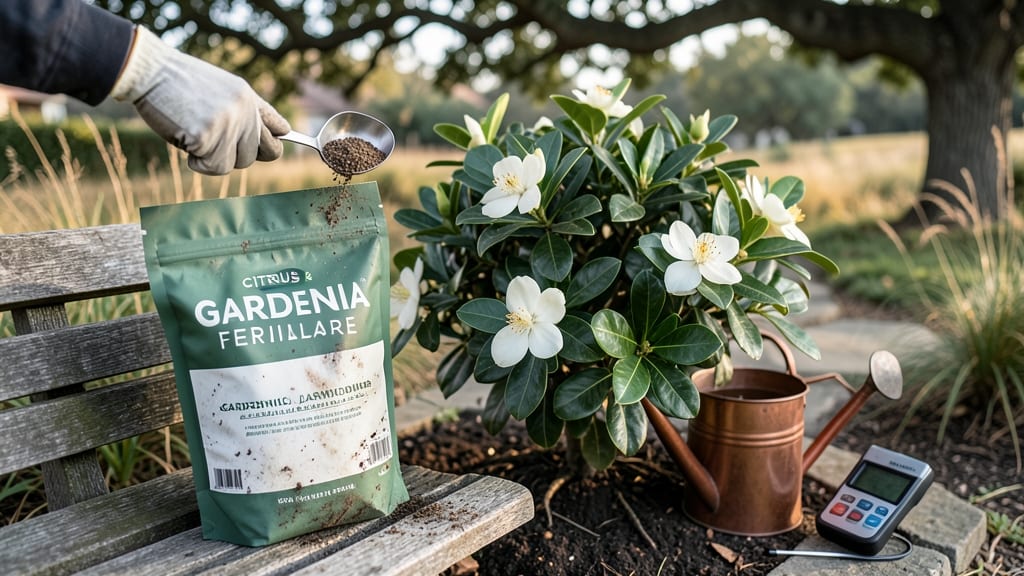
To keep your gardenias thriving with vibrant blooms, you need an acid-based fertilizer designed for their tropical roots.
Struggling to keep your gardenias blooming year after year? The secret lies in their soil pH—and an acid-based fertilizer tailored to their needs can transform your plants from lackluster to showstopping. These stunning 🌸 shrubs demand a specific balance, and without it, their leaves yellow, buds drop, and growth stalls.
Most gardeners overlook the importance of pH, but gardenias in USDA Zones 9-11 won’t thrive unless their soil stays between 4.5 and 6.0. An acid-based fertilizer ensures they get the right nutrients while keeping the soil chemistry perfect for blooming.
Think of it as giving your gardenias a year-round vitamin boost—just in the right doses.
In this guide, I’ll walk you through how to pick the best fertilizer, when to apply it, and how to spot signs of over- or under-feeding. By the end, your gardenias will be the envy of the neighborhood—fragrant, lush, and covered in those iconic white blooms.

Why gardenias need acid-based fertilizer and how to test your soil pH
If your gardenias are struggling to bloom or their leaves are turning yellow, the culprit might be your soil's pH balance. Gardenias thrive in acidic soil with a pH range of 4.5–6.0.
When the pH strays too high (alkaline) or too low (highly acidic), your plants can't absorb essential nutrients like iron, manganese, and phosphorus, leading to stunted growth and fewer flowers. That's why an acid-based fertilizer is non-negotiable for these tropical beauties.
Gardenias are native to Southeast Asia, where the soil is naturally acidic and rich in organic matter. When planted in neutral or alkaline soil (pH 7.0 or higher), they exhibit classic deficiency symptoms like yellowing leaves (chlorosis) or brown leaf tips.
Even if your gardenia looks healthy, testing your soil's pH ensures it has the right conditions to produce those fragrant, creamy-white blooms you love.
Before reaching for an acid-based fertilizer, it's crucial to test your soil pH. This step helps you determine whether your gardenia needs more acidity or if you're already in the ideal range.
Testing is simple and can be done with DIY test kits, digital meters, or by sending a sample to a lab. Let's dive into the science behind why gardenias need acidic soil and how to get your pH just right.
🌱 Did You Know? Gardenias are part of the Rubiaceae family, which includes coffee plants. Like coffee, they thrive in acidic, well-draining soil that mimics their natural tropical habitat.
🌿 Gardenias: Acid-Based Fertilizer & Soil pH Guide
| Factor | Ideal Specification | Symptoms of Imbalance | Solution |
|---|---|---|---|
| Soil pH | 4.5–6.0 (acidic) | Yellow leaves, poor blooms, stunted growth | Add sulfur or peat moss |
| Fertilizer Type | Acid-based (e.g., 7-9-5 NPK) | Burnt leaves, leaf drop, weak stems | Use slow-release granules |
| Testing Method | DIY kit or lab test | Incorrect pH adjustments | Test before fertilizing |
| Application Time | Spring & early summer | Over-fertilization, root burn | Follow label instructions |
Testing your soil pH is the first step to giving your gardenias the perfect growing conditions. Start by collecting soil samples from multiple spots around your plant, about 4–6 inches deep. Mix these samples together to get an average reading.
For a DIY test kit, follow the instructions to dissolve a small amount of soil in water, then compare the color to the provided chart. If you prefer accuracy, send a sample to a local extension service or use a digital pH meter for instant results.
If your soil tests above 6.0, it’s too alkaline, and your gardenias won’t thrive. To lower the pH, mix in elemental sulfur or peat moss into the top 6 inches of soil.
For a quick fix, use an acidifying fertilizer like Miracle-Gro Azalea/Camellia or Espoma Garden-Tone. These products are formulated to lower pH gradually while providing essential nutrients.
On the flip side, if your soil is below 4.5, it’s too acidic, and you’ll need to raise the pH. Add lime (calcium carbonate) or wood ash sparingly, as gardenias are sensitive to sudden pH changes.
Always re-test your soil after making adjustments to ensure you’ve reached the ideal 4.5–6.0 range.
Once your soil pH is perfect, apply your acid-based fertilizer in early spring as new growth begins. Use a slow-release granular fertilizer or a liquid formula every 4–6 weeks during the growing season.
Avoid fertilizing in fall or winter, as gardenias enter dormancy and don’t need extra nutrients. Water your plants thoroughly after fertilizing to help nutrients absorb into the soil.
💡 Pro Tip: Mulch your gardenias with pine bark fines or pine needles to maintain acidity naturally. This also helps retain moisture and suppress weeds, keeping your plants healthy all season long.
By understanding your gardenias' need for acidic soil and testing your pH regularly, you’ll set them up for vibrant blooms and lush foliage. Remember, a little patience and attention to soil health go a long way in transforming your
Best acid-based fertilizers for gardenias: organic vs synthetic options compared
Gardenias thrive when their soil pH stays between 4.5 and 6.0, but not all acid-based fertilizers deliver the same results. Choosing the right formula—whether organic or synthetic—can mean the difference between vibrant blooms and stunted growth.
Let’s break down the top options, their benefits, and how to apply them for maximum impact.
Synthetic fertilizers like Miracle-Gro Azalea/Camellia offer quick nutrient uptake, while organic choices such as Espoma Garden-Tone improve soil health over time. Each has trade-offs: synthetics provide immediate results but may require more frequent applications, whereas organics build long-term soil fertility but take longer to show effects.
🌿 Comparison Table: Acid-Based Fertilizers for Gardenias
| Type | Key Ingredients | Application Rate | Pros | Cons | Cost (per lb) |
|---|---|---|---|---|---|
| Miracle-Gro Azalea/Camellia (Synthetic) | 12-4-8 NPK + sulfur | 1 tbsp per plant every 4-6 weeks | Fast-acting, precise nutrient balance | Can burn roots if overused | $12-$15 |
| Espoma Garden-Tone (Organic) | Bone meal, kelp, sulfur | 2 tbsp per plant every 6-8 weeks | Improves soil structure, slow release | Slower results, bulkier to apply | $18-$22 |
| Peat Moss (Organic) | Sphagnum peat, sulfur | Mix 2-3 inches into soil annually | Retains moisture, naturally acidic | Requires soil amendment, not a complete fertilizer | $8-$12 |
| Pine Bark Fines (Organic) | Finely ground pine bark | Top-dress 1-2 inches annually | Slow-release, improves drainage | Limited nutrient content | $10-$14 |
For quick blooms, synthetic fertilizers like Miracle-Gro Azalea/Camellia are ideal during spring and summer when gardenias are actively growing. Apply in the early morning to avoid leaf burn, and always water thoroughly afterward to help nutrients absorb.
Organic options like Espoma Garden-Tone or peat moss are better for long-term soil health, especially if your gardenias are potted. Mix peat moss into the soil annually to maintain acidity, or use pine bark fines as a mulch to slowly release nutrients while suppressing weeds.
If your gardenias show signs of nutrient deficiency—such as yellowing leaves or fewer blooms—switch to a high-phosphorus fertilizer (like 7-9-5) to encourage flowering. Always test your soil pH before applying fertilizer to avoid over-acidifying the soil.
Pro tip: Combine organic and synthetic fertilizers for balanced results. Use a slow-release organic in fall to prep for spring growth, then switch to a liquid synthetic in spring for a quick nutrient boost.