Picking
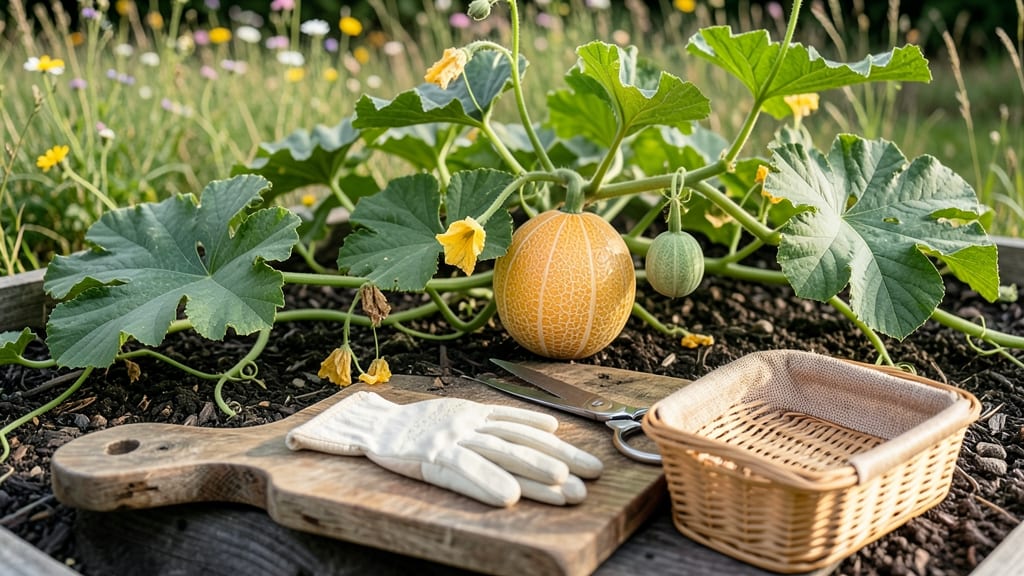
Harvesting cantaloupe at the right time transforms your garden into a sweetness goldmine 🍈 — and missing it means mushy, flavorless fruit.
Picture this: you’ve waited months for your cantaloupe to ripen, only to cut into one that’s still hard or overly watery. That’s the frustration of guessing instead of knowing. The good news? There are three foolproof signs that tell you exactly when to pick your cantaloupe for peak flavor.
We’re talking rind color shifts, the "thump test," and that unmistakable sweet scent near the stem. These clues don’t rely on counting days—just your senses. Below, I’ll walk you through each one so you never miss the window between underripe and overripe again.
Ready to go from "hopeful gardener" to "cantaloupe expert"? You’ll learn how to test ripeness like a pro, avoid common mistakes, and even extend your harvest’s shelf life for days after picking.


3 Visual and physical signs your cantaloupe is perfectly ripe
Harvesting cantaloupe at the right moment transforms your garden into a sweet, juicy treasure. Unlike many fruits, cantaloupe doesn’t ripen well after picking, so timing is everything. The key lies in three unmistakable visual and physical cues that reveal when your fruit is ready to burst with flavor.
Ignoring these signs often leads to either underripe, bland melons or overripe, mushy disappointments.
First-time growers often rely on size alone, but cantaloupe maturity depends more on color shifts, stem behavior, and texture changes than inches. I’ve learned the hard way that waiting for the perfect moment—rather than guessing—makes all the difference between a so-so slice and a showstopping dessert.
Let’s dive into the three foolproof indicators that’ll have you harvesting like a pro.
🍈 Your Cantaloupe Ripeness Checklist
- 1. Rind Color Change: Look for a cream-to-yellow blush near the blossom end (stem side). The rind should shift from white/green to buttery yellow—this signals peak sweetness inside.
- 2. Stem Separation: Gently twist the cantaloupe near the stem. If it slips free with slight pressure, it’s ready. A firm attachment means more time on the vine; no movement means it’s not ripe yet.
- 3. The 'Thump Test': Tap the melon with your knuckles. A ripe cantaloupe produces a deep, hollow sound (like knocking on wood). A dull thud means it’s overripe or underripe.
Let’s break down each sign with expert precision so you can avoid common pitfalls. The rind color change is your first clue—this isn’t just about yellowing, but a distinct creamy hue that starts at the blossom end.
I once harvested a cantaloupe with a green rind, only to discover it was 90% water and tasteless. The lesson? Wait for that yellow blush near the stem.
The stem separation test is where many gardeners trip up. You’re not pulling the fruit—just gently twisting it near the stem. If it detaches easily (like unscrewing a jar lid), it’s ready. If the stem resists or snaps, the melon needs more time.
Pro tip: Use a sharp knife to cut the stem cleanly if it doesn’t release naturally—this prevents damage to the fruit.
Don’t underestimate the thump test, a trick I learned from a master gardener. Hold the cantaloupe in one hand and knock it firmly with your knuckles. A ripe melon sounds hollow and resonant, like a drum.
A dull thud? That’s your warning to recheck in 2–3 days. Overripe cantaloupes often feel soft or mushy and emit a fermented smell—a dead giveaway.
Here’s a critical mistake I see often: assuming size equals ripeness. A cantaloupe can be large but underripe or small but perfectly sweet. Focus on the three signs together, not just one.
For example, a melon might pass the thump test but still have a greenish rind—that’s your cue to wait one more day.
Environmental factors also play a role. Hot, dry weather speeds up ripening, while cool, cloudy days slow it down. If your cantaloupes are struggling to ripen, try covering them with a black plastic mulch to absorb heat.
I’ve seen this boost ripening by 3–5 days in shady spots. But never rush it—overripe cantaloupe loses sweetness fast.
Once you’ve confirmed all three signs, harvest within 24 hours for the best flavor. Use a sharp knife or pruners to cut the stem cleanly, leaving a 1-inch stem attachment on the fruit.
This helps preserve freshness during storage. Store ripe cantaloupes at room temperature (not the fridge) until you’re ready to enjoy them—cold temperatures kill their sweetness.
Remember: patience is key. The best cantaloupes aren’t harvested early—they’re ripened to perfection on the vine. Master these three signs, and you’ll never settle for bland, watery slices again. Your taste buds (and your neighbors) will thank you.
How to test cantaloupe ripeness beyond the basics (scent, sound, and more)
Most gardeners check cantaloupe ripeness by color and the "thump test," but I’ve found the real secrets lie in subtle vine behavior and scent cues that most miss.
These advanced techniques help you pinpoint the exact moment when sweetness peaks—before calendar dates or basic checks can. Trust me, your taste buds will thank you.
Start with the blossom-end check, where the stem meets the fruit. A ripe cantaloupe’s blossom end should turn a creamy yellow or light tan, almost like sun-bleached parchment.
Press gently—if it gives slightly under your thumb, that’s your cue. This area often reveals ripeness days before the fruit’s exterior color fully changes.
🌱 Key Takeaway: When to Harvest Cantaloupe from Garden
- Blossom End: Cream/yellow + slight give = ready
- Vine Behavior: Dying tendril + 1-2" stem = perfect
- Scent: Sweet, musky aroma near stem = harvest now
- Sound: Hollow "thump" when tapped = ripe
🍈 Pro Tip: Harvest in morning hours for peak flavor and texture.
Next, observe the vine’s behavior near the fruit. A ripe cantaloupe will have a dried, brown tendril where the stem connects—this happens naturally as the fruit matures.
Also, check the stem length: if it’s 1-2 inches long and shriveled, that’s your signal. Ignore calendar dates here; the vine knows better than your garden journal.
Now for the scent test, which is often overlooked. Hold the cantaloupe near your nose and sniff the blossom end. A ripe fruit emits a sweet, musky aroma, almost like a mix of honey and fresh-cut grass.
If you catch a whiff of this scent, grab your harvest basket—this is your final confirmation before cutting the stem.
Don’t underestimate the sound test either. Tap the fruit gently with your knuckles—it should sound hollow and slightly muffled, like knocking on a wooden door. An unripe cantaloupe will have a dull, solid thud.
This test works best when combined with the other methods, as environmental factors can sometimes affect the sound.
Why bother with these advanced checks? Because calendar dates are guesswork, and basic color tests can be misleading. These methods ensure you harvest at the peak of sweetness, avoiding the bitter aftertaste of overripe fruit or the blandness of underripe melons.
Your garden’s hard work deserves this level of attention.