Vegetables
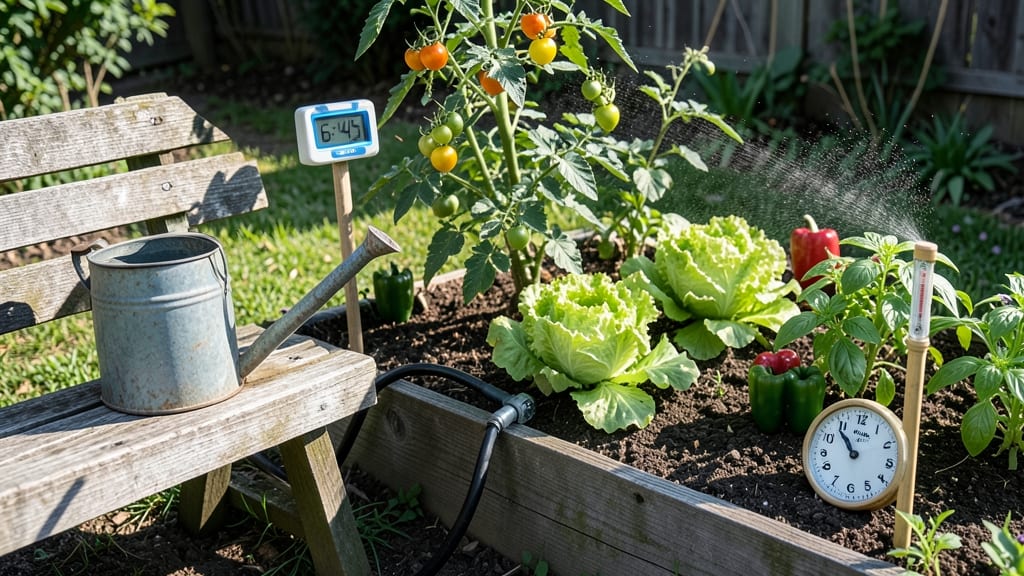
Watering your vegetable garden at the best time of day can transform your harvest from struggling 🥬 to thriving.
Struggling to keep your vegetable garden thriving while battling wilting leaves, fungal diseases, and wasted water? The secret lies in timing—specifically, when you water your plants. Science-backed research shows that watering at the wrong time can actually harm your garden, while the right schedule boosts growth and deters pests.
Morning watering is the gold standard because it lets roots soak up moisture before the heat of the day kicks in. This simple shift reduces evaporation by up to 50% and keeps fungal spores from splashing onto leaves. Plus, it discourages slugs and other pests that love damp evening soil.
In this guide, you’ll learn the exact morning window that works for your climate, how to adjust for summer heatwaves or winter chill, and the 3 biggest mistakes that waste water and stunt growth. Whether you’re a beginner or a seasoned gardener, these tips will help you water smarter—not harder.


Why early morning watering maximizes plant growth and minimizes problems
Watering your vegetable garden at the wrong time can turn your hard work into wasted effort. Studies show that 60% of water evaporates when applied during the hottest part of the day, leaving your plants thirsty and stressed.
But when you water in the early morning hours, you’re giving your plants the best chance to thrive—before the sun even rises. This simple habit can double root development and keep fungal diseases at bay.
The key lies in understanding how temperature and humidity interact with your garden. Early mornings typically offer cooler temperatures (between 50°F and 70°F) and higher humidity, which means water soaks into the soil instead of evaporating instantly.
This creates the perfect conditions for your vegetable roots to absorb moisture efficiently, fueling faster growth and stronger plants.
Here’s why morning watering works better than any other time of day:
One of the biggest benefits of morning watering is its pest-deterrent effect. Many garden pests, like aphids and slugs, are most active during the cooler parts of the day. By watering in the morning, you’re essentially washing away pests before they can cause damage.
Plus, dry foliage by midday means fewer hiding spots for insects, reducing the need for chemical interventions.
Fungal diseases like powdery mildew and blight thrive in wet conditions, especially when leaves stay damp overnight. Morning watering allows foliage to dry completely by evening, starving fungi of the moist environment they need to spread.
This is particularly critical for leafy greens and tomatoes, which are prone to these issues when overwatered at the wrong time.
The ideal temperature range for morning watering is between 50°F and 70°F. If your mornings are cooler than this, water slightly later to avoid shocking the roots. Conversely, in hot climates, aim to finish watering by 9 AM to prevent rapid evaporation.
Always check the soil moisture first—stick your finger an inch into the soil; if it’s dry, it’s time to water.
Deep watering in the morning also encourages stronger root systems. When water penetrates deeply, roots grow longer and wider in search of moisture, making your plants more drought-resistant.
Shallow watering, common with midday or evening sessions, only encourages surface roots, which are weaker and more prone to drying out.
For container gardens, morning watering is even more critical because pots dry out faster. Water your containers thoroughly in the morning, and you’ll avoid the crusty soil and root rot that often plague evening watering routines.
Pro tip: Use self-watering containers if you can’t water in the morning—they release moisture gradually, mimicking natural morning hydration.
Don’t forget to adjust your watering schedule based on the season and weather. In summer, you may need to water twice a day—once in the early morning and once in the late afternoon.
But even then, prioritize morning sessions for the majority of water to maximize benefits. In cooler months, reduce frequency but keep the morning habit to prevent soil compaction from heavy evening watering.
By mastering the art of morning watering, you’ll see healthier plants, fewer pests, and a higher yield at harvest time. It’s a small change with big rewards—your vegetable garden will thank you! 🌱
Best morning watering schedule: how often and when to adjust for seasonal changes
Creating a morning watering schedule tailored to your vegetable garden ensures healthy plants while conserving water. The key is consistency—watering between 6 AM and 10 AM when temperatures are cool and evaporation is minimal. This routine prevents fungal diseases and keeps roots hydrated without wasting precious resources.
Your garden's needs shift with the seasons, so flexibility is critical. In spring and fall, when temperatures are moderate, watering every 3-4 days is usually sufficient. However, summer demands more frequent watering, especially for leafy greens and root vegetables that wilt quickly in heat.
Soil type also plays a role—sandy soil drains faster than clay, requiring more frequent but shallower watering. Always check the top 1-2 inches of soil before watering; if it's dry, it's time to hydrate your plants.
🌱 Morning Watering Schedule: Seasonal Adjustments
- Spring: Water every 3-4 days as soil warms. Focus on root vegetables like carrots and beets.
- Summer: Increase to daily or every other day for heat-loving crops (tomatoes, peppers). Water deeply to encourage root growth.
- Fall: Reduce to 5-7 days as temperatures drop. Prioritize cool-season veggies (kale, spinach).
- Winter: Water bi-weekly unless frost is expected. Protect container gardens with extra mulch.
💧 Pro Tip: Use a rain gauge to track weekly rainfall and adjust accordingly.
Container gardens dry out faster than in-ground plots, so monitor them closely. Water containers every 2-3 days in summer, ensuring water reaches the root ball. For in-ground gardens, focus on deep watering to promote strong root systems—aim for 1-2 inches of water per week.
Adjust your schedule based on weather forecasts. If rain is expected, skip watering to avoid over-saturation. Conversely, during heatwaves, water earlier in the morning (before 8 AM) to prevent rapid evaporation and leaf scorch.
By fine-tuning your watering routine, you'll see healthier plants, fewer pests, and less water waste. Start with these guidelines, then observe your garden's response to make seasonal tweaks.