Planting
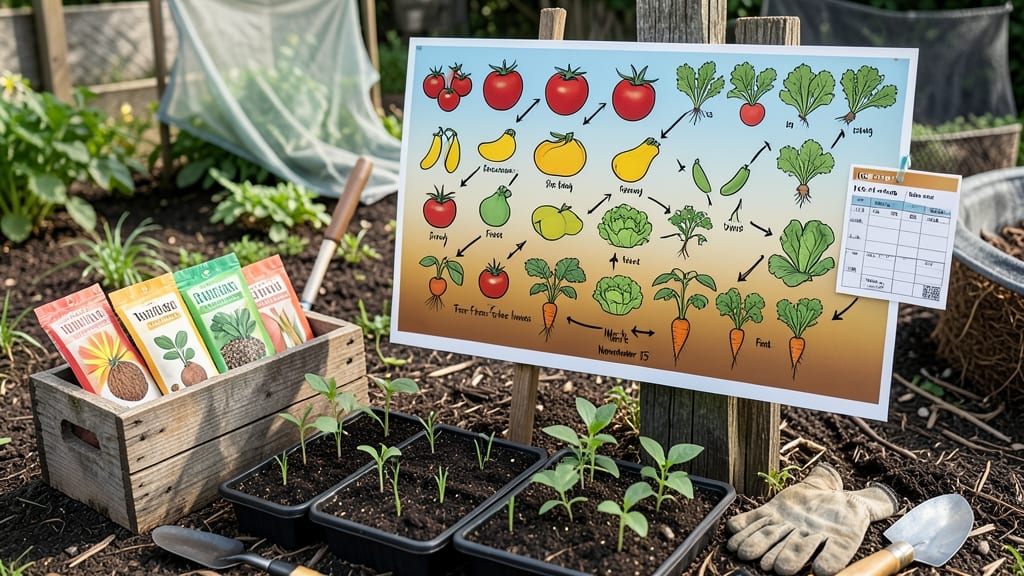
Planting a vegetable garden in NC at the right time means the difference between a bumper crop 🥕 and a sad, frost-nibbled disappointment.
North Carolina’s diverse climate means your vegetable garden’s success hinges on timing—plant too early and risk frost damage, too late and miss peak harvests. Here’s your county-specific guide to mastering NC’s last-frost dates and crop-specific planting windows.
Cool-season crops like lettuce and broccoli need to hit the soil 4-6 weeks before your last frost, while tomatoes and peppers wait until 2-3 weeks after the frost danger passes. In 6b-8a zones, that window shifts from mid-March in the mountains to February on the coast.
Below, I break down exact planting dates by county, adjust for raised beds, and share the one trick that adds 3 extra weeks to your growing season—no matter where you garden in the Tar Heel State.
NC last-frost dates by county: exact planting windows for cool-season vs. warm-season crops
North Carolina’s last-frost dates vary dramatically across its 100 counties, from the coastal plains to the mountain regions. These differences create planting windows that can shift by weeks—meaning a tomato planted in March in Asheville might freeze, while the same plant thrives in Wilmington by April.
Understanding your local frost zone is the key to timing cool-season crops like lettuce and warm-season crops like peppers perfectly.
For example, coastal counties like Dare and Carteret have last-frost dates as early as February 15, while mountain counties like Haywood and Macon often see frost until April 15. This 2-month difference means your broccoli or kale might bolt in the lowlands but thrive in the high country.
Let’s break down the exact planting windows for your NC county and the crops that perform best in each zone.
Below is a color-coded comparison of last-frost dates by region, along with ideal planting windows for cool-season (lettuce, spinach, broccoli) and warm-season (tomatoes, peppers, cucumbers) crops. Use this as your garden calendar to avoid frost damage or missed harvests.
🌱
If you’re in the coastal plains, you can start direct-sowing lettuce as early as February 1, while mountain gardeners should wait until March 1 to avoid frost damage.
This 2-month shift also affects warm-season crops: tomatoes and peppers can go into the ground by March 15 in Wilmington but must wait until May 15 in Asheville.
For cool-season crops like broccoli or kale, plant 4-6 weeks before your last-frost date.
For warm-season crops like tomatoes or cucumbers, wait 2-3 weeks after the last frost to ensure soil temperatures are above 55°F. Soil thermometers are your best friend here—warm-season plants won’t thrive in cold soil, even if air temperatures are mild.
🌿
Let’s take lettuce as an example. In Carteret County (coastal), you can direct-sow leaf lettuce as early as January 15 for a spring harvest, while in Buncombe County
Crop-specific planting timeline for NC gardens: when to start seeds indoors vs. direct-sow outdoors
North Carolina’s diverse microclimates demand precise planting timing—whether you’re starting seeds indoors or direct-sowing outdoors. Frost-sensitive crops like tomatoes and peppers need warm soil, while hardy greens like kale thrive in cooler temps.
Below, I’ve mapped out the optimal windows for 12 essential NC vegetables, including when to begin seeds indoors and when to transplant or sow directly.
For cool-season crops (e.g., lettuce, broccoli), start seeds indoors 8–10 weeks before your last frost date.
In NC’s Piedmont, that’s typically mid-January to early February, while mountain regions can begin slightly later. Warm-season crops like cucumbers and beans should wait until 2–3 weeks after your last frost—usually mid-April to early May—to avoid chilly soil shocks.
| Crop | Indoor Start (Weeks Before Last Frost) | Direct Sow (Outdoor Window) | Transplant Outdoors | Frost Tolerance |
|---|---|---|---|---|
| Potatoes | Seed pieces 4–6 weeks before last frost | Early March (direct-sow) | N/A (direct-sow) | High |
| Lettuce | 4–6 weeks before last frost | February–March (successive plantings) | March–April | Very High |
| Tomatoes | 6–8 weeks before last frost | N/A (transplant only) | April–May (after frost) | Low |
| Peppers | 8–10 weeks before last frost | N/A (transplant only) | May (soil ≥60°F) | None |
| Cucumbers | 3–4 weeks before last frost | May–June (after frost) | May–June | None |
| Broccoli | 6–8 weeks before last frost | March–April | March–April | High |
| Green Beans | N/A (direct-sow) | April–May (after frost) | N/A (direct-sow) | Moderate |
| Carrots | N/A (direct-sow) | March–April (spring) or August (fall) | N/A (direct-sow) | High |
| Squash | 3–4 weeks before last frost | May–June (after frost) | May–June | None |
| Kale | 4–6 weeks before last frost | February–March (spring) or July (fall) | March–April | Very High |
| Eggplant | 8–10 weeks before last frost | N/A (transplant only) | May–June (soil ≥65°F) | None |
| Radishes | N/A (direct-sow) | February–March (spring) or August (fall) | N/A (direct-sow) |