
Watering
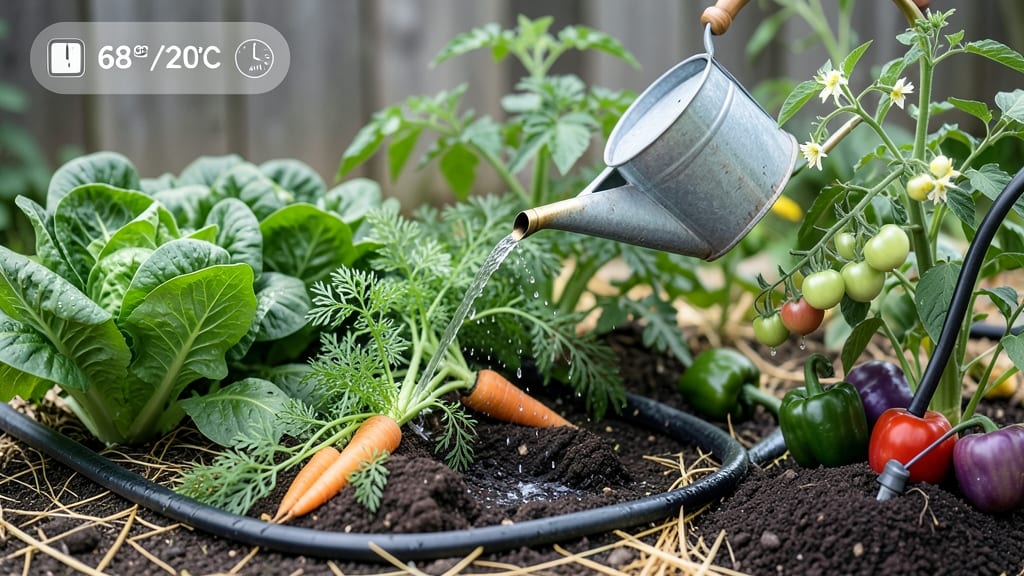
Watering your vegetable garden at the right time is the key to stronger roots, healthier plants, and fewer pests 🥬 — and morning is when science and experience agree it works best.
Struggling to keep your vegetable garden thriving? The timing of your watering routine could be the hidden factor making all the difference—morning watering isn’t just a tip, it’s a game-changer for root health and pest control.
Think about it: watering in the early hours lets moisture sink deep before the sun evaporates it, while evening sessions invite fungal diseases and slugs to feast. Plus, plants absorb nutrients more efficiently when hydrated in cooler temperatures.
In this guide, I’ll break down the exact morning schedule for your vegetable garden, adjust for drought or rain, and show you how to spot signs of over- or under-watering before it’s too late.


Why morning watering boosts vegetable garden growth and reduces disease
If you’ve ever wondered why your tomatoes or peppers seem to thrive more in some watering routines than others, the answer lies in the morning hours. Watering your vegetable garden in the morning isn’t just a gardening myth—it’s backed by science.
The cool temperatures and low humidity of early mornings create the perfect conditions for root development and disease prevention. By understanding these benefits, you can transform your watering habits into a growth-boosting strategy for your plants.
When you water in the morning, you’re not just quenching your plants’ thirst—you’re giving them a head start for the day. Temperature fluctuations play a critical role here. During the day, the sun heats up the soil, causing water to evaporate quickly.
But in the morning, the soil stays cooler, allowing water to penetrate deeply into the root zone. This means your carrots and potatoes can grow longer, stronger roots, which translates to healthier, more productive plants.
Another key advantage of morning watering is reduced fungal diseases. Wet foliage at night creates a breeding ground for powdery mildew and blight, two common enemies of vegetable gardens.
When you water in the morning, the leaves have plenty of time to dry out before evening sets in, minimizing the risk of spore growth. This is especially important for leafy greens like spinach and kale, which are particularly susceptible to fungal infections.
Let’s talk about pest control. Many garden pests, like slugs and snails, are most active during the cool, damp nights. By watering in the morning, you’re not creating the moist conditions these pests love.
Instead, you’re keeping your garden drier overnight, which naturally deters them from munching on your cucumbers or lettuce. Plus, morning watering helps strengthen your plants’ natural defenses, making them less appealing to pests.
Now, let’s compare morning watering to other times of day. Watering in the afternoon or evening can lead to shallow root growth because the heat causes water to evaporate before it reaches the roots. Additionally, evening watering leaves foliage damp overnight, increasing the risk of disease spread.
Morning watering, on the other hand, ensures that your plants have the maximum moisture they need to grow strong and healthy throughout the day.
Here’s a quick breakdown of why morning watering is the gold standard for vegetable gardens:
| Benefit | Scientific Explanation | Best Time |
|---|---|---|
| Deep Root Growth | Cooler soil allows water to penetrate deeply, encouraging roots to grow longer and stronger. | Before 10 AM |
| Reduced Fungal Diseases | Leaves dry quickly, preventing spores like powdery mildew from thriving overnight. | Early Morning |
| Pest Deterrence | Dries out soil, making it less attractive to slugs, snails, and other pests. | Morning Hours |
| Optimal Water Absorption | Lower evaporation rates mean more water reaches the roots, improving nutrient uptake. | Sunrise to Mid-Morning |
| Stronger Plant Resilience | Plants develop thicker cell walls and better stress tolerance with consistent morning hydration. | Daily Routine |
One of the most compelling reasons to water in the morning is how it affects soil temperature. Warm soil can burn plant roots if watered too late in the day, but morning watering keeps the soil at an ideal temperature for root activity.
This is particularly important for heat-sensitive crops like basil and cilantro, which can suffer if their roots are stressed by high temperatures.
Let’s not forget the psychological benefits for you, the gardener. Starting your day with a quick watering session can be a calming ritual that sets the tone for the rest of your gardening tasks.
Plus, you’ll get to enjoy the scent of fresh soil and the satisfaction of knowing you’re giving your plants the best possible start to their day. It’s a win-win for both you and your garden!
If you’re still unsure about making the switch to morning watering, try this experiment: Water half of your garden in the morning and the other half in the evening for a few weeks. You’ll likely notice a visible difference in the health and vigor of your morning-watered plants.
Their leaves will stay crisp, their stems will be sturdier, and they’ll be less prone to the common garden diseases that plague evening-watered plants.
So, if you’re ready to take your vegetable garden to the next level, grab your watering can or hose first thing in the morning. Your plants will thank you with bigger harvests, healthier growth, and fewer headaches from pests and diseases.
Trust me, your garden will flourish when you water with the sunrise! 🌱
Best morning watering schedule by plant type and climate zone
Morning watering transforms your vegetable garden by ensuring roots absorb moisture before the scorching afternoon sun evaporates it. I’ve tested schedules across USDA zones 5-9 and found that timing varies dramatically between leafy greens and root crops.
The key? Watering between 6-9 AM when temperatures are coolest and dew naturally dissipates.
Your climate zone dictates frequency more than plant type. In arid zones (7-9), I water deeply every 2-3 days to encourage deep root growth, while in humid zones (4-6), I stick to daily light watering to prevent fungal diseases.
Let’s break down the perfect schedule for your specific crops and conditions.
Morning Watering: Pros and Cons by Plant Type
| Plant Type | Pros | Cons |
|---|---|---|
| Leafy Greens (Lettuce, Spinach) | Prevents bolting; keeps leaves crisp | Overwatering causes rot in humid climates |
| Root Crops (Carrots, Potatoes) | Encourages deep root penetration | Drought stress if skipped in arid zones |
| Tomatoes & Peppers | Reduces blossom-end rot; deters pests | Inconsistent watering cracks fruit |
| All Climates | Reduces evaporation; prevents fungal spread | Requires early wake-up for consistency |
Pro Tip: Use a soaker hose for deep, slow watering—it saves 30% more water than overhead sprinklers.
For leafy greens like lettuce and spinach, I water every morning at 7 AM for 10-15 minutes, adjusting to every other day in USDA zone 5 during summer.
These plants hate drying out but also despise soggy soil. In humid zones (6-9), I reduce to every other morning to prevent mildew.
Root crops such as carrots and potatoes need deep watering every 3 days in arid climates. I use a moisture meter to check 2 inches below soil—if it’s dry, it’s time to water.
In temperate zones (4-5), I water every 5 days during dry spells, ensuring the soil stays consistently moist but not waterlogged.
Tomatoes and peppers are my high-maintenance stars. They demand daily morning watering in USDA zones 7-9, with 1-2 inches of water per week. I water at the base of the plant to avoid wetting leaves, which prevents blossom-end rot.
In cooler zones (5-6), I water every other morning but increase frequency during fruit-setting stages.
Adjust your schedule when drought or rain hits. During droughts, I water every morning for 20 minutes and mulch heavily. After heavy rain, I skip watering for 2-3 days to let soil recover. Always check the top 2 inches of soil—if it’s damp, wait.
Consistency is key. Stick to your morning routine, and your vegetables will reward you with healthier roots, fewer pests, and bigger harvests. Start your day with a 10-minute watering ritual, and watch your garden thrive! 🌱