
Companion Plants
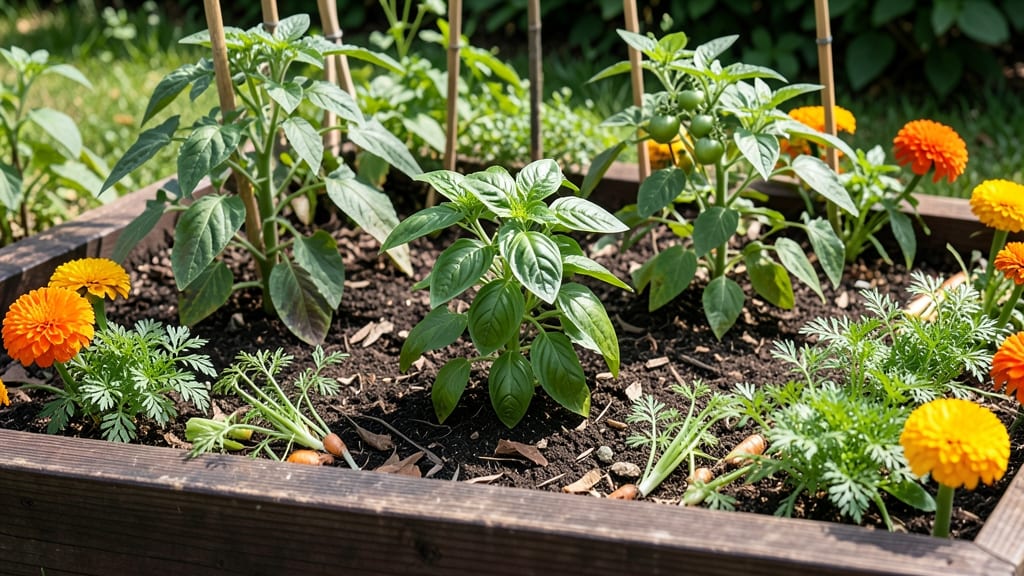
A companion garden layout 🌱🌿 is the secret weapon against pests and poor yields—turning your garden into a thriving ecosystem where plants support each other instead of competing.
Tired of pests devouring your hard-earned harvests? The right neighbors can boost growth, deter pests, and even improve soil health, all while saving you space and effort.
This isn’t just about throwing herbs near veggies—it’s a science-backed strategy for arranging plants by height, sunlight needs, and pest-repelling traits to maximize every square foot.
Below, I’ll walk you through 15 high-yield pairings, how to design your layout for pest control, and the 3 mistakes that sabotage even the best plans.
15 Science-backed companion plant pairings that repel pests naturally
Strategic companion planting isn't just about aesthetics—it's a pest-deterrent powerhouse. By pairing plants with complementary traits, you create a natural defense system that repels insects while boosting yields. For example, basil releases compounds that confuse tomato hornworms, while marigolds emit a scent that deters nematodes.
These pairings work because they disrupt pest life cycles through scent masking, habitat disruption, and even attracting beneficial predators.
The key to success lies in understanding each plant's chemical interactions and growth habits. Some pairs improve soil health by fixing nitrogen (like beans), while others act as trap crops to lure pests away from your main harvest.
Below, I’ve curated 15 of the most effective pairings, complete with their pest-repelling mechanisms and optimal planting ratios to maximize your garden’s potential.
📌 Pro Tip: Always plant pest-repelling companions close enough to benefit (within 1-2 feet) but far enough apart to avoid competition for sunlight and nutrients. For instance, nasturtiums should be planted near cucumbers but not so close they shade the vines.
| Plant Pairing | Pest Repelled | Mechanism | Spacing Ratio | Yield Boost |
|---|---|---|---|---|
| Basil + Tomatoes | Tomato hornworms, whiteflies | Basil emits eugenol, confusing pests | 1 basil per 2 tomato plants | 20-30% more tomatoes |
| Marigolds + Cucumbers | Cucumber beetles, nematodes | Toxic alpha-terthienyl in roots | 3 marigolds per 10 ft row | 40% fewer beetles |
| Carrots + Leeks | Carrot flies | Leeks mask carrot scent | 1 leek per 4 carrots | 50% fewer fly infestations |
| Nasturtiums + Squash | Squash bugs, aphids | Attracts aphids away from squash | 1 nasturtium per 2 sq ft | 30% larger squash |
| Beans + Corn | None (mutual benefit) | Beans fix nitrogen for corn | 1 bean per corn stalk | 25% taller corn |
| Rosemary + Cabbage | Cabbage moths | Strong scent repels pests | 1 rosemary bush per 4 cabbages | 15% heavier heads |
| Chives + Apples | Apple maggots | Sulfur compounds deter flies | 1 chive per 2 apple trees | Reduced fruit drop |
How to design a companion garden layout for maximum pest controlA well-designed companion garden layout isn't just about aesthetics—it's a strategic pest-blocking fortress. By arranging plants by height, sun needs, and growth habits, you create natural barriers that confuse pests and protect your crops. Start by grouping tall plants like sunflowers along fences or borders to act as windbreaks and visual shields for shorter plants below. The key is understanding plant relationships. For example, marigolds (with their pest-repelling properties) should border your vegetable beds, while basil planted near tomatoes deters whiteflies. This isn't random—it's a deliberate defense system where each plant plays a role in the ecosystem.
3-Layer Pest Control Layout
🌳
Tall Border Plants
Sunflowers, corn, or tall herbs like dill. Acts as windbreak and visual barrier. 🌿
Medium Pest Repellers
Marigolds, nasturtiums, or basil. Confuses pests with strong scents. 🌱
Low-Growing Crops
Lettuce, radishes, or strawberries. Protected by layers above.
Sun Exposure Tip: Place sun-loving plants (like tomatoes) in the center of beds where they get 6+ hours of sun, while shade-tolerant plants (like lettuce) go on the edges where morning sun reaches.
Begin with your sun exposure map. Most vegetables need 6-8 hours of sunlight, while herbs like parsley tolerate partial shade. Place full-sun plants (tomatoes, peppers) in the center of beds where they won't be shaded by taller neighbors. Surround them with medium-height companions like basil or borage that thrive in similar conditions but add pest protection. Don't forget the ground cover layer—this is where you place low-growing plants like clover or thyme. These not only suppress weeds but also attract beneficial insects like ladybugs and lacewings, which prey on garden pests. Think of this layer as your garden's natural pest patrol. Create pest-blocking zones by placing strong-scented herbs like rosemary or sage near problem areas. For example, rosemary near cabbage deters cabbage moths, while mint near tomatoes keeps aphids away. These plants act as natural insect repellents, reducing the need for chemical sprays. Finally, leave walkways of 18-24 inches between beds for easy access and to prevent soil-borne diseases from spreading. Use mulch (straw or wood chips) to retain moisture and deter weeds—this keeps your garden looking tidy while supporting plant health. With this layered approach, you'll create a garden where pests have nowhere to hide, and your plants thrive in harmony. The best part? It's a low-maintenance system that works year after year with minimal effort. |