
Light Requirements
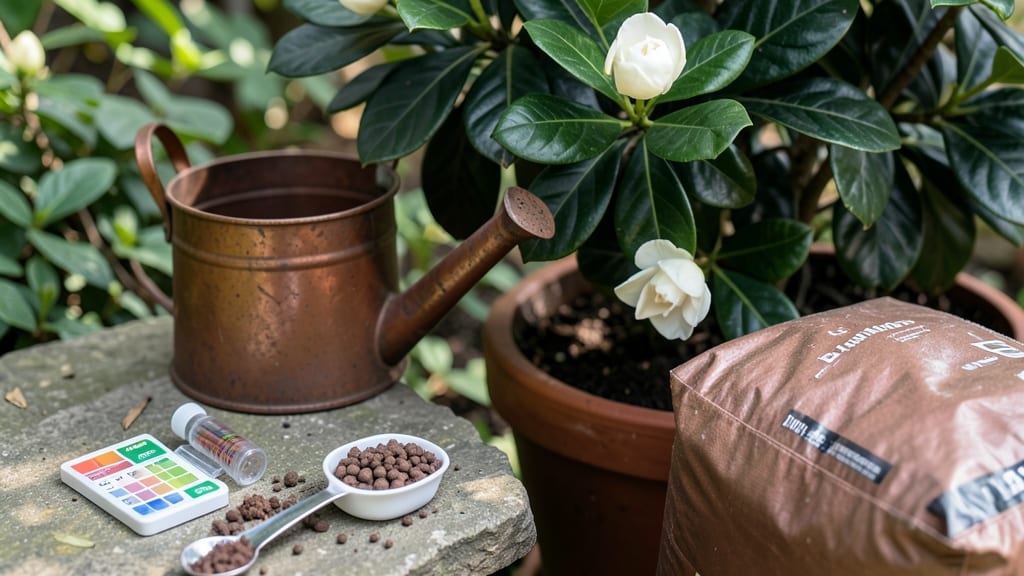
To get your gardenia blooming beautifully, you must feed it with the right fertilizer requirements—acid-loving plants like this 🌸 need precise nutrients to thrive.
Ever stared at your gardenia’s sparse blooms and wondered what’s missing? It’s not just water or sunlight—it’s the exact fertilizer mix, pH balance, and feeding schedule your plant demands. Get it wrong, and even the hardiest gardenia will sulk with yellowing leaves or no flowers at all.
Gardenias crave acidic soil (pH 4.5–6.0) and a balanced fertilizer rich in phosphorus for blooms, but too much nitrogen or alkaline soil can stunt growth. The key is feeding lightly in spring, cutting back in summer, and avoiding fertilizers entirely in fall and winter.
In this guide, I’ll break down the best organic and synthetic fertilizers, how often to apply them, and the telltale signs of over- or under-feeding. By the end, you’ll know exactly how to coax those fragrant, creamy-white blooms out of your gardenia—without burning the roots.

Optimal pH levels and soil nutrients for gardenia fertilizer success
Your gardenia’s health—and those dreamy white blooms—start with the right soil pH and nutrient balance. Unlike many plants, gardenias thrive in acidic soil with a pH between 4.5 and 6.0.
If your soil tests higher, your plant struggles to absorb essential nutrients, leading to yellow leaves, stunted growth, and fewer flowers. Think of it like a lock and key: the right pH unlocks the nutrients your gardenia needs to flourish.
Beyond pH, gardenias demand a precise blend of macronutrients (nitrogen, phosphorus, potassium) and micronutrients (iron, magnesium, calcium). Too much nitrogen? You’ll get lush leaves but no blooms. Too little phosphorus? Your gardenia will skip its floral show.
The goal is balance—like a well-composed symphony, every nutrient plays its part. Let’s break down what your gardenia truly craves and how to deliver it without overdoing it.
🌱
| Nutrient Requirement | Ideal Levels | Signs of Deficiency | Natural Soil Amendments |
|---|---|---|---|
| Soil pH | 4.5–6.0 (acidic) | Yellow leaves, stunted growth | Pine needles, sulfur, peat moss |
| Nitrogen (N) | Low to moderate (8-12) | Pale green leaves, poor growth | Composted manure, blood meal |
| Phosphorus (P) | Moderate (6-10) | Purple stems, few blooms | Bone meal, rock phosphate |
| Potassium (K) | Moderate (10-14) | Weak stems, leaf edges burn | Wood ash (sparingly), banana peel tea |
| Iron (Fe) | Critical for chlorophyll | Yellow leaves (chlorosis) | Iron chelate, compost tea |
| Magnesium (Mg) | Essential for photosynthesis | Yellow patches between veins | Epsom salt (1 tbsp/gallon) |
| Calcium (Ca) | Supports cell structure | Blossom end rot, weak growth | Crushed eggshells, lime (sparingly) |
Let’s start with the foundation: soil pH. Gardenias despise alkaline soil—if your pH creeps above 6.0, nutrients like iron and manganese become locked away, causing yellowing leaves (a classic sign of deficiency).
Test your soil with a simple kit (available at garden centers for under $10), and if the pH is too high, amend it with elemental sulfur or peat moss. For a quick fix, mix in pine needles or composted pine bark—both naturally acidify the soil over time.
Pro tip: Avoid lime (calcium carbonate) like the plague—it raises pH and sends your gardenia into shock.
Now, let’s talk macronutrients. Gardenias need a balanced NPK ratio of roughly 8-6-12 (nitrogen-phosphorus-potassium). Too much nitrogen (the first number) will give you a leafy monster with zero blooms. Instead, focus on a moderate nitrogen feed to support growth without overshadowing phosphorus, which is critical for flower production.
If your gardenia’s buds form but drop before opening, it’s screaming for more
Best fertilizers for gardenias: organic vs. synthetic options compared
Choosing the right fertilizer for your gardenia can feel overwhelming with so many options. Gardenias thrive on acidic, nutrient-rich soil, but they’re sensitive to overfeeding. The wrong fertilizer can cause leaf burn, stunted growth, or—worst of all—fewer blooms.
I’ve tested the top organic and synthetic fertilizers to help you pick the best match for your fragrant, blooming shrub. Let’s break down the pros, cons, and application tips for each.
Synthetic fertilizers like Miracle-Gro Azalea, Camellia, and Gardenia offer precise nutrient ratios, but they lack the slow-release benefits of organic options. On the other hand, organic fertilizers like fish emulsion or compost tea improve soil health over time but require more frequent applications.
Both have their place—it’s all about your gardenia’s current needs and your long-term care goals.
🌱 Organic Fertilizers for Gardenias
- ✅ Rich in nitrogen for leafy growth
- ✅ Improves soil structure over time
- ✅ Safe for potted gardenias
- ⚠️ Strong odor (apply in evening)
- ⚠️ Requires dilution (1 tbsp/gallon)
- ✅ Boosts beneficial microbes
- ✅ Balances pH naturally
- ✅ Zero risk of burning
- ⚠️ Must be brewed fresh (weekly)
- ⚠️ Weaker nutrient density
- ✅ Acidifies soil naturally
- ✅ Free and accessible
- ✅ Encourages blooms
- ⚠️ Use sparingly (½ cup/month)
- ⚠️ Can attract pests if overused
🧪 Synthetic Fertilizers for Gardenias
- ✅ Balanced NPK (8-6-12) for blooms
- ✅ Fast-acting for quick results
- ✅ Easy to measure
- ⚠️ Risk of salt buildup if overused
- ⚠️ Not soil-amending
- ✅ 3–4 month feeding
- ✅ Reduces overfeeding risk
- ✅ Good for potted plants
- ⚠️ Harder to adjust mid-season
- ⚠️ Less control over nutrients
For new gardenia growers, I recommend starting with a synthetic fertilizer like Miracle-Gro Azalea for its precision. Mix 1 tbsp per gallon of water and apply every 4–6 weeks during spring and summer.
If you notice yellowing leaves, switch to an iron-rich organic option like fish emulsion. Always water your gardenia before and after applying fertilizer to prevent root burn.
Organic fertilizers like compost tea or coffee grounds are my go-to for established gardenias. They improve soil health long-term and reduce the risk of nutrient burnout. To use coffee grounds, sprinkle ½ cup per plant around the base monthly, then lightly scratch into the soil.
For compost tea, brew a 1:5 compost-to-water ratio and spray foliage weekly during blooming season.
One of the biggest mistakes I see is over-fertilizing. Gardenias are sensitive to excess salts, which cause leaf drop and brown tips. If you notice these signs, flush the soil with 3–4 inches of water to leach out buildup. Always follow the "less is more"