
Planting
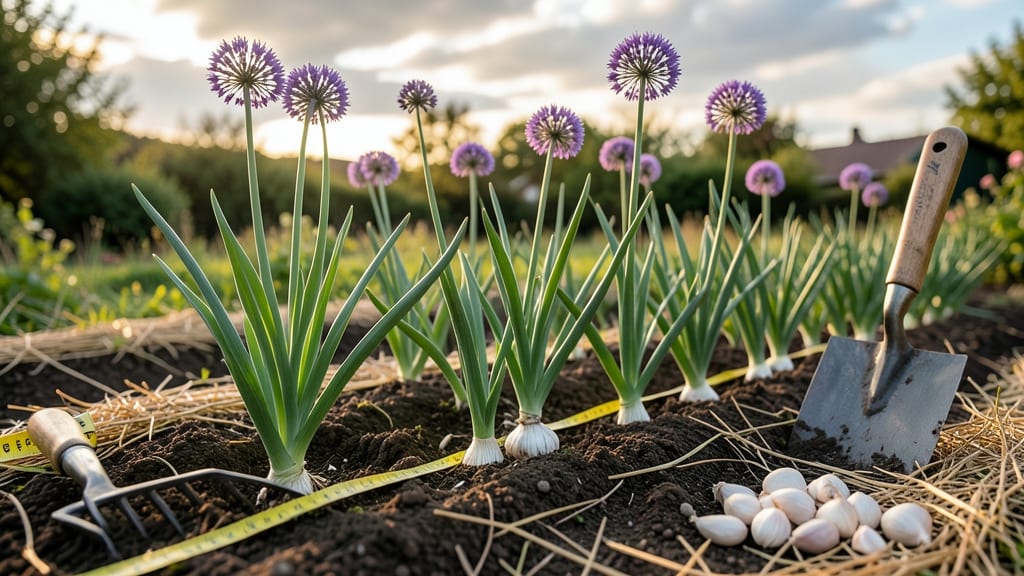
Spacing garlic in your garden by 4–6 inches between cloves and 12–18 inches between rows is the secret to plump, flavorful bulbs 🧄—not just soil or sunlight.
Picture this: You’ve planted your garlic, but by harvest time, the bulbs are small and scraggly. That’s not a soil problem—it’s a spacing issue. Too close, and your garlic fights for nutrients; too far, and you waste garden space. The right distance ensures airflow, prevents disease, and maximizes bulb size.
Whether you’re growing hardneck or softneck varieties, the spacing rules change slightly. Hardnecks need a little more room to develop their signature scapes, while softnecks can handle tighter quarters. Below, I’ll break down the exact layout for your garden, plus common mistakes that shrink your harvest—and how to fix them.
Ready to transform your garlic game? You’ll learn how to adjust spacing for different soil types, when to plant for optimal growth, and pro tips to stretch your harvest season. Let’s get those cloves planted the right way!
Optimal garlic spacing by planting method (cloves vs. bulbs)
Garlic spacing isn’t one-size-fits-all—whether you’re planting individual cloves or pre-sprouted bulbs, the distance between plants directly impacts bulb size and yield. Hardneck varieties (like Rocambole) and softneck varieties (like Silverskin) both need precise spacing, but the method matters most.
Get this wrong, and you’ll end up with small, weak bulbs or disease-ridden crops. Let’s break down the exact measurements for each approach so you can maximize your harvest.
When planting individual cloves, the golden rule is 4–6 inches apart in rows spaced 12–18 inches apart.
This gives each plant enough room to develop a full bulb without competing for nutrients or airflow. Pre-sprouted bulbs, however, need more space—8–12 inches apart in rows—because they’ve already started growing and will expand faster.
Skipping this step often leads to overcrowding, which stunts growth and invites fungal diseases like white rot.
Garlic Spacing Comparison
| Planting Method | Spacing (Inches) | Row Spacing (Inches) | Best For | Notes |
|---|---|---|---|---|
| Individual Cloves | 4–6 inches apart | 12–18 inches apart | Hardneck & Softneck | Plant pointy end up, 2 inches deep. |
| Pre-Sprouted Bulbs | 8–12 inches apart | 18–24 inches apart | Softneck Varieties | Needs more space for bulb expansion. |
| Raised Beds | 6 inches apart | 12 inches apart | All Varieties | Soil warms faster; adjust for early planting. |
| Containers | 3–4 inches apart | N/A (Single Row) | Dwarf Varieties | Use large pots (12+ inches deep). |
🌱 Pro Tip: Use a spacer tool or string guide to mark rows for precision.
For hardneck garlic, which produces scapes (those curly green stems), stick to the 4–6 inch spacing for cloves.
These varieties grow taller and need room to develop their signature hardneck bulbs. Softneck garlic, like the kind you’d find in grocery stores, can handle slightly tighter spacing—5–6 inches apart—but still benefits from wider rows (16–18 inches) to prevent leaf diseases.
If you’re growing in raised beds, you can reduce spacing to 6 inches apart in rows 12 inches apart because the soil warms faster and promotes quicker growth.
One common mistake is assuming "more space is always better." While overcrowding is a problem, over-spacing can also waste garden real estate. For example, planting cloves 8 inches apart might seem safe, but it reduces your total yield per square foot.
Aim for 10–12 cloves per square foot when using the 4–6 inch spacing method. If you’re experimenting with container growing, reduce spacing to 3–4 inches apart but limit your container size to 12+ inches deep to accommodate root growth.
Airflow is just as critical as spacing. Garlic hates humidity and stagnant air, which is why row-to-row distance matters. If your rows are too close (less than 12 inches), moisture lingers, increasing the risk of botrytis blight or rust fungus.
Always space rows 12–18 inches apart to ensure good circulation. In humid climates, consider elevating beds or using drip irrigation to keep foliage dry. Mulching with straw or grass clippings (2–3 inches thick) also helps regulate soil moisture and temperature without smothering the plants.
Variety also plays a role in spacing. Artichoke garlic (a hardneck type) benefits from the full 6-inch spacing because its bulbs are larger. Creole garlic, a softneck, can tolerate 5-inch spacing but still needs 16-inch rows.
If you’re growing elephant garlic (which is technically a leek), increase spacing to 8–10 inches apart—its bulbs can reach the size of a softball! Always check seed packets for variety-specific recommendations, as some heirloom types may have unique growth habits.
Visualizing spacing helps—imagine a grid where each clove or bulb has its own personal bubble. Use a measuring tape or spacer tool to mark your garden before planting. For large plots, lay out string lines between stakes to guide your rows.
If you’re planting in fall, mark your rows now and plant as soon as the soil is workable (usually 4–6 weeks before the first frost). Spring planting follows the same rules, but adjust for your local frost dates to avoid early-season crowding.
Finally, don’t forget that soil type affects spacing needs. In sandy soil, which drains quickly, you can space plants slightly closer (4 inches apart) because they won’t compete as fiercely for water. In clay soil, where moisture lingers, increase spacing to 6 inches apart to prevent root rot. Always amend your soil with compost before planting to improve drainage and nutrient availability. A well-prepared bed with loamy soil (the ideal mix of sand
Common garlic spacing mistakes that shrink your harvest
Even with perfect soil and sunlight, garlic spacing mistakes can sabotage your harvest. Overcrowding is the #1 culprit, forcing plants to compete for nutrients and water, while under-spaced garlic struggles with airflow, inviting fungal diseases like white rot.
I’ve seen gardens where bulbs barely reach 1-inch diameter because spacing was ignored—don’t let that happen to you!
The ideal 4–6 inches between cloves and 12–18 inches between rows gives roots room to expand.
But soil type changes the game: sandy soil drains fast, so you can space cloves closer (4 inches), while clay soil holds moisture longer, requiring wider gaps (6 inches) to prevent rot. Adjusting for your soil saves your harvest from stunted growth.
⚠️ callout-warning ⚠️
- Disease risk: Poor airflow = fungal infections
- Nutrient theft: Plants steal from each other
- Small bulbs: Cloves shrink to ½-inch or less
Watch for these warning signs of poor spacing: yellowing leaves (nutrient competition), small cloves (overcrowding), or mushy bulbs (rot from poor airflow). If you see these, it’s time to act! Dig up overcrowded plants, replant with proper spacing, and add compost to help roots recover. I’ve revived gardens this way—your harvest can too!
For hardneck varieties, space cloves 6 inches apart—they need room for their tall scapes. Softneck garlic, with smaller bulbs, thrives at 4 inches apart.
Skipping this rule? You’ll end up with tiny, weak bulbs that store poorly. Pro tip: Use a measuring tape or spacer tool to keep rows straight and consistent.
Soil compaction worsens spacing issues. Before planting, loosen soil to 6–8 inches deep and mix in compost to improve drainage. In raised beds, reduce spacing to 3–4 inches—the deeper soil lets roots spread wider.
Test your soil’s drainage: If water pools after 2 hours, amend with sand or perlite to prevent rot.
Don’t wait until harvest day to regret spacing mistakes. Start with the right layout, monitor for yellowing leaves or stunted growth, and adjust as needed. With proper spacing, your garlic bulbs will double in size—and your neighbors will ask for your secrets! 🧄