
How To
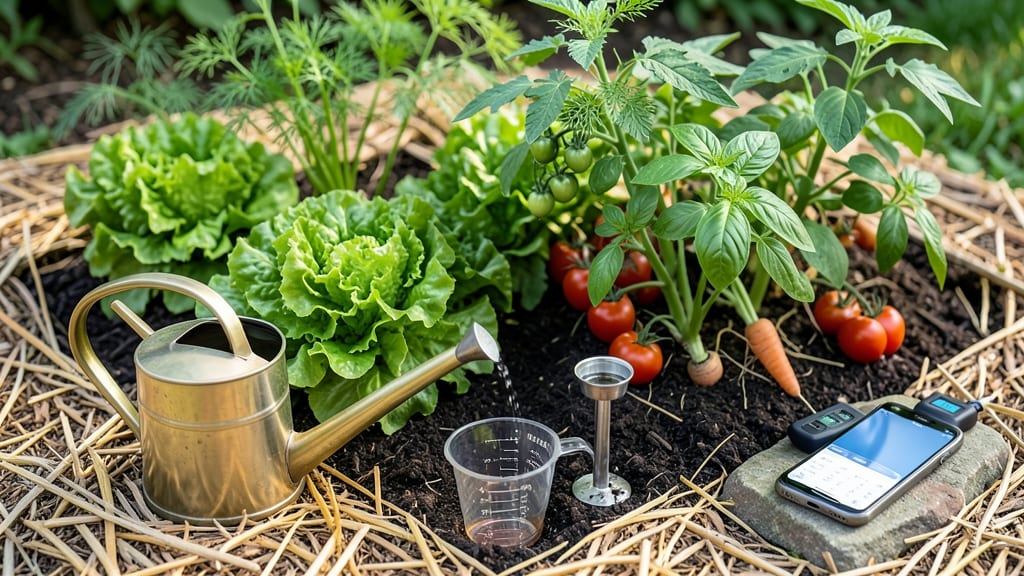
Watering your vegetable garden for the right length of time ensures deep roots and strong plants—yet most gardeners over- or underestimate how long that should be.
Overwatering or underwatering your vegetable garden can ruin months of hard work—yet most gardeners guess how long to water instead of checking the soil. The right moisture method ensures strong roots, better yields, and less wasted water.
This guide breaks down how long to water based on soil type, plant needs, and weather conditions. You’ll learn the soil-moisture check method that prevents wilting, mold, or shallow roots, plus seasonal adjustments to keep your garden thriving.
From sandy soil that drains fast to clay that holds water too long, we’ll cover the exact timing for common vegetables like tomatoes, peppers, and lettuce—so you can water with confidence.


The correct soil-moisture check method for vegetable gardens
Every vegetable plant has different moisture needs, but most gardeners make the mistake of watering based on a schedule rather than actual soil conditions. I’ve learned the hard way that overwatering can drown roots while underwatering stresses plants—both lead to poor yields.
The key is checking soil moisture at the right depth and time of day.
Most vegetables need moisture in the top 2-3 inches of soil, but root crops like carrots or potatoes require deeper checks (up to 6 inches). I recommend testing moisture early in the morning before watering, when conditions are most stable. This helps you understand your garden’s natural water retention.
You don’t need expensive tools to check soil moisture. My go-to method is the finger test, which takes just seconds. For a more precise reading, a moisture meter (like the ones designed for vegetable gardens) gives instant feedback.
Both methods work, but finger tests help you develop a feel for your soil’s moisture levels over time.
How to Check Soil Moisture in 5 Simple Steps
- Choose the right time: Test soil early morning (6-8 AM) when evaporation is minimal. Avoid checking after rain or watering.
- Pick the right depth:
- Leafy greens (lettuce, spinach): 1-2 inches
- Root crops (carrots, potatoes): 3-6 inches
- Fruiting plants (tomatoes, peppers): 2-3 inches
- Use your finger or trowel:
- Stick your index finger 1-2 inches deep into the soil.
- Gently squeeze—if soil clumps slightly but crumbles easily, it’s ideal.
- If it feels dry and powdery, water immediately.
- Compare with a moisture meter (optional):
- Insert the probe to your target depth.
- Readings of 30-50% indicate perfect moisture for most vegetables.
- Below 20% means water now; above 60% risks overwatering.
- Adjust watering based on plant type:
- Leafy greens: Keep soil consistently moist (never soggy).
- Root crops: Let soil dry slightly between waterings to prevent rot.
- Fruiting plants: Deep water 2-3 times per week (adjust for heat).
Leafy greens like spinach and kale thrive in soil that stays moist but not soggy. I’ve found that these plants wilt quickly if their top inch of soil dries out, so I check them daily during hot spells.
For these, aim for soil that feels like a wrung-out sponge—damp but not dripping.
Root vegetables, on the other hand, need a different approach. Carrots and beets develop best when the soil around their roots stays evenly moist but not waterlogged. Overwatering causes them to split or rot, while underwatering leads to tough, woody textures.
I test at 3 inches deep for these crops and water deeply when the soil feels dry at that level.
Fruiting plants like tomatoes and peppers have deeper roots and need consistent moisture to produce fruit. These plants benefit from deep watering (soaking the soil to 6 inches deep) every 2-3 days.
I’ve noticed that shallow watering encourages weak roots, so I always water until moisture reaches the base of the plant.
Seasonal changes dramatically affect how often you need to water. In summer, I check soil moisture twice daily—once in the morning and once in the late afternoon—because heat evaporates water quickly.
During spring or fall, a morning check every 2-3 days is usually sufficient. Always adjust based on rainfall and temperature.
Signs of overwatering include yellowing leaves, mold on soil, or plants that feel mushy when touched. Underwatering shows up as wilting (even in the morning), dry soil cracks, or crispy leaf edges. I keep a small notebook near my garden to track these signs and adjust my watering schedule accordingly.
Remember, the goal is to mimic natural rainfall patterns—deep, infrequent watering encourages strong root growth. With practice, you’ll develop an intuition for your garden’s needs, and your vegetables will thank you with healthier growth and better yields. 🌱💧
How long to water based on soil type and plant needs
Your vegetable garden's soil type determines how long you should water—sandy soil drains quickly and needs shorter bursts, while clay soil holds moisture longer and requires deeper, less frequent watering. Understanding these differences prevents overwatering (root rot) or underwatering (wilting plants).
For example, tomatoes in sandy soil may need 5–10 minutes every 2 days, while the same plants in clay soil thrive with 15–20 minutes every 3 days.
Most gardeners overestimate how long to water because they focus on frequency rather than depth of moisture. A general rule: Water until the soil is moist 6 inches deep—this encourages deep root growth.
Use a soil probe or your finger to check; if the top inch is dry, it’s time to water again. Adjust this based on your local climate—hotter days mean more frequent watering, while cooler weather reduces the need.
| Plant | Soil Type | Water Duration | Frequency | Signs of Overwatering |
|---|---|---|---|---|
| Tomatoes | Sandy | 5–10 mins | Every 1–2 days | Yellow leaves, mold |
| Tomatoes | Clay | 15–20 mins | Every 3 days | Stunted growth, wilting |
| Peppers | Sandy | 8–12 mins | Every 2 days | Blossom end rot |
| Peppers | Clay | 20–25 mins | Every 4 days | Leaf drop |
| Lettuce | Sandy | 3–5 mins | Daily | Bolting, slimy leaves |
| Lettuce | Clay | 10–15 mins | Every 2 days | Yellowing edges |
For leafy greens like lettuce, shallow watering is key—they prefer consistent moisture but can’t tolerate soggy soil.
Water for 3–5 minutes in sandy soil or 10–15 minutes in clay, then check the top inch daily. Root vegetables like carrots need deeper watering to prevent cracking; aim for 10–15 minutes in sandy soil and 20–30 minutes in clay, ensuring moisture reaches 8–10 inches deep.
Always water in the early morning to reduce evaporation and fungal risks.
Watch for visual cues like wilting leaves (underwatering) or yellowing foliage (overwatering). Mold or fungus on leaves or soil is a red flag—adjust your watering immediately. If your garden soil feels too compacted, consider adding compost to improve drainage and water retention. Mulching with straw or wood