Watering
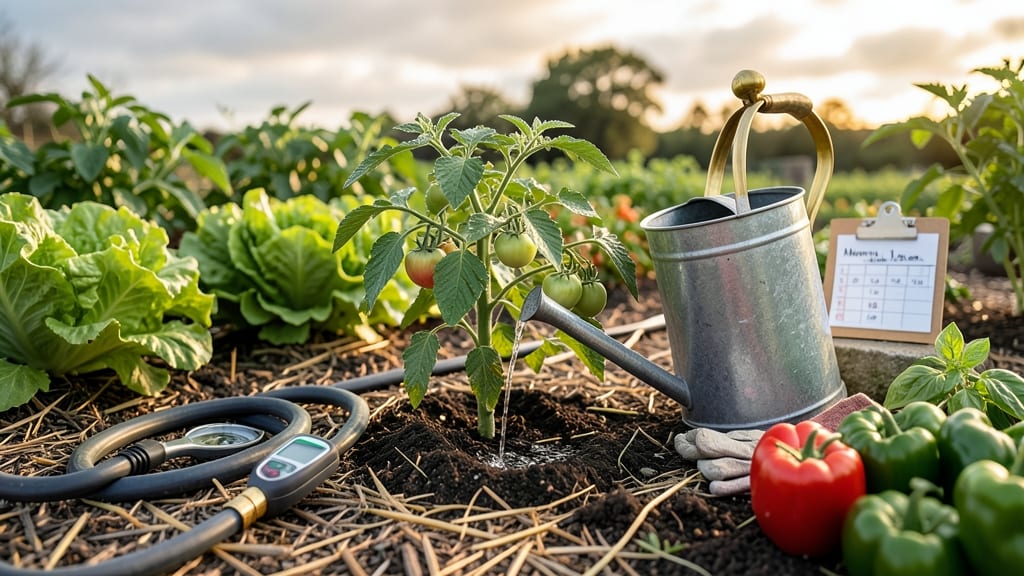
Watering a vegetable garden the right amount—1 to 2 inches per week—is the secret to lush, productive plants that don’t wilt or drown.
Overwatering or underwatering your 🥬 vegetable garden can mean the difference between a thriving harvest and wasted effort—yet most gardeners guess rather than measure. Mastering soil-moisture tests transforms your watering strategy from random to precise, ensuring every plant gets exactly what it needs.
Think about it: too much water drowns roots, while too little stresses plants during their most critical growth stages. The key is checking soil moisture at the right depth—1 to 2 inches for shallow-rooted crops like lettuce, deeper for tomatoes.
In this guide, I’ll walk you through simple soil tests, plant-specific watering rules, and how to adjust for your climate. By the end, you’ll water like a pro—no more guesswork, just healthy, happy plants.


5 Soil-moisture tests to determine when vegetables need water
Watering your vegetable garden isn't about following a rigid schedule—it's about understanding what your plants truly need. Leafy greens like lettuce and spinach prefer consistently moist soil, while root crops such as carrots and potatoes need deeper, less frequent watering.
Without accurate soil-moisture tests, you risk either drowning your plants in soggy soil or leaving them parched and stressed. The key is checking moisture at the right depth and frequency for each vegetable type.
I've tested these methods in my own garden, and the difference between guessing and measuring is like night and day. Overwatering leads to root rot, while underwatering causes stunted growth and bitter produce.
Below, I'll walk you through five foolproof tests—from the simplest finger check to high-tech moisture meters—that will help you water with confidence, no matter what's growing in your beds.
- 🌱 Leafy Greens (e.g., Lettuce, Spinach): Keep top 1-2 inches of soil consistently moist—water when dry to touch.
- 🥕 Root Crops (e.g., Carrots, Potatoes): Water deeply 1-2 times per week to encourage deep root growth.
- 🍅 Fruiting Plants (e.g., Tomatoes, Peppers): Maintain 1-2 inches of moisture at 4-6 inch depth during flowering/fruiting.
- 🌿 Herbs (e.g., Basil, Parsley): Water when top ½ inch feels dry—avoid waterlogged soil.
- 💧 General Rule: Water early morning (6-9 AM) to reduce evaporation and fungal risks.
Let's start with the finger test, the simplest and most accessible method. Stick your index finger about 1 inch deep into the soil near your plants. If it feels dry, it's time to water. For leafy greens, this is your go-to method because they need frequent moisture.
However, for root vegetables, you'll need to check deeper—around 2-3 inches—since their roots grow downward and need consistent moisture at depth.
For a more precise approach, try the trowel check. Dig a small hole about 6 inches deep with a trowel and examine the soil. If it's dry, water thoroughly until moisture reaches that depth.
This method works especially well for tomatoes and peppers, which need deep watering to support their heavy fruit production. I use this test every 2-3 days during peak summer heat to ensure my plants aren't struggling.
If you're growing in containers or raised beds, the weight test can be incredibly useful. Lift your pot or container—if it feels light, it's likely dry and needs water. For in-ground gardens, step on the soil lightly; if it springs back slowly, it's time to water.
This method is quick and doesn't require any tools, making it perfect for busy gardeners who want to stay on top of their watering schedule.
For those who prefer a more high-tech solution, a soil moisture meter is a game-changer. These devices give you an instant reading of moisture levels at various depths. I recommend using one with multiple probes to check both shallow and deep soil layers.
For carrots and beets, set the meter to check at 3-4 inches deep to ensure their roots aren't drying out. Moisture meters are especially helpful in sandy soils, which drain quickly and require more frequent watering.
Don't overlook the visual cues from your plants themselves. While soil tests are essential, wilting leaves or yellowing foliage can signal that your watering routine needs adjustment. Leafy greens often wilt quickly when thirsty, while root crops may show signs of stress only after prolonged dryness.
Combine these visual clues with your soil tests for the most accurate watering strategy.
One common mistake I see is watering based on a fixed schedule rather than soil conditions. For example, during rainy seasons, you might not need to water at all, while hot, dry spells can require daily checks.
Adjust your watering frequency based on the weather forecast and your soil's drainage. Clay soils hold moisture longer, while sandy soils dry out faster—always tailor your approach to your garden's unique conditions.
Pro tip: Mulch your vegetable beds to retain moisture and reduce the need for frequent watering. Organic mulch like straw or shredded leaves helps keep soil cool and slows evaporation. This is especially beneficial for shallow-rooted plants like radishes and lettuce, which dry out quickly in hot weather.
I apply a 2-3 inch layer of mulch around my plants and notice a significant difference in how long the soil stays moist.
Remember, the goal is to keep your vegetable garden consistently moist but not soggy. Overwatering can be just as damaging as underwatering, leading to root rot and fungal diseases.
By mastering these soil-moisture tests, you'll create an optimal environment for your plants to thrive, resulting in a bountiful and healthy harvest. Happy gardening!
Watering schedules by vegetable type: how often and how deep
Not all vegetables crave the same amount of water—what works for leafy greens like lettuce can drown root vegetables like carrots. Understanding your plants' needs prevents blossom-end rot in tomatoes and stunted growth in peppers.
The key is matching watering depth to root depth and adjusting for your soil type (sandy drains fast; clay holds moisture longer).
For example, tomatoes need 1-2 inches of water per week, delivered deeply to encourage strong root systems.
In sandy soil, this might mean watering twice daily, while clay soil may only need weekly deep soakings. Peppers, on the other hand, prefer consistent moisture but hate soggy soil—aim for 1 inch per week and focus on keeping the soil evenly damp.
Here’s a quick reference for your most common vegetables, tailored to growth stages and climate zones:
| Vegetable | Water Frequency | Depth per Watering | Soil Adjustments | Pitfalls to Avoid |
|---|---|---|---|---|
| Tomatoes | 2-3x/week (daily in heat) | 1-2 inches | Mulch to retain moisture | Blossom-end rot (inconsistent water) |
| Peppers | 2-3x/week | 1 inch | Avoid wetting leaves | Root rot (overwatering) |
| Lettuce | Daily (light water) | ½ inch | Shallow roots—keep topsoil moist | Bolting (drought stress) |
| Carrots | 2x/week | ½-1 inch | Deep, loose soil for roots | Forked roots (uneven water) |
In hot climates (zones 9-11), increase frequency by 30% and water early morning to prevent evaporation. Cool climates (zones 3-5) can often stretch watering to every 3-4 days, but monitor soil moisture closely.
A simple trick: stick your finger 2 inches deep—if it feels dry, it’s time to water.
Young seedlings need shallow, frequent watering (every 1-2 days) to establish roots, while mature plants thrive on deep, infrequent waterings.
For instance, tomato plants in their fruiting stage should receive water at the base, not the leaves, to prevent fungal diseases like early blight. Drip irrigation is ideal for consistency, but a soaker hose works too—just avoid overhead sprinklers.
Pro tip: Mulch heavily (2-3 inches of straw or wood chips) to lock in moisture and reduce weeds. This cuts water needs by up to 40% while keeping roots cool.
Adjust your schedule seasonally—spring and fall plants often need less than those battling summer heat. Pay attention to your plants’ wilting cues; they’re smarter than you think!