
Watering
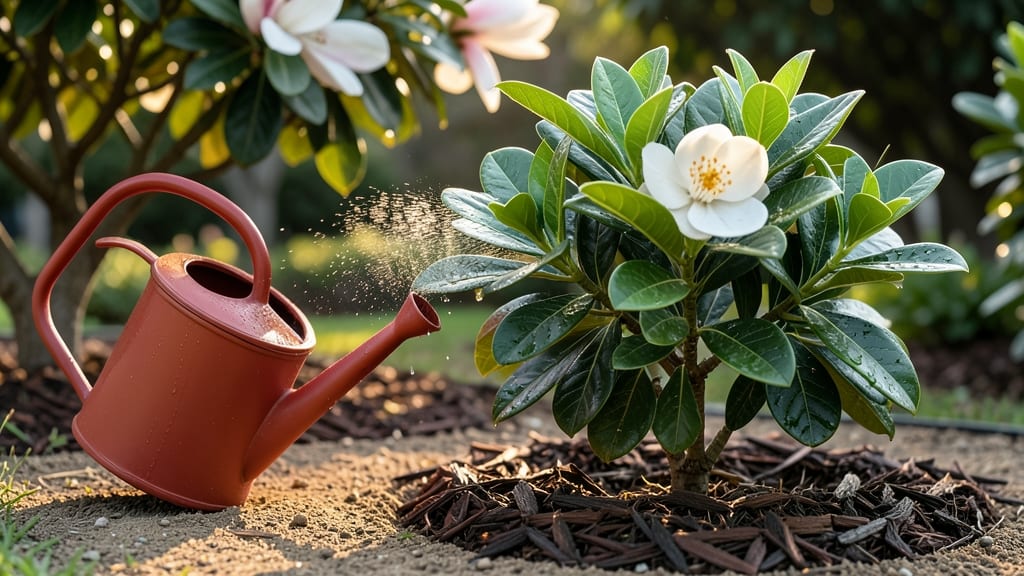
How much water do gardenias need? The answer is deep, consistent moisture—about 1 to 1.5 inches per week—to keep those fragrant blooms thriving without drowning their roots.
Struggling to keep your gardenias blooming beautifully without turning the soil into a soggy mess? The secret lies in mastering their watering needs—too much or too little can mean the difference between vibrant flowers and wilted leaves.
Most gardeners either drown their plants in an attempt to keep them hydrated or let them dry out completely, both of which stress the shrub. The key is understanding how much water gardenias truly need, and when to adjust based on the season, soil type, and even your local climate.
In this guide, I’ll break down a simple weekly watering schedule, share signs of over- and under-watering, and reveal the best techniques—like mulching and deep soaking—to keep your gardenias lush and fragrant all season long.


Gardenia watering schedule by season: how much and when to water for optimal growth
Gardenias thrive on consistent moisture, but their watering needs shift dramatically with the seasons. In spring and summer, they crave more frequent hydration to fuel their lush blooms, while fall and winter demand a gentler touch to prevent root rot.
The key? Understanding your local climate, soil type, and plant maturity to strike the perfect balance.
I’ve learned the hard way that overwatering is just as deadly as underwatering for these tropical beauties. Too much water suffocates roots, while too little causes buds to drop before they even open.
Let’s break down exactly how much water gardenias need each season, plus the best times to water for maximum bloom potential.
| Season | Frequency | Amount per Watering | Best Time | Soil Check |
|---|---|---|---|---|
| Spring | Every 2-3 days | 1-1.5 gallons | Morning (6-9 AM) | Top 1-2 inches dry |
| Summer | Daily or every other day | 1.5-2 gallons | Early morning | Top 1 inch dry |
| Fall | Every 4-5 days | 1 gallon | Late morning | Top 2-3 inches dry |
| Winter | Bi-weekly | 0.5-1 gallon | Mid-morning | Top 3-4 inches dry |
Note: Adjust for potted gardenias (water more frequently) and container size.
In spring, gardenias wake up from dormancy and need 1-1.5 gallons of water every 2-3 days. This is when they start pushing new growth and buds, so morning watering is critical to reduce evaporation and fungal risks.
I always check the soil by sticking my finger 1-2 inches deep—if it feels dry, it’s time to water.
Summer is the most demanding season for gardenias, especially in hot, dry climates. You may need to water daily or every other day, delivering 1.5-2 gallons per watering. Mulching with 2-3 inches of organic mulch helps retain moisture and keeps roots cool.
Pro tip: Water at the base of the plant, not overhead, to protect those delicate blooms from scorching.
As temperatures drop in fall, gardenias slow their growth and need less water. Reduce frequency to every 4-5 days with 1 gallon per watering. This is also when I reduce fertilizer to prepare the plant for winter dormancy.
Always water in the late morning to avoid evening dampness, which can invite pests.
Winter care is all about minimal intervention. Most gardenias enter dormancy, so I water bi-weekly with just 0.5-1 gallon. The goal is to keep the soil slightly moist, not soggy.
If you’re in a mild winter zone, you might water a bit more, but always let the top 3-4 inches dry out between waterings.
One common mistake I see is ignoring the soil type. Gardenias hate heavy clay soil that stays wet. If your gardenia is in containers, ensure pots have drainage holes and use a well-draining potting mix.
For in-ground plants, amending the soil with peat moss or compost improves drainage and water retention.
Environmental factors like humidity and wind also play a role. In dry, windy areas, gardenias lose moisture faster, so I water more frequently. Conversely, in humid climates, I space waterings out slightly.
Always adjust based on your local conditions—your gardenia will thank you with more blooms and fewer stress signs.
Finally, never skip the soil moisture check. Stick your finger 2-3 inches deep—if it’s dry, water; if it’s damp, wait. Overwatering is the #1 killer of gardenias, so when in doubt, wait an extra day.
With this seasonal schedule, your gardenias will stay healthy, fragrant, and blooming all year round. 🌸
Signs of overwatering vs underwatering gardenias: how to fix common mistakes
Gardenias are finicky about water—too much and their roots suffocate, too little and they droop like sad balloons. The key is finding that sweet spot where soil stays moist but not soggy.
I’ve seen gardenias thrive after just a few adjustments, so let’s decode their water stress signals before it’s too late.
Start by checking the soil moisture with your finger. Stick it 2 inches deep—if it feels damp, hold off on watering. If it’s bone-dry, your gardenia’s screaming for hydration.
But here’s the catch: gardenias hate wet feet, so even well-meaning gardeners drown them by watering on a schedule instead of by need.
How Much Water Do Gardenias Need?
- Water deeply 2-3x/week in summer
- Use morning watering to reduce fungal risk
- Check soil before watering—never on a schedule
- Ensure well-draining soil (amend with peat moss if needed)
- Reduce watering in fall/winter to 1x/week
- Let soil stay soggy for days (root rot risk)
- Water at night (encourages mildew)
- Use hard water (builds up salts)
- Ignore yellowing leaves—could be overwatering
- Skip mulching (helps retain moisture)
"Gardenias drink deeply but hate standing water—think of them like a thirsty friend who needs a long sip, not a constant trickle."
Yellow leaves are the #1 red flag—if they’re soft and mushy, you’re overwatering. But if they’re crispy and brown at the edges, your gardenia’s dehydrated. Another giveaway? Dropping buds—this happens when roots can’t absorb water fast enough, often from compacted or waterlogged soil.
To fix overwatered gardenias, stop watering immediately and let the top 3 inches of soil dry out. If the roots smell rotten, trim away the mushy parts with sterilized pruners and repot in fresh, acidic potting mix.
For underwatered plants, soak the root zone thoroughly until water runs out the drainage holes, then mulch heavily to lock in moisture.
Pro tip: Use a moisture meter ($10 at garden centers) to avoid guesswork. Aim for 50-60% moisture in the root zone—any higher risks rot, any lower stresses the plant. And always water at the base of the plant, not overhead, to protect those fragrant blooms from fungal spores.
With these fixes, your gardenias will bounce back in 2-4 weeks. The secret? Pay attention to their leaves and buds—they’re always talking to you. Just listen closely, and you’ll never drown (or dehydrate) them again!