
Watering
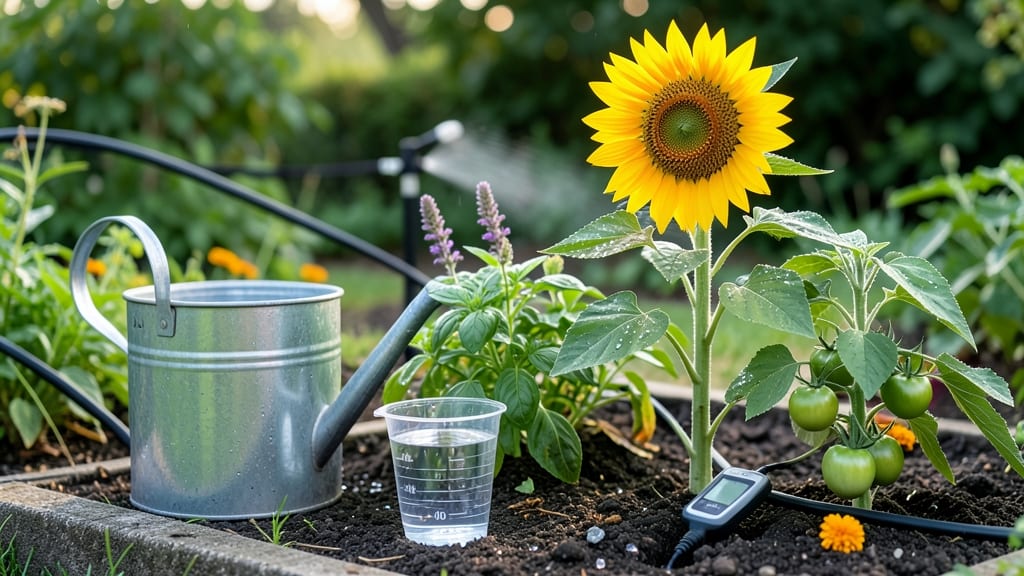
Daily water requirements by plant type: the science-backed breakdown
Watering your garden isn’t about following a rigid schedule—it’s about understanding your plants’ transpiration rates and root depth. Leafy vegetables like lettuce need 1-1.5 inches of water weekly, while deep-rooted plants like tomatoes thrive with 2-3 inches.
The key is matching water supply to the plant’s natural needs, not just guessing. For example, herbs like basil wilt quickly with underwatering but rot if overwatered.
Plant water needs vary dramatically based on their biological structure. Succulents like aloe vera store water in their leaves, needing only 0.5 inches monthly, while thirsty hydrangeas demand 1-2 inches weekly to maintain vibrant blooms.
Even within categories, differences exist: shallow-rooted marigolds dry out faster than deep-rooted lavender. Understanding these distinctions prevents both drought stress and root suffocation.
| Plant Type | Daily Water Need (inches) | Root Depth | Key Factors |
|---|---|---|---|
| Leafy Vegetables (lettuce, spinach) | 0.25–0.5 | Shallow (6–12 inches) | High leaf surface area; wilts fast |
| Fruiting Plants (tomatoes, peppers) | 0.5–1.0 | Moderate (12–24 inches) | Deep roots; needs consistent moisture |
| Herbs (basil, cilantro) | 0.25–0.5 | Shallow (6–12 inches) | Fast-growing; sensitive to overwatering |
| Flowers (roses, hydrangeas) | 0.5–1.5 | Moderate (12–36 inches) | Bloom-heavy; needs steady hydration |
| Trees/Shrubs (maple, boxwood) | 0.25–0.75 | Deep (36+ inches) | Slow water uptake; deep soak needed |
| Succulents (aloe, cacti) | 0.05–0.1 | Very shallow (2–6 inches) | Water-storing leaves; drought-tolerant |
Transpiration—the process where plants release water vapor—plays a huge role. Plants with large leaf surfaces, like sunflowers, lose water faster than those with smaller leaves, such as thyme.
Even the time of day matters: watering in the early morning reduces evaporation loss by up to 30% compared to evening watering. For example, my zucchini plants produce better when watered at dawn, while my roses benefit from a midday top-up during heatwaves.
Don’t overlook soil type—it drastically alters water retention. Sandy soil drains quickly, requiring daily watering for shallow-rooted plants, while clay soil holds moisture longer, reducing frequency to every 3-4 days.
I once struggled with my strawberries until I amended the soil with compost, which improved water retention and cut my watering time in half. Test your soil’s moisture by digging 2 inches deep—if it’s dry, it’s time to water.
How climate and soil type adjust your watering schedule
Your garden’s watering needs aren’t static—they shift with seasonal temperatures, soil composition, and even local humidity. In USDA Zone 5, where winters are harsh, plants might need only 0.5 inches of water weekly in winter, while Zone 10’s mild climate demands daily watering during summer droughts.
The key is understanding how these factors interact to create your unique watering formula.
Let’s start with soil type, which dramatically alters water retention. Sandy soil drains quickly, requiring frequent shallow watering (every 2–3 days), while clay soil holds moisture longer, needing deep watering every 5–7 days.
Even loamy soil—the gardener’s gold—balances this with 1–1.5 inches of water per week. Test your soil by squeezing a handful: if it crumbles easily, it’s dry; if it stays clumped, it’s moist.
Next, factor in humidity levels. In humid climates like the Southeast, plants lose less moisture through evaporation, so you might water 20% less than in dry regions. Use a rain gauge to track natural precipitation—if you get 0.5 inches of rain, halve your watering for the week.
For container gardens, this rule doubles: pots dry out 3x faster than in-ground soil.
Seasonal shifts demand the most attention. During summer’s peak heat, even drought-resistant lavender or rosemary may need daily watering, while winter’s dormancy reduces needs to once every 2–3 weeks. Mulching with straw or wood chips retains moisture, cutting water use by up to 30%.
I’ve seen tomato plants in Zone 8 thrive with mulch alone, needing only supplemental water every 10 days in summer.
Finally, wind exposure plays a sneaky role. Windy areas lose 15–