
Plants
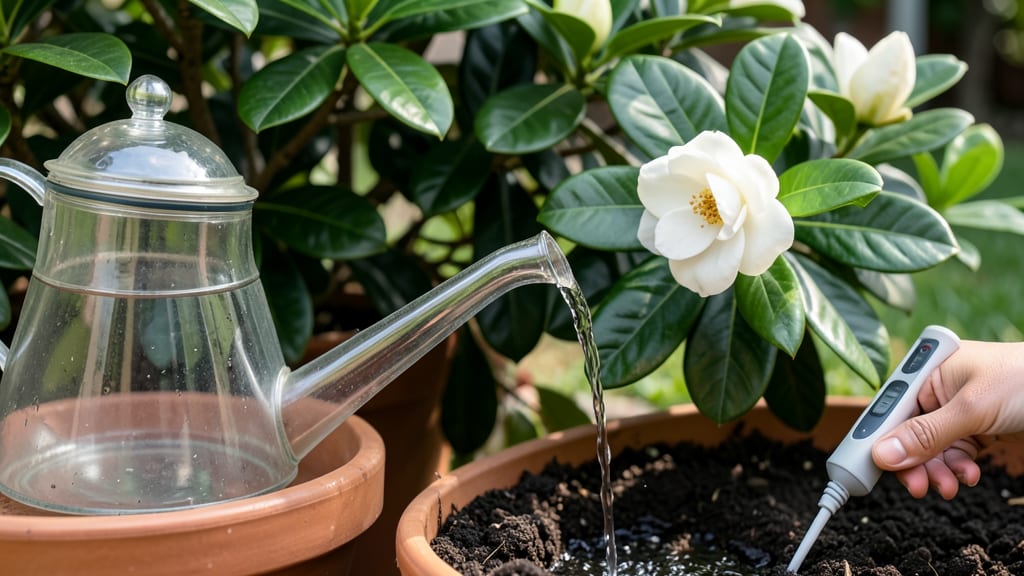
A gardenia plant needs about 1 to 1.5 inches of water per week—deep soaks that keep the soil evenly moist but never soggy. If you’ve ever watched your 🌸 gardenia leaves yellow or buds drop without blooming, watering is likely the culprit.
Too little water stresses the roots, while overwatering suffocates them—both lead to the same sad result. The key is consistency: check the top inch of soil before watering, and adjust for your climate. In summer heat, you might water daily, but winter slows things down to every two weeks.
Here’s the real secret: gardenias thrive when their soil stays moist but well-drained. A quick finger test (stick your finger in the soil—if it’s dry at an inch deep, it’s time to water) beats guessing. I’ll show you how to spot over- or under-watering signs and fix them fast.
Ready to turn your gardenia into a blooming superstar? You’ll learn the exact watering schedule by season, how mulch can save you time, and the one trick that keeps roots happy even in heavy clay soil.


Ideal watering schedule for gardenia plants by season
Gardenia plants thrive when their watering routine matches their natural growth cycles. Unlike drought-tolerant succulents, gardenias demand consistent moisture but hate soggy roots. The key is balancing frequency, depth, and timing—especially as seasons shift.
In my experience, gardenias in USDA Zone 6a (like mine) need the most attention during summer’s heat, but winter care is equally critical.
Your gardenia’s soil type plays a huge role. Sandy soil drains too fast, while clay holds moisture too long—both stress gardenias. Aim for loamy, acidic soil (pH 5.0–6.5) amended with compost. If your soil doesn’t drain well, raise your plant in a well-draining pot with perlite.
Morning watering is non-negotiable: it reduces fungal risks and lets roots absorb moisture before the sun peaks.
🌸 Pro Tip: Stick your finger 1–2 inches into the soil. If it’s dry, water; if damp, wait. Overwatering is the #1 killer of gardenias—it causes root rot and yellow leaves faster than you’d think.
| Season | Frequency | Water Depth | Best Time | Climate Notes |
|---|---|---|---|---|
| Spring | Every 2 days | 1–1.5 inches | Morning | Increase if rainy |
| Summer | Daily or every other day | 1.5–2 inches | Early morning | Mulch to retain moisture |
| Fall | Every 3–4 days | 1 inch | Morning | Reduce as temps drop |
| Winter | Bi-weekly | 0.5–1 inch | Mid-morning | Avoid frost contact |
Summer is the most critical season for gardenias. When temperatures hit 85°F+, I water mine daily—but only in the early morning. Evening watering leads to fungal diseases like powdery mildew, which I’ve seen ruin blooms in just days.
If you’re in a hot, dry climate, consider drip irrigation to deliver water directly to the roots without wetting leaves.
Fall signals a shift to less frequent watering. As nights cool, gardenias enter a dormant-like state. I cut back to every 3–4 days and monitor soil moisture closely.
Overwatering in fall can rot roots before winter, so always check for dampness before watering. Mulch with 2–3 inches of pine bark to insulate roots and retain moisture.
Winter care is often overlooked, but gardenias still need minimal hydration. In USDA Zone 6a, I water mine bi-weekly unless we get snow. The goal is to keep soil slightly moist, not soggy.
If your gardenia is potted, move it to a protected spot away from freezing winds. Indoor gardenias may need humidity trays to mimic outdoor moisture levels.
Climate matters more than you’d think. In humid regions, gardenias need less water because air moisture keeps soil damp longer. In arid zones, you’ll water daily in summer but must mulch heavily to prevent evaporation.
I once had a gardenia in Arizona—it thrived with drip irrigation and a thick mulch layer.
Signs of underwatering include drooping leaves, crispy edges, and bud drop. Overwatering? Look for
Signs your gardenia is overwatered or underwatered (and how to fix it)
Gardenia plants are famously finicky about water—too much causes root rot, while too little leads to crispy leaves. The key is consistent moisture without soggy soil. I’ve seen gardeners lose their prized blooms because they mistook thirsty roots for a love of water.
Let’s decode the visual clues so you can rescue your gardenia before it’s too late.
Start by checking the soil moisture with your finger. Stick it 2 inches deep—if it feels damp, hold off on watering. Gardenias thrive when the top 1-2 inches of soil dry out between waterings.
Overwatering often happens when well-meaning gardeners water on a strict schedule instead of checking soil conditions first.
⚠️ How Much Water Does a Gardenia Plant Need?
1-2 inches of soil dryness between waterings is ideal. In summer heat, gardenias may need daily watering, but never let them sit in soggy soil. Use the finger test—if the soil feels dry at 2 inches, it’s time to water deeply until it drains from the bottom.
💡 Pro Tip: Morning watering prevents fungal diseases by letting foliage dry before nightfall.
Yellowing leaves are the first warning sign of overwatering, often starting at the bottom of the plant. Unlike nutrient deficiencies, these leaves feel squishy when pressed. Root rot spreads quickly in waterlogged soil, and your gardenia may even drop buds or flowers as it struggles to survive.
If you notice a musty smell at the base, act fast—this is a red flag for rot.
Underwatered gardenias show crispy, brown edges on leaves that feel dry to the touch. The plant may also droop dramatically in the afternoon, even after watering. Unlike wilting from heat stress, underwatered gardenias don’t bounce back quickly.
Check the pot’s drainage holes—if they’re clogged, water can’t escape, mimicking overwatering while the roots actually starve.
To fix an overwatered gardenia, stop watering immediately and repot it in fresh, well-draining soil. Trim any mushy roots with sterilized scissors, then place the plant in a shady spot for a week to recover.
For underwatered plants, soak the soil thoroughly until water runs out the drainage holes, then reduce future watering to every 2-3 days in summer or 3-4 days in cooler months.
Mulch with 2-3 inches of organic material (like pine bark) to retain moisture without suffocating roots. And always water at the base of the plant, not the leaves, to prevent fungal issues. With the right balance, your gardenia will reward you with fragrant blooms all season.