
Watering
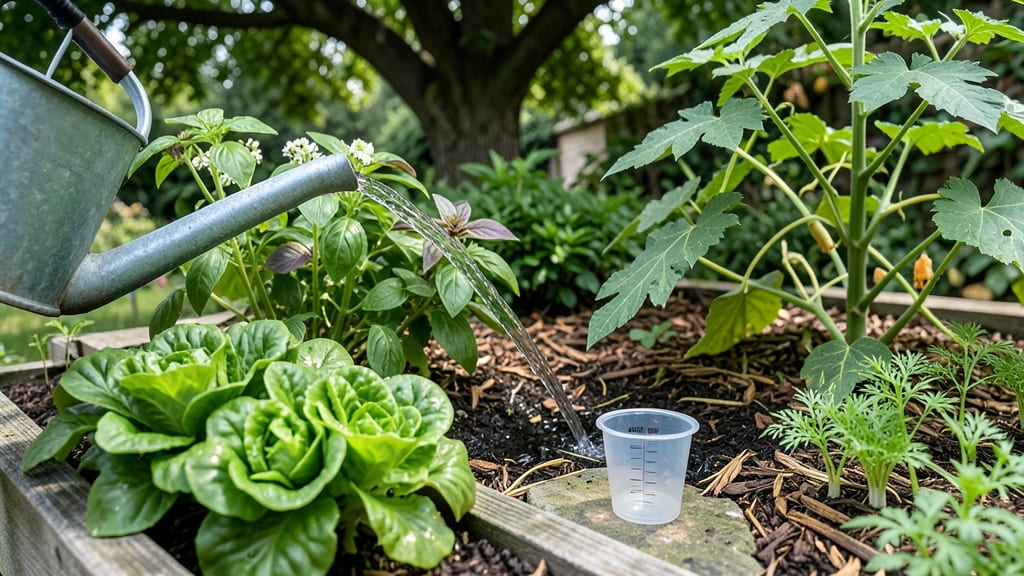
A vegetable garden needs 1 to 2 inches of water per week to thrive—whether from rainfall or your hose—because too little or too much can ruin your harvest faster than you think.
Picture this: you’ve spent weeks nurturing your 🥬 patch, only to watch your tomatoes split or your lettuce bolt because the watering was off. The truth is, most gardeners either drown their plants or leave them parched, and neither leads to a bumper crop.
This guide breaks down the exact watering schedule for common vegetables, from leafy greens that hate soggy roots to fruiting plants that need deep, infrequent drinks. We’ll also cover how to adjust for your soil type, climate, and even the time of day you water.
By the end, you’ll know not just how much to water, but when and how—so your garden stays healthy, productive, and free from the guesswork that kills so many plants.


Weekly water requirements for common vegetable plants by type
Understanding how much water your vegetable garden needs isn't about a one-size-fits-all approach.
Different plants have unique hydration needs based on their growth habits and life cycles. Leafy greens like lettuce and spinach prefer consistent moisture, while root vegetables such as carrots and beets need deep, infrequent watering to prevent splitting.
Meanwhile, fruiting plants like tomatoes and peppers thrive with steady watering to support heavy fruit production.
I’ve broken down the weekly watering needs by plant type to simplify your gardening routine. The key is deep watering—soaking the root zone rather than surface watering—which encourages stronger roots and healthier plants.
For most vegetables, aim for 1-2 inches of water per week, but adjust based on rainfall, soil type, and temperature. Sandy soils dry faster, while clay holds moisture longer.
Here’s a quick reference for the most common vegetable categories, including how often to water and how much to provide. This table will help you tailor your watering schedule for a thriving garden.
| Plant Type | Water Frequency | Water Amount | Deep Watering Depth | Notes |
|---|---|---|---|---|
| Leafy Greens (Lettuce, Spinach, Kale) | Daily to every other day | ½–1 inch per watering | Top 4–6 inches | Keep soil moist; avoid waterlogging |
| Root Vegetables (Carrots, Beets, Radishes) | Every 2–3 days | 1–1.5 inches per week | Deep soak to 8–12 inches | Inconsistent watering causes splitting |
| Fruiting Plants (Tomatoes, Peppers, Cucumbers) | Every 2–3 days (daily in heat) | 1–2 inches per week | Soak roots 6–12 inches deep | Avoid wetting leaves to prevent disease |
| Herbs (Basil, Parsley, Cilantro) | Every 2–3 days | ½–1 inch per watering | Top 4–6 inches | Drought-tolerant once established |
| Legumes (Beans, Peas, Peanuts) | Every 3–4 days | 1 inch per week | Soak roots 6 inches deep | Reduce watering as pods mature |
For leafy greens, shallow but frequent watering mimics their natural habitat. These plants grow quickly and need steady moisture to prevent bolting (premature flowering). Use a gentle spray or drip irrigation to keep the soil evenly damp, especially during hot afternoons.
If you notice the leaves wilting by midday, it’s a sign they need more frequent watering.
When it comes to root vegetables, deep watering is critical. Carrots and beets, for example, develop cracks or deformities if their soil dries out unevenly. I recommend using a soaker hose or drip irrigation to deliver water directly to the root zone.
Aim to water every 2–3 days during dry spells, but adjust based on your soil type. Clay soils retain moisture longer, so you may only need to water every 4–5 days, while sandy soils dry out faster.
Fruiting plants like tomatoes and peppers are heavy drinkers, especially when bearing fruit. These plants need 1–2 inches of water per week, delivered deeply to encourage root growth. A common mistake is watering the leaves, which can lead to fungal diseases like blight. Instead, water at the base of the plant early in the morning to allow foliage to dry quickly. During peak summer heat, you may need to water daily to prevent stress.
Herbs like basil and parsley are often overlooked but have specific watering needs. While they’re somewhat drought-tolerant once established, they thrive with consistent moisture during their early growth stages. Water herbs every 2–3 days
Signs your vegetable garden is overwatered or underwatered (and how to fix it)
Even with the best intentions, it's easy to misjudge how much water your vegetable garden truly needs. Too little, and your plants will wilt and struggle; too much, and you risk root rot or fungal diseases.
The key is learning to read your plants' signals—both visual and tactile—so you can adjust before damage sets in.
Start by checking the soil moisture 1-2 inches below the surface. Stick your finger in—if it feels dry, your plants need water. If it's soggy, you're overdoing it. This simple test saves hours of guesswork and prevents common watering mistakes that stifle growth.
Most vegetables need 1-2 inches of water per week, but this varies by plant type and season. Leafy greens like lettuce tolerate more frequent light watering, while root crops like carrots need deep, infrequent soaks. Morning watering (before 10 AM) is ideal—it reduces evaporation and fungal risks.
Use a rain gauge or tuna can to measure water output from your hose. Aim for consistency: shallow, daily watering stresses roots, while deep, infrequent watering encourages strong growth. Adjust based on rainfall and soil type (sandy soil drains faster than clay).
Yellowing leaves are a classic sign of overwatering, but don't assume it's always excess water. Check the leaf veins: if they're dark or the leaves feel mushy, you're drowning your plants. Mold or mildew on soil or leaves is another red flag—these thrive in soggy conditions.
Pull back on watering immediately and improve drainage by adding compost or perlite to heavy soil.
On the flip side, wilting doesn't always mean thirst. Some plants, like tomatoes, wilt slightly in the heat but recover at night. Dig deeper: if the soil is bone-dry below the surface, water deeply.
If the topsoil is moist but leaves are crispy, your plants might be suffering from underwatering stress or even salt buildup from poor-quality water.
Mulch is your secret weapon for balancing moisture. Apply a 2-3 inch layer of organic mulch (straw, wood chips, or leaves) around plants to retain soil moisture and regulate temperature.
This reduces evaporation by up to 30%, cutting your watering needs by half in hot months. Just keep mulch 2 inches away from stems to prevent rot.
For stubborn cases, adjust your watering schedule based on the season. In summer, water early in the morning to minimize evaporation, while in winter, reduce frequency to once every 10-14 days unless you're growing cold-hardy crops like kale.
Always water at the base of plants, not overhead, to protect leaves from disease.
Remember, every garden is unique. Keep a watering journal to track what works—note soil type, rainfall, and plant responses. With time, you'll develop an intuitive sense of when your vegetables are truly thirsty or drowning in excess moisture.