
Watering
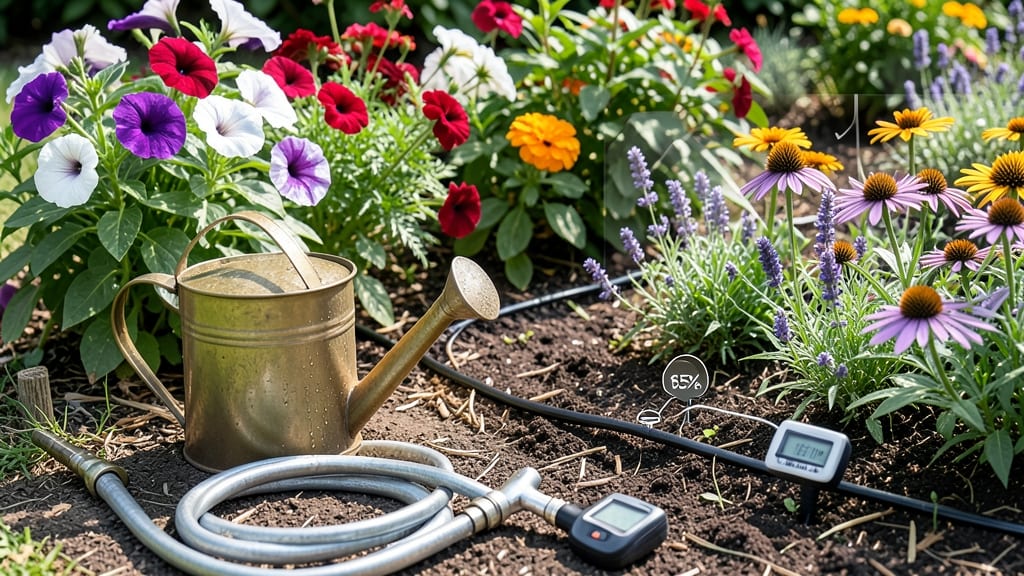
Watering your flower garden the right way means knowing how often to water it without drowning or starving your blooms 🌸—and the answer changes more than you think.
Struggling to keep your flower garden vibrant and healthy? Overwatering or underwatering can both kill your blooms—so getting the watering schedule right is key to a thriving garden. In Zone 6a, where spring blooms start as early as April, timing matters even more than you’d expect.
Most flower gardens need about 1-2 inches of water per week, but that shifts dramatically between summer’s heat and winter’s chill. Annuals like petunias demand frequent watering, while perennials like daylilies can stretch their roots deeper and survive longer dry spells.
Below, I’ll break down the exact schedule by season, plant type, and soil conditions—plus the easy tricks to check if your garden is thirsty or soggy. Ready to stop guessing and start growing?
How often to water flower gardens by plant type and season
Watering your flower garden isn't a one-size-fits-all task—it depends on plant type, seasonal demands, and even your local climate. Annuals like marigolds and petunias need consistent moisture, while drought-tolerant lavender or yarrow can handle less.
Understanding these differences prevents wilting or root rot, keeping your blooms vibrant all season.
Seasonal shifts also change watering needs dramatically. Summer heat demands frequent deep watering, while winter dormancy often requires minimal moisture. Even soil type plays a role—sandy soil drains quickly, while clay holds moisture longer.
Let's break down the ideal watering schedule for annuals, perennials, and bulbs so you can tailor your approach.
| Plant Type | Season | Watering Frequency | Soil Moisture Check | Notes |
|---|---|---|---|---|
| Annuals (e.g., petunias, zinnias) | Spring | Every 2-3 days | Top 1-2 inches dry | Fast-growing; needs consistent moisture |
| Annuals (e.g., petunias, zinnias) | Summer | Daily (early morning) | Top 1 inch dry | Heat increases evaporation; mulch helps |
| Perennials (e.g., daylilies, coneflowers) | Spring/Fall | Every 5-7 days | Top 2-3 inches dry | Established roots; deeper watering |
| Perennials (e.g., lavender, sedum) | Summer | Every 7-10 days | Top 3 inches dry | Drought-tolerant; reduce frequency |
| Bulbs (e.g., tulips, daffodils) | Spring (after blooming) | Every 10-14 days | Top 4 inches dry | Minimal water after foliage dies back |
| All Types | Winter | Monthly (light) | Top 6 inches dry | Prevents frost heave; avoid soggy soil |
For annual flowers, like geraniums or impatiens, stick to the 1-2 inch weekly rule during peak growing months. These thirsty plants wilt quickly when dry, but overwatering can drown their shallow roots.
I always check soil moisture by sticking my finger 1-2 inches deep—if it feels dry, it's time to water.
Perennials like black-eyed Susans or bee balm are more resilient once established. In spring and fall, water deeply every 5-7 days to encourage strong root growth. During summer heatwaves, I increase frequency to every 3-4 days and water in the early morning to reduce evaporation and fungal risks.
Bulbs like tulips and hyacinths have unique needs. After they bloom in spring, reduce watering to <
Signs your flower garden needs water (or too much water)
Your flower garden sends clear signals when it's thirsty or drowning in water. Yellowing leaves, drooping petals, or mushy stems are all red flags. But how do you tell if your plants need a drink or a break from the watering can?
Let's decode the visual cues so you can keep your blooms happy and healthy.
First, check the soil moisture by sticking your finger about 1-2 inches deep. If it feels dry, your flowers likely need water.
But if it's soggy or smells foul, you're overdoing it. Wilting in the heat is normal, but if leaves stay limp even after watering, that's a sign of root stress.
🌱 Underwatering often causes crispy leaf edges and stunted growth, while overwatering leads to moldy soil and root rot. Both extremes can kill your plants if ignored. Here’s how to spot the difference:
Watering Your Flower Garden: Pros & Cons
- Soil feels dry 1-2" deep
- Leaves wilt in heat
- New growth slows
- Morning hours (6-10 AM)
- Soil is damp or soggy
- Leaves yellow with mushy stems
- Evening/night (encourages rot)
- Rain predicted within 24 hours
For annuals like petunias or geraniums, you’ll need to water every 2-3 days in summer, while perennials like lavender or coneflowers can go 5-7 days between drinks. Always adjust based on your local climate and soil type—sandy soil drains faster than clay.
Pay attention to leaf color changes too. Blue-green leaves often mean underwatering, while yellowing or brown spots signal overwatering. If you see white mold or blackened stems, cut back immediately and let the soil dry out before watering again.
💧 Test your soil regularly by squeezing a handful—if it crumbles easily, it’s dry. If it stays clumped, hold off on watering. Remember, most flowers prefer deep but infrequent watering over shallow, frequent doses. This encourages strong root growth and drought resistance.