
Watering
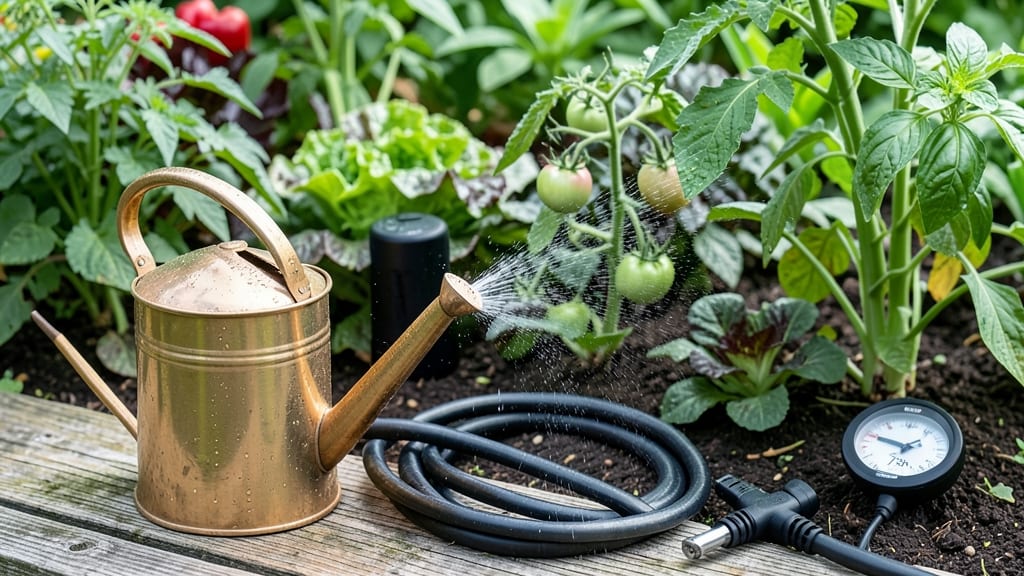
Watering your vegetable garden the right way means knowing how often to water each plant type — because a one-size-fits-all schedule will leave some crops thirsty and others drowning.
Picture this: your lettuce wilting by noon while your tomatoes struggle to set fruit, all because you’re watering on the same rigid schedule. The truth? Root depth, season, and soil type rewrite the rules every time.
A leafy green like spinach needs frequent, shallow drinks, while carrots and potatoes thrive with deep, infrequent soaks.
Climate throws another wrench in the mix. In the heat of summer in Zone 6a, your garden may need daily watering, but a spring morning after rain could stretch that to every three days.
Below, I break down the exact schedules for common crops, plus the smartest techniques to save water and time without guessing.
You’ll learn how to read your soil, adjust for drought or downpours, and use tools like mulch and drip irrigation to keep your 🌱 vegetable garden thriving with minimal effort. No more wasted water, no more stressed plants — just a system that works for your specific garden.
Watering frequency by vegetable type: root depths & needs
Understanding your vegetable garden's watering needs starts with knowing root depth. Plants with shallow roots, like leafy greens, need frequent, light watering, while deep-rooted vegetables like carrots thrive with infrequent deep soaks.
Let's break down the science behind it—because watering too much or too little can ruin your harvest before it even begins.
Most gardeners make the mistake of assuming all vegetables need the same care. In reality, leafy greens (spinach, lettuce, kale) have roots just 1-2 inches deep, while root vegetables (carrots, potatoes, beets) can stretch 12+ inches underground.
Even fruiting plants (tomatoes, peppers, cucumbers) have moderate needs that differ from their leafy cousins. Let’s dive into the specifics.
| Plant Type | Root Depth | Water Frequency | Soil Moisture Test | Best Time to Water |
|---|---|---|---|---|
| Leafy Greens | 1-2 inches | Every 1-2 days | Top 1 inch dry | Morning |
| Root Vegetables | 6-12+ inches | Every 3-4 days | Top 2 inches dry | Evening |
| Fruiting Plants | 3-6 inches | Every 2-3 days | Top 1.5 inches dry | Morning |
| Herbs | 1-3 inches | Every 2 days | Top 1 inch dry | Morning |
For leafy greens, consistency is key. These plants grow quickly and need daily moisture to stay crisp. Stick your finger 1 inch deep—if it feels dry, it's time to water. Overhead watering works, but drip irrigation keeps leaves dry, reducing fungal risks like powdery mildew.
My lettuce and spinach thrive when I water them in the morning, giving them a full day to absorb moisture before evening heat.
Root vegetables like carrots and potatoes are the opposite—they hate soggy soil. Their deep roots need infrequent but deep watering to encourage downward growth. Water these plants every 3-4 days and always in the evening to prevent evaporation. Pro tip: Use a soaker hose to deliver water directly to the soil without disturbing the top layer where seeds germinate.
Fruiting plants such as tomatoes and peppers fall in the middle. They need steady moisture, especially during flowering and fruiting, but not as frequently as leafy greens. A good rule is to water when the top 1.5 inches of soil feel dry.
My tomato plants produce more fruit when I water deeply in the morning, which also helps prevent blossom-end rot—a common issue caused by inconsistent watering.
Don’t forget about soil moisture tests! The finger test is my go-to: Insert your index finger into the soil. If it feels dry up to your first knuckle for leafy greens or second knuckle for root veggies, it’s time to water.
For sandy soil, you’ll need to water more often because it drains quickly, while clay soil holds moisture longer, so you can space waterings further apart.
Seasonal adjustments are crucial too. In summer heat, even deep-rooted plants may need watering every 2 days, while winter dormancy reduces needs to once a week.
Always check the soil first—it’s the best indicator of what your plants truly need. Overwatering is just as harmful as underwatering, leading to root rot and stunted growth.
Mulching is another game-changer. A 2-inch layer of mulch (straw or wood chips) helps retain moisture, reducing how often you need to water. I’ve seen my watering frequency drop by 30% since I started mulching last summer. Plus, it keeps weeds at bay and regulates soil temperature—win, win, win!
Lastly, observe your plants. Wilting leaves usually mean underwatering, but yellowing leaves can signal overwatering. Adjust your schedule based on what you see. With a little practice, you’ll develop a feel for your garden’s unique needs—no guesswork required. Happy growing!
Seasonal watering adjustments: heat, rain, and drought strategies
Summer heatwaves can turn your vegetable garden into a thirsty desert if you don't adjust your watering routine. Most gardeners assume a fixed schedule works year-round, but seasonal changes dramatically alter plant needs.
For example, my tomatoes wilt by noon in July unless I water deeply twice daily, while the same plants thrived on every-other-day watering in May.
Winter dormancy is equally tricky—overwatering in cold months suffocates roots, while underwatering stresses plants. I learned this the hard way when my kale turned mushy after heavy rain followed by freezing temperatures.
The key? Adjusting based on soil moisture, weather forecasts, and plant type—not just the calendar.
⚠️ WARNING: Overwatering vs. Underwatering Signs ⚠️
💧
During heatwaves (90°F+), I switch to morning watering to reduce evaporation and fungal risks. My peppers and cucumbers need 1-2 inches of water daily, but I deliver it slowly via drip irrigation to prevent runoff.
A quick trick: Water when soil is warm (use your hand)—cool soil means plants aren't absorbing efficiently.
Rainy seasons throw gardeners off guard. I once halted watering entirely after 3 inches of rain in 48 hours, only to find my lettuce rotting. Rule of thumb: Skip watering if you've had 1 inch of rain in the past 24 hours.
For drought-prone areas, mulch heavily (3-4 inches) to lock in moisture—my squash survived a 3-week dry spell with this trick.
Winter watering is about minimal maintenance. Most cool-season crops like spinach and carrots need water every 7-10 days unless snow covers the soil.
I test moisture by lifting a clod of soil—if it crumbles easily, hold off. Evergreens like broccoli may need weekly watering if temperatures hover above 40°F.
Unpredictable rainfall? Use a rain gauge to track totals and adjust accordingly. I pair mine with a soil moisture sensor ($20 at garden centers) to avoid guesswork. For container gardens, check soil daily—pots dry out 3x faster than in-ground beds.
Pro tip: Group thirsty plants (like zucchini) together and water them as a block to save time.
🌱