
Watering
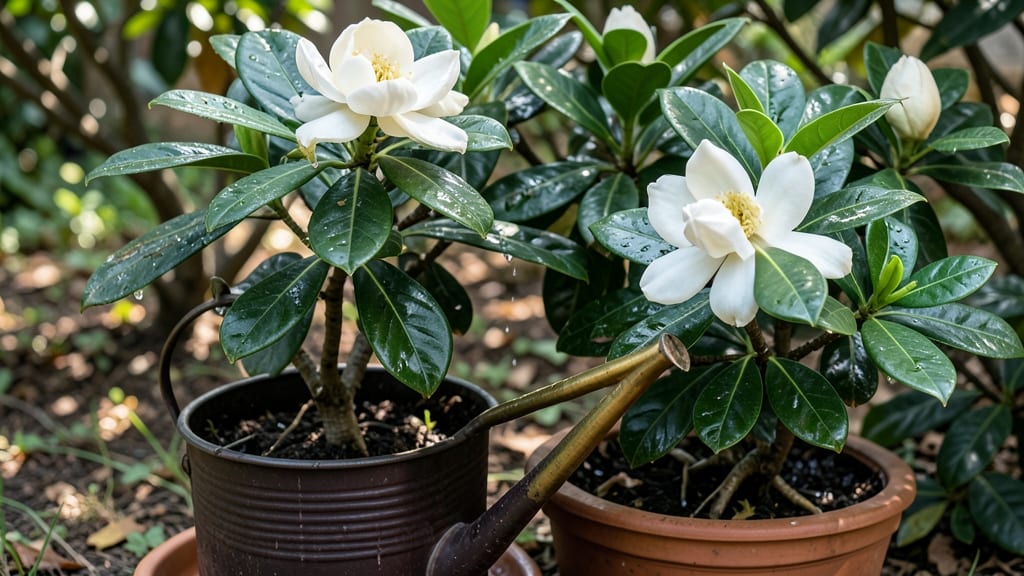
To water gardenia plants properly, aim for deep, consistent moisture that keeps the soil evenly damp without drowning the roots—this is the key to those fragrant blooms you crave.
Struggling to keep your gardenia thriving with vibrant blooms? The secret lies in mastering its watering needs—too much or too little can spell disaster for these delicate beauties. 🌸 Whether you're dealing with a potted plant or one planted in the ground, getting the balance right makes all the difference.
Most gardenias need watering every 2-3 days in warm weather, but the real trick is checking soil moisture before you water. Stick your finger an inch deep—if it feels dry, it’s time.
In cooler months, you can stretch that to once a week, but never let the soil dry out completely.
Below, I’ll break down the exact schedule for your climate, how to spot overwatering or underwatering, and the best techniques to keep your gardenia thriving without root rot or wilted leaves.


The perfect watering schedule for gardenias: how often and when to water
Mastering the watering schedule for gardenias is the key to those fragrant blooms you crave. These tropical beauties thrive on consistent moisture but hate soggy roots—getting it right means the difference between lush foliage and wilting disappointment.
I’ve learned through years of trial (and a few sad gardenia casualties) that timing, season, and soil moisture checks are everything.
Gardenias demand regular watering, but their needs shift dramatically with the seasons. In summer heat, I water mine daily, while in winter dormancy, I barely touch the hose.
The secret? Checking soil moisture before watering—never on guesswork. Let me show you exactly how to nail this delicate balance.
| Season | Watering Frequency | Best Time | Soil Check Method |
|---|---|---|---|
| Spring | Every 2 days | Morning (6-9 AM) | Finger test (top 1-2 inches dry) |
| Summer | Daily or every other day | Early morning (before 10 AM) | Moisture meter (3-4 on scale) |
| Fall | Every 3-4 days | Morning (7-9 AM) | Finger test (top 2 inches dry) |
| Winter | Every 7-10 days | Morning (8-10 AM) | Finger test (top 3 inches dry) |
First, let’s talk about the best time to water gardenias. I always water in the early morning—between 6 and 9 AM—because this gives the roots time to absorb moisture before the midday heat evaporates it.
Evening watering is a big no-no for me; it invites fungal diseases like powdery mildew by keeping foliage damp overnight.
For potted gardenias, I check moisture every 1-2 days in summer, as containers dry out faster. In-ground plants need less frequent watering—every 3-4 days in fall—but I still monitor the top 2 inches of soil.
Pro tip: Use your finger to test moisture. If it feels dry, it’s time to water.
Don’t rely on a watering schedule alone—always verify with a soil moisture check. I use a simple finger test for most seasons: Stick your finger about 1-2 inches deep.
If it’s dry, water thoroughly until it drains from the bottom. For precise readings, a moisture meter (like the ones made for houseplants) gives me exact numbers to avoid overwatering.
Seasonal shifts are critical. In summer’s peak heat, I increase watering to daily or every other day, but I never let water pool in saucers. For winter dormancy, I cut back to once every 7-10 days and avoid wet leaves entirely.
This adjustment prevents root rot while keeping the plant hydrated enough to survive.
One common mistake I see? Surface watering instead of deep soaks. Gardenias need water to reach their root zone, which can extend 12-18 inches deep in mature plants. I water until I see moisture draining from the bottom of pots or the soil around in-ground plants.
This encourages strong root growth and prevents shallow, weak roots that lead to floppy stems.
If you’re growing gardenias in containers, choose pots with drainage holes and use a well-draining mix. I add perlite or orchid bark to my potting soil to improve aeration.
For in-ground plants, amend the soil with compost or peat moss to retain moisture while preventing waterlogging. Mulching with pine bark helps too—it keeps roots cool and slows evaporation.
Watch for these telltale signs of watering trouble: Yellow leaves often mean overwatering, while crispy edges signal underwatering. Drooping foliage that doesn’t bounce back after watering? That’s a cry for help—usually from root stress. Adjust your schedule immediately and check the roots for rot if needed.
With these watering guidelines, your gardenias will reward you with glossy leaves and abundant blooms all season. Remember: consistency is key. Stick to the schedule, check the soil, and soon you’ll have gardenias that thrive year after year—no guesswork required. 🌸
Signs of overwatering vs. underwatering gardenias: how to fix common mistakes
Your gardenia plant may look lush, but its leaves tell a different story. Yellowing foliage or drooping branches often signal watering mistakes—either too much or too little. These tropical beauties thrive on a consistent moisture balance, and even small shifts can trigger stress.
The key is learning to read your plant’s cues before damage sets in.
First, check the soil moisture by sticking your finger 2 inches deep. If it feels soggy, you’re overwatering. If dry, it’s time to hydrate. Gardenias hate waterlogged roots but also wilt when thirsty. Let’s break down the red flags and quick fixes to save your fragrant blooms.
Overwatering vs. Underwatering: Quick Fixes
Overwatering
- Yellow leaves (especially lower)
- Mushy stems or blackened roots
- Foul odor from soil
Underwatering
- Dry, crispy leaf edges
- Wilting even when soil is dry
- Slow growth or no blooms
If your gardenia leaves turn yellow with soggy soil, act fast. Root rot spreads quickly, turning healthy roots black and mushy. Gently remove the plant, rinse the roots with water, and trim away any dark, squishy sections with sterilized scissors.
Repot in a terracotta pot with fresh, acidic soil mixed with perlite for drainage.
On the flip side, underwatered gardenias show signs like crispy brown edges or leaves that curl inward. Unlike wilting from thirst, these leaves won’t bounce back when watered. Revive your plant by giving it a deep soak—aim for 1-2 gallons until water drains from the bottom.
For potted gardenias, water until it flows from the drainage holes.
Adjust your watering schedule based on the season. In summer heat, water every 1-2 days in the morning, while winter slowdown means cutting back to once a week. Always water at the base of the plant, not the leaves, to prevent fungal diseases like powdery mildew.
Pro tip: Use a moisture meter to avoid guesswork. Insert it into the soil—readings below 40% moisture mean it’s time to water, while anything above 60% signals overwatering. Pair this with a well-draining pot and organic mulch to keep roots happy year-round.
With these adjustments, your gardenia will bounce back in 2-4 weeks, rewarding you with glossy leaves and scented blooms. Pay attention to the soil, leaves, and stems—they’re your plant’s way of communicating! 🌸