
Advice
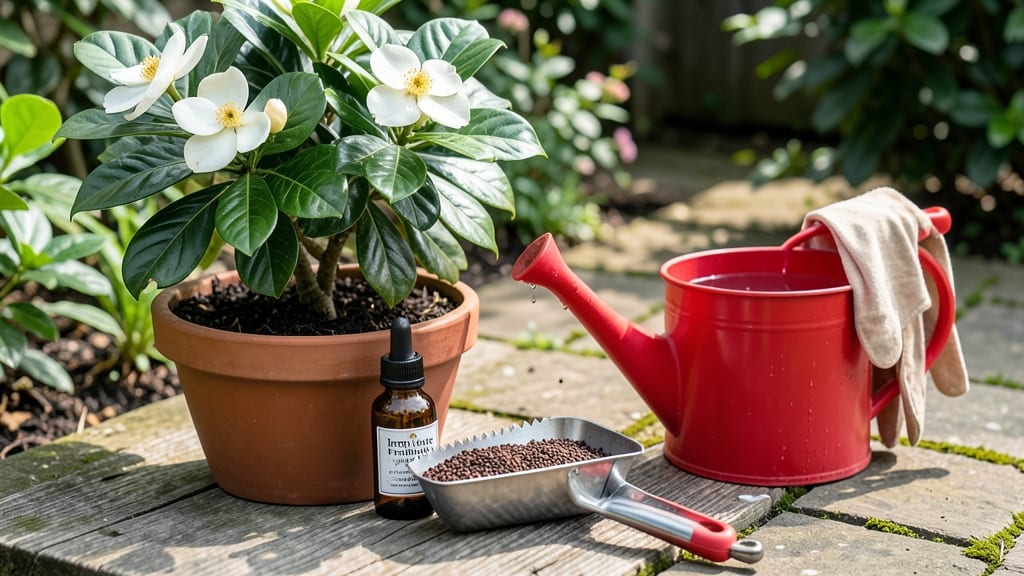
Adding iron for gardenias is the game-changer when those glossy leaves start turning yellow between the veins — a classic sign your tropical beauty is starving for this essential nutrient.
If your gardenias are struggling with yellowing leaves, stunted growth, or sparse blooms, an iron deficiency could be the culprit—and the fix is simpler than you think. These 🌸 shrubs thrive in General (Tropical/Subtropical) zones like 9-11, where alkaline soil often locks out iron.
Without it, even well-watered plants can’t produce the vibrant blooms you love.
The good news? Chelated iron supplements (like Fe-EDTA) or organic amendments (such as sulfur to lower pH) can turn things around in weeks. I’ll walk you through how to diagnose the problem, choose the right iron source, and apply it safely—whether you’re working with soil or foliar sprays.
By the end, you’ll know exactly how to restore your gardenias’ lush foliage and fragrant blooms without overloading the soil. Let’s get those 🌸 thriving again!
How to identify and confirm iron deficiency in gardenias
If your gardenia leaves are turning yellow between the veins while keeping green veins, you're likely dealing with iron deficiency chlorosis. This common issue occurs when gardenias can't access enough iron in the soil, despite it being present.
The problem often stems from alkaline soil (pH above 7.0), which locks out iron even when it's abundant.
Iron deficiency isn't the only cause of yellowing leaves—manganese or zinc deficiencies can look nearly identical. The key difference? Iron deficiency typically starts on younger leaves first, while manganese issues often appear on older leaves. Let's break down how to confirm what's really causing your gardenia's distress.
| Symptom | Iron Deficiency | Manganese Deficiency | Zinc Deficiency |
|---|---|---|---|
| Leaf Color | Yellow between veins, veins stay green | Yellow/brown speckles, veins stay green | Yellow/brown on leaf edges |
| Affected Leaves | New growth first | Older leaves first | New growth first |
| Growth Impact | Stunted, weak stems | Reduced leaf size | Small, distorted leaves |
| Soil pH | Alkaline (7.0+) | Calcareous or alkaline | Alkaline or high organic matter |
| Diagnostic Test | Soil pH test + leaf analysis | Leaf tissue test for Mn levels | Leaf tissue test for Zn levels |
To confirm iron deficiency, start with a simple soil pH test. Gardenias thrive in acidic soil (pH 5.0-6.0), and any reading above 7.0 will lock out iron.
Grab a soil test kit (available at garden centers for ~$15) or send a sample to your local cooperative extension service for professional analysis.
Next, examine the leaf pattern. True iron deficiency shows as interveinal chlorosis—yellowing between the green veins—starting on younger leaves. If you spot brown spots or crinkled leaves, manganese or zinc might be the culprits.
Take a leaf sample to a lab for precise nutrient analysis if symptoms are unclear.
Another clue? Check the root zone. Gardenias in containers often suffer from iron deficiency because calcium and magnesium in tap water can bind with iron, making it unavailable. If you're using hard water, switch to rainwater or distilled water for watering to reduce competition for iron.
Don't overlook environmental factors like compaction or poor drainage, which can worsen iron uptake. If your gardenia sits in heavy clay soil, roots may struggle to access iron even if it's present. Amending with organic matter like peat moss or compost can improve soil structure and iron availability.
For a quick at-home test, use a chelating agent like citric acid (1 tsp per gallon of water). Water your gardenia with this solution—if the yellowing slows within 2-3 weeks, iron deficiency was likely the issue.
This test also helps rule out fungal diseases like leaf spot, which cause yellowing but won't improve with iron treatments.
If you're still unsure, compare your gardenia's symptoms to healthy gardenia leaves. Healthy leaves should have a deep green color with no yellowing, and the undersides should be free of rust-colored spots (a sign of rust fungus). Take photos of both affected and healthy leaves for side-by-side comparison.
Remember, gardenias are heavy feeders and need consistent care. If you've recently fertilized with lime or bone meal, these amendments can raise soil pH and trigger iron deficiency. Always test soil before amending—especially in alkaline regions like the Southwest or Midwest.
Once you've confirmed iron deficiency, the good news is that it's one of the easiest nutrient deficiencies to fix. The next steps involve choosing the right iron supplement and applying it correctly—we'll cover those solutions in the following section. For now, focus on reducing stress
Best iron supplements for gardenias: chelated vs. non-chelated options
When your gardenias show signs of iron deficiency, like yellowing leaves with green veins, you need a targeted solution. Not all iron supplements work equally—some are fast-acting but risky, while others provide long-term benefits. Let me break down the best options to revive your gardenias safely and effectively.
The key difference lies in chelated vs. non-chelated iron. Chelated iron binds to organic molecules, making it more plant-available, especially in alkaline soils. Non-chelated options, like iron sulfate, can work but may cause soil pH shifts or leaf burn if overused.
Here’s how to choose the right one for your gardenias.
For foliar sprays, EDDHA chelate is my top pick—it absorbs quickly through leaves and works wonders in alkaline soils. Mix 2-4 ounces per 100 gallons of water and apply in the early morning to avoid leaf burn.
If your gardenias are in containers, Fe-EDTA chelate is a safer bet for soil drenches, as it won’t alter pH levels.
Organic options like blood meal or iron-rich compost are ideal for long-term prevention. Work 1 tablespoon of blood meal into the top inch of soil around your gardenias in early spring, or top-dress with compost to gradually improve iron availability.
These methods are gentler but require patience—results take 6-8 weeks or longer.
Avoid iron sulfate if your soil is already acidic or if you’re unsure about pH levels. Overuse can lower soil pH further, harming your gardenias in the long run. Always test your soil first—aim for a pH of 5.0-6.0 for optimal iron uptake.
Pro tip: Combine foliar sprays with soil amendments for faster results. For example, spray EDDHA chelate on leaves while adding compost to the soil. Monitor your garden