
Tools
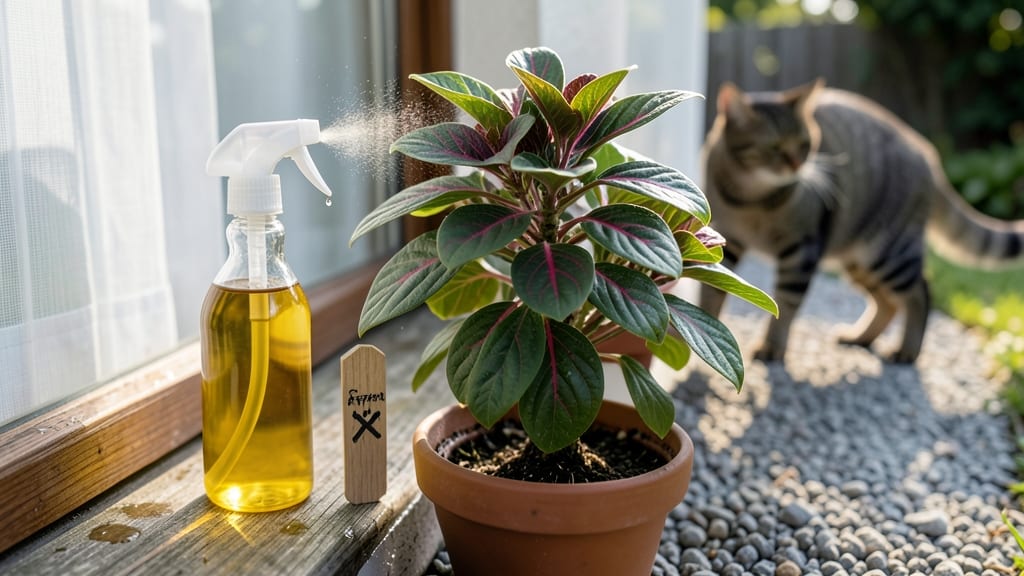
To repel cats from your garden, use natural sprays like citrus peels mixed with water, diluted vinegar, or commercial cat repellent sprays containing essential oils such as eucalyptus or lavender. Apply directly to soil or affected areas for immediate deterrence.
Cats have an incredibly sensitive sense of smell—up to 14 times stronger than ours—which is why they avoid strong, unfamiliar scents. 🌿 The oils in citrus, eucalyptus, and peppermint disrupt their natural curiosity, making them steer clear of treated areas.
I’ve found that reapplying every few days keeps the deterrent effective, especially after rain washes away the spray. For best results, focus on garden edges and plant beds where cats tend to mark territory.
If you’re dealing with a particularly persistent feline, combining scents with physical barriers like prickly plants or motion-activated sprinklers can create a multi-layered defense. Always test sprays on a small area first—some essential oils may harm delicate plants, while others are completely safe.
The key is consistency; cats learn quickly when their favorite spots become unpleasant.
💡 In This Article
- Why Cats Avoid Certain Garden Scents
- DIY Cat Repellent Sprays for Immediate Results
Why cats avoid certain garden scents
A cat’s sense of smell is 14 times more sensitive than a human’s, making them highly attuned to even faint odors. 🌿 Essential oils like eucalyptus, citrus, and peppermint contain compounds that cats find overwhelming or unpleasant.
For example, eucalyptus releases 1,8-cineole, a chemical that disrupts their natural curiosity and triggers an aversion response. Unlike humans, cats lack certain enzymes to process these compounds, making them taste bitter or irritating.
The effectiveness of scents depends on the oil’s volatility—citrus oils evaporate quickly, providing short-term deterrence (about 24-48 hours40-50% compared to using either method alone.
Cats also avoid areas where they detect predator scents, like those from foxes or coyotes. Commercial repellents often mimic these smells using synthetic compounds, but natural oils like lavender (which contains linalool) can achieve similar results without harming the environment.
The key is consistency—cats rely on scent memory, so reapplying every 3-5 days reinforces the deterrent effect.
Not all plants react the same to these sprays. For instance, citrus oils can harm delicate herbs like basil or thyme, while eucalyptus is generally safe for most foliage.
Always spot-test on a small area before full application. 🌱 The best approach is to tailor the repellent to your garden’s plant types and the cat’s behavior patterns—observing which areas they frequent most helps target treatments effectively.
Another factor is the cat’s personality. Some felines are more curious and may ignore mild scents, while others flee at the first whiff. If you notice a cat lingering near treated areas, consider adding physical barriers like prickly plants (e.g., rosemary or lavender bushes) or chicken wire around vulnerable plants.
This layered defense creates a multi-sensory deterrent that’s harder for cats to ignore.
For maximum impact, apply sprays in the early morning or late evening, when cats are most active.
The cooler temperatures help the oils disperse evenly, while direct sunlight can cause citrus-based sprays to degrade faster. 🌅 Understanding these nuances ensures your repellent strategy is both humane and effective, giving your garden the protection it needs without harming your feline visitors.