
Watering
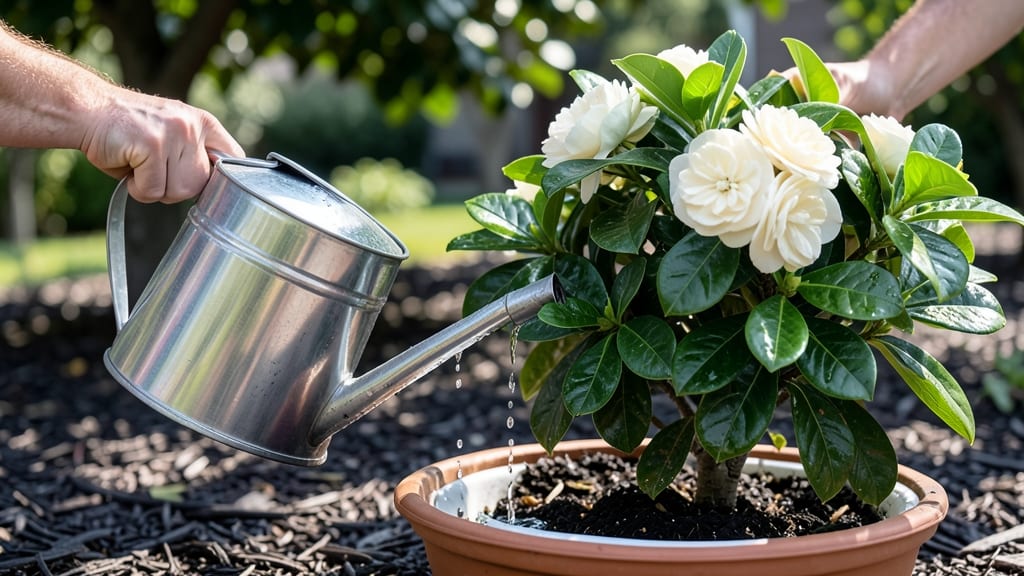
Watering a gardenia plant the right way is the key to those fragrant blooms you love—too much or too little, and you’ll end up with sad, wilted leaves instead of lush 🌸 growth.
Struggling to keep your gardenia blooming? The secret isn’t just about how often you water—it’s about how you water, and most gardeners get this critical step wrong.
Gardenias thrive when the soil stays consistently moist but never soggy, which means timing, technique, and even the type of water all matter. Skip the guesswork and learn the exact schedule, signs to watch for, and seasonal tweaks that keep your plant happy year-round.
In this guide, I’ll walk you through when and how to water, how to spot over- or underwatering, and a few pro tips—like mulching and humidity hacks—to give your gardenia the perfect growing conditions.


The perfect watering schedule for gardenias: frequency, timing, and seasonal adjustments
Gardenias are glorious bloomers, but their delicate roots demand precision when it comes to watering. Unlike drought-tolerant succulents, gardenias thrive on consistent moisture—yet they hate soggy soil. The key? A science-backed schedule that adjusts with the seasons and your gardenia’s environment.
Whether your plant is potted or in-ground, timing and frequency make all the difference between vibrant blooms and wilting leaves.
Most gardeners overwater by default, thinking gardenias need constant hydration. In reality, their roots need oxygen too. The solution? A deep-soak method that mimics natural rainfall—watering thoroughly until it drains from the bottom, then waiting until the top 1-2 inches of soil dry out.
This balance prevents root rot while keeping the plant hydrated enough to support those iconic white flowers. Let’s break down the ideal schedule for each season and plant type.
Spring is when your gardenia wakes up from dormancy, so I start with gentler watering—every 4-5 days for in-ground plants. The goal is to encourage root growth without shocking the system.
Potted gardenias dry out faster, so I water them 1 day earlier than in-ground ones. Always water in the morning to let foliage dry before nightfall, reducing fungal risks like powdery mildew.
Summer is the peak blooming season, but also the most demanding for water. I increase frequency to every 2-3 days and aim for deeper watering—up to 18 inches deep—to reach the roots. Potted plants need even more attention; their smaller soil volume dries out quickly.
If your gardenia’s leaves curl or droop by late afternoon, it’s a sign to water immediately. Pro tip: Use a moisture meter to check soil depth—1-2 inches dry is ideal.
Fall signals a gradual slowdown in growth, so I reduce watering to weekly for in-ground plants. This helps prepare roots for winter without stressing the plant. Potted gardenias still need slightly more frequent watering, but I cut back by half compared to summer.
Watch for yellowing leaves, which often signal overwatering in cooler months. If the soil stays cold and damp for weeks, roots can suffocate.
Winter is all about minimal intervention. Gardenias enter dormancy, so I water bi-weekly or only when the top 2 inches of soil feel dry. Potted plants may need water every 10-14 days, but I never let them sit in wet soil.
If you’re in a warmer winter zone (like Zone 8+), increase to weekly if growth resumes. Always water in the morning to prevent cold shock to the roots.
Potted gardenias dry out faster than in-ground ones, so I adjust my
Signs your gardenia is overwatered or underwatered (and how to fix it)
Your gardenia plant might look stunning with its glossy leaves and fragrant blooms, but getting the watering balance wrong can turn those lush leaves yellow or cause them to wilt.
I’ve seen gardeners struggle with this delicate balance, especially when their gardenias start showing stress signals like leaf drop or mushy stems. The key is recognizing the subtle differences between overwatering and underwatering—both can look alarmingly similar at first glance.
When your gardenia’s roots sit in waterlogged soil for too long, they suffocate and rot, leading to yellowing leaves that start at the bottom and spread upward. On the flip side, underwatered gardenias show crispy, brown edges on their leaves and may droop dramatically, even after watering.
Both issues can be fixed, but the recovery process depends on how quickly you act and whether you’ve adjusted your watering habits or soil drainage.
Gardenia roots need consistent moisture but hate soggy soil. Here’s how to fix it:
- Test soil moisture by sticking your finger 2 inches deep—if it’s damp, wait before watering.
- Water deeply until it drains from the bottom of the pot or 6 inches into the ground.
- Ensure pots have drainage holes and use well-draining soil (pH 5.0-6.5).
- Avoid watering at night—stick to morning sessions to prevent fungal growth.
🌱 Pro Tip: Mulch around the base to retain moisture without compacting roots.
If your gardenia’s leaves are yellowing and mushy, it’s likely overwatered. Start by letting the soil dry out completely—this might take a week or more. Repot the plant in fresh, well-draining soil and trim any rotting roots with sterilized scissors.
For the next few weeks, only water when the top 1-2 inches of soil feel dry to the touch. If you’re growing gardenias in the ground, consider amending the soil with perlite or sand to improve drainage.
For underwatered gardenias, the fix is simpler but requires consistency. Water deeply until the soil is thoroughly moistened, then let it dry out slightly before watering again. If the leaves are crispy or curled, trim the damaged foliage to help the plant focus on new growth.
Place your gardenia in a shadier spot temporarily to reduce water loss through evaporation, especially if you’re in a hot, dry climate. Over the next few days, monitor the soil moisture closely—gardenias prefer consistently damp (not soggy) soil.
One common mistake I see is assuming that drooping leaves always mean underwatering. However, if the soil feels soggy or the pot is heavy with water, the issue is likely overwatering.
To test, gently squeeze a handful of soil—if water drips out, your gardenia is getting too much moisture. In this case, hold off on watering and let the roots recover.
If the pot feels light and the soil is dry, it’s time to water deeply and adjust your schedule to every 2-3 days in summer or weekly in cooler months.
To prevent future issues, invest in a moisture meter or use the finger test regularly. Gardenias thrive in humid environments, so if your home is dry, consider placing a tray of water near the plant or misting the leaves lightly in the morning.
Remember, the goal is to keep the soil consistently moist without creating waterlogged conditions. With these adjustments, your gardenia will bounce back with vibrant blooms and healthy foliage in no time.
🌸