Watering
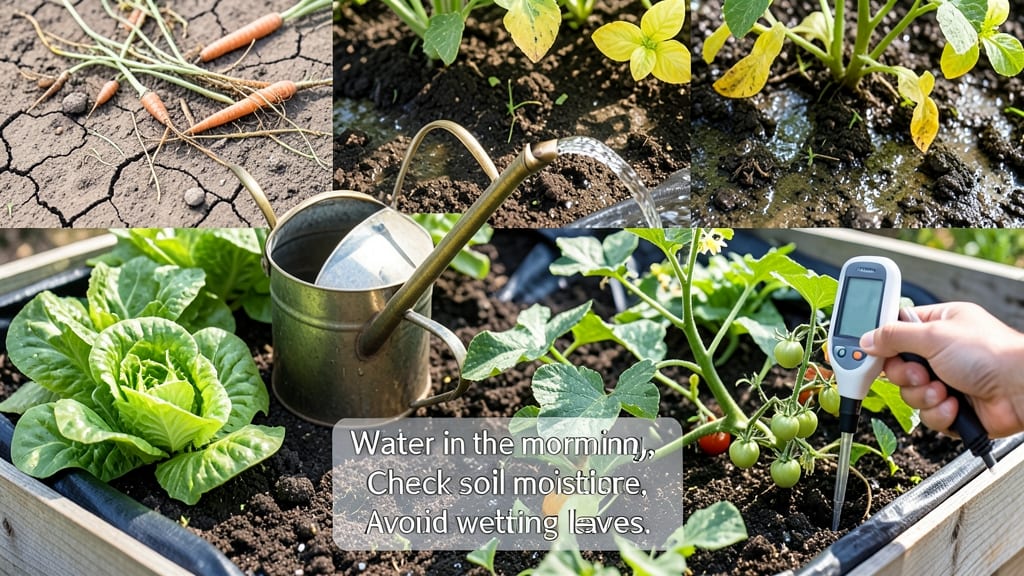
Watering your vegetable garden every day can actually harm your plants more than help them—unless you live in extreme heat or have sandy soil.
Overwatering is a silent killer in gardens, suffocating roots and inviting fungal diseases while wasting precious water. Yet many gardeners drown their plants daily, thinking more moisture equals better growth.
Most vegetables thrive on deep, infrequent watering—think twice-weekly soaks that encourage strong roots. Leafy greens like spinach may handle daily watering, but root crops like carrots or potatoes need consistency, not constant dampness.
Below, I break down the science of smart watering: how to read your soil, adjust for weather, and spot the 5 signs your garden is getting too much love. No guesswork, just healthy plants and happy harvests.


How often should you water vegetable gardens (and why daily watering is risky)
Watering your vegetable garden feels like a balancing act—too little and your plants wilt, too much and you risk drowning their roots. The common misconception that vegetables need daily watering leads to root suffocation and fungal diseases.
Most vegetables thrive with deep, infrequent watering that encourages strong root systems. Let’s break down the science-backed schedule that keeps your garden healthy without wasting water.
Daily watering may seem harmless, but it disrupts the natural soil-plant-water balance. When soil stays constantly wet, oxygen can’t reach roots, leading to anaerobic conditions that weaken plants.
Additionally, nutrient leaching occurs as excess water washes away essential minerals. Even leafy greens, often thought to need frequent water, can suffer from overwatering if not managed properly.
Your watering schedule should adapt to soil type, climate zone, and plant maturity. Sandy soil drains quickly, while clay holds moisture longer.
In USDA Zones 7-9, summer heat may require more frequent watering, but even then, deep soakings every 2-3 days are better than light daily doses. Let’s explore the ideal frequency for different conditions.
🌱
| Factor | Ideal Watering Frequency | Risks of Daily Watering |
|---|---|---|
| Soil Type | Sandy: Every 1-2 days Loamy: Every 2-3 days Clay: Every 3-4 days |
Root rot, poor drainage |
| Climate Zone | Zones 3-5: Every 3-4 days Zones 6-8: Every 2-3 days Zones 9-11: Daily (if extreme heat) |
Fungal growth, nutrient loss |
| Plant Type | Leafy Greens: Every 1-2 days Root Crops: Every 2-3 days Fruiting Plants: Every 3-4 days |
Blossom end rot, weak stems |
| Container Gardens | Every 1-2 days (small pots) | Drying out, salt buildup |
| Rainfall | Skip watering if >1 inch rain | Over-saturation, disease |
The key to successful watering is deep irrigation that penetrates 6-12 inches into the soil. Use a soil moisture meter or the finger test—stick your finger 2 inches deep; if dry, it’s time to water.
For young seedlings, daily light watering may be necessary, but transition to deeper watering as they mature.
Extreme conditions are the only exceptions where daily watering might apply. In 100°F+ heatwaves or with sandy soil, plants may need more frequent hydration. However, even in these cases, morning watering is best to reduce evaporation and fungal spores that thrive in damp evening air.
Avoid watering at night, as it invites blight and mildew.
Mulching is your best ally in reducing watering frequency. A 2-3 inch layer of mulch (straw, wood chips, or leaves) retains moisture, regulates soil temperature, and suppresses weeds.
This allows you to water less frequently while keeping roots consistently moist. For container gardens, use self-watering pots or add hydration crystals to extend time between waterings.
Signs of overwatering include yellowing leaves, mushy stems, and white mold on soil. If you notice these, stop watering immediately and let the soil dry out.
For root-bound plants, gently loosen soil around roots to improve airflow. In severe cases, you may need to transplant affected plants to fresh, dry soil.
Adjust your watering schedule seasonally. Spring and fall typically require less water than summer, while winter may need minimal hydration unless you’re growing cool-season crops like kale or spinach. Always observe your plants—wilting can indicate both underwatering and overwatering, so check the soil before reacting.
💧
Smart watering schedules by vegetable type: daily vs. alternate-day guidelines
Not all vegetables thrive with daily watering—some need it, while others suffer from root suffocation. Leafy greens like lettuce and spinach prefer consistent moisture, while root crops like carrots and potatoes need well-drained soil to prevent splitting. Understanding these differences prevents wasted water and plant stress.
Daily watering can actually harm fruiting plants like tomatoes and peppers by leaching nutrients and encouraging fungal diseases. Alternate-day watering often works better, letting soil dry slightly between sessions. The key is matching your schedule to the plant's natural needs.
Here’s how to balance watering for your garden’s most common vegetables, including adjustments for drought, rainfall, and container gardening:
| Vegetable Type | Daily Watering Risk | Optimal Frequency | Adjustments Needed |
|---|---|---|---|
| Leafy Greens (lettuce, spinach, kale) | Root rot, fungal growth | Every 1-2 days (morning) | Mulch to retain moisture |
| Root Crops (carrots, potatoes, beets) | Split roots, stunted growth | Every 2-3 days (deep watering) | Avoid overhead watering |
| Fruiting Plants (tomatoes, peppers, cucumbers) | Nutrient leaching, blossom end rot | Alternate days (drip irrigation) | Water at soil level |
| Container Plants (herbs, peppers, lettuce) | Dries out faster, root burn | Daily (small pots), every other day (large pots) | Use self-watering pots |
For drought conditions, reduce frequency by 50% and water deeply in the morning to minimize evaporation.
If rain is forecasted, skip watering for 24-48 hours to avoid soggy soil. Container gardens dry out faster, so check soil moisture daily with your finger—if the top inch feels dry, it’s time to water.
Pro tip: Use a moisture meter or the "squeeze test" (grab a handful of soil—if it crumbles, it’s dry; if it sticks, it’s wet). This simple check replaces guesswork and saves water.
Adjust your schedule based on the season—summer may require daily watering, while spring and fall can often stretch to every other day.
Remember, overwatering is the silent killer of vegetable gardens. Stick to these guidelines, and your plants will reward you with healthier growth and bigger harvests—without the waste. 💧