
Picking
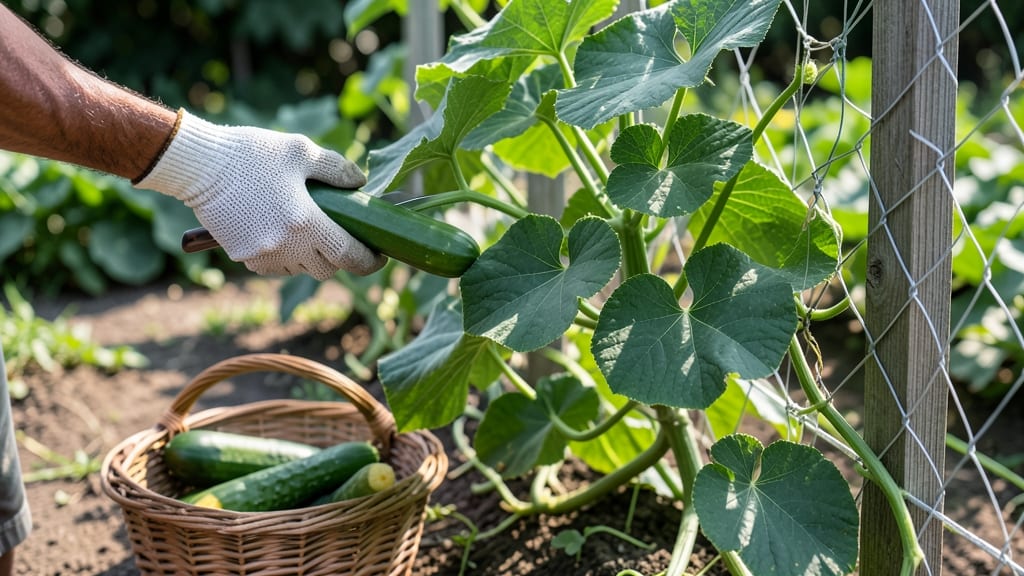
Harvesting cucumbers from your garden at the right time ensures crisp, seedless perfection—and missing that window means bitter, seedy, or overripe disappointment.
Picture this: you’ve nurtured your 🥒 plants all season, only to pull a cucumber that’s either rock-hard or mushy. That’s the difference between a sweet victory and a kitchen regret.
Timing matters because cucumbers keep ripening after picking. Too early, and you’ll get a bitter, underdeveloped fruit. Too late, and you’re left with a mealy, seedy mess. The key is knowing when the skin is firm but yields slightly, the color is deep and consistent, and the stem snaps cleanly.
In this guide, I’ll show you three tactile tests to nail perfect harvest timing, plus how to adjust for slicing, pickling, or heirloom varieties. No more guesswork—just crunchy, flavorful cucumbers every time.
3 Tactile tests to determine perfect cucumber harvest time
Harvesting cucumbers at the right moment transforms your garden bounty from good to extraordinary. The secret lies in understanding three tactile tests that reveal peak ripeness—whether you're growing heirloom varieties or hybrid hybrids.
These science-backed checks ensure crisp texture, seedless perfection, and ideal flavor for slicing, pickling, or eating fresh.
Many gardeners make the mistake of waiting too long, resulting in bitter, seedy cucumbers or harvesting too early, which yields underdeveloped fruit. The good news? With these physical cues, you'll never guess again—just feel, observe, and harvest with confidence.
Let's dive into the three key tests that'll change how you pick cucumbers forever.
🌱 Your Cucumber Harvest Checklist
-
Test 1: The Size Rule
Most slicing cucumbers peak at 6-12 inches—harvest before they grow longer. Pickling varieties should be 1-3 inches when firm. -
Test 2: The Color Check
Look for deep, even green (or variety-specific hues). Yellowing or white streaks mean overripe—time to harvest! -
Test 3: The Thumb Press
Gently press the cucumber—it should yield slightly (like a ripe avocado) but not feel mushy. Hard = underripe; soft = overripe. -
Bonus: The Stem Snap
Twist the cucumber at the stem—if it snaps cleanly with a slight resistance, it's ready. A green stem end means it's still growing.
Let's start with the size test, the simplest way to avoid overgrown cucumbers. Most slicing varieties like 'Straight Eight' or 'Marketmore' reach their prime at 6-12 inches. If you let them grow longer, they'll develop woody textures and large, bitter seeds.
For pickling cucumbers such as 'Boston Pickling', harvest when they're 1-3 inches—any larger, and they'll be too tough for pickling.
Heirloom varieties often have longer maturation times than hybrids, so don't rush the harvest. For example, 'Lemon Cucumber' can take up to 70 days to reach ideal size, while 'Slicemaster' hybrids mature in just 55 days.
Always check the seed packet for days-to-maturity guidelines and adjust your size expectations accordingly.
The color test is your next clue to perfect ripeness. Most cucumbers should be deep, vibrant green when ready to harvest. Look for uniform color—no yellowing or white patches.
Some varieties, like 'Armenian Cucumbers', develop striped patterns when ripe, while others, such as 'Green Dwarf', stay solid green but darken slightly. Yellowing or soft spots signal overripeness, which leads to mushy texture and off flavors.
For heirloom varieties, color can be more variable—some develop golden hues or dark green stripes when ready. Always cross-reference color with the other tests to avoid mistakes. If you're unsure, err on the side of earlier harvests, as cucumbers continue ripening even after picking.
Now for the thumb press test, the most reliable way to gauge internal ripeness. Gently press the cucumber with your thumb—it should yield slightly but still feel firm to the touch.
Think of it like testing a ripe avocado: just enough give to know it's ready, but not so soft it's overripe. Hard cucumbers are underripe and lack sweetness, while mushy ones are past their prime and may have seedy, bitter flesh.
This test works especially well for bush varieties, which can be harder to monitor due to their compact growth habit. If you're growing vining cucumbers, combine the thumb press with the stem snap test for extra accuracy.
The stem should snap cleanly at the base when you twist it gently—this indicates the cucumber has fully detached from the vine and is ready for harvest.
One common mistake is harvesting at the wrong time of day. Always pick cucumbers in the morning when they're cool and crisp. Harvesting in the afternoon heat can make cucumbers wilt quickly and lose their crunchy texture.
Plus, morning harvests give you the best chance to spot subtle ripeness cues like stem color changes or surface texture shifts.
For pickling cucumbers, timing is even more critical. Harvest them small and firm—typically 1-2 inches long—to ensure they stay crisp and tender after pickling. If you wait too long, they'll develop seeds and a tough skin, ruining your pickles.
Use a small knife or pruning shears to avoid damaging the vine, and always harvest every 2-3 days to encourage more production.
Remember, consistency is key when harvesting cucumbers. The more frequently you pick, the more your plants will produce. If you neglect harvesting, your cucumbers will overgrow, crowd the vine, and reduce overall yield.
Plus, overripe cucumbers can attract pests like cucumber beetles, which love to feed on soft, rotting fruit. Stay ahead of the game by checking your plants daily
Common harvest mistakes that ruin your cucumbers (and how to avoid them)
Even experienced gardeners sometimes fall into traps that turn crisp cucumbers into bitter, seedy disappointments. The key is recognizing subtle visual cues and understanding harvest timing nuances most guides overlook.
I’ve learned the hard way that waiting for "full yellowing" or picking based on vine maturity alone can ruin your harvest.
One of the biggest mistakes is assuming size alone determines ripeness. A 6-inch cucumber might still be hard and underdeveloped, while a 10-inch one could be overripe. The real test lies in texture and stem color, not just measurements.
I once harvested a batch of cucumbers at 8 inches because they looked "big enough," only to find them woody and flavorless.
Another critical error is harvesting too early to avoid bitter seeds. Many gardeners pull cucumbers as soon as they appear, but this can lead to underdeveloped fruit with poor texture.
The sweet spot is when the cucumber reaches its variety-specific size (usually 6–12 inches) and the skin yields slightly when pressed.
🚨
⚠️ Warning: The 3 Harvest Mistakes That Kill Cucumber Flavor
- Ignoring stem color: A green stem end means the cucumber is still growing. Harvest when the stem turns yellow at the base.
- Overlooking texture: Press gently—if it feels rock-hard, it’s too early; if it’s mushy, it’s past prime.
- Waiting for full yellowing: Most cucumbers are best dark green (not yellow) for slicing. Yellow means overripe.
💡 Pro Tip: Harvest every 2–3 days to prevent overgrowth and encourage more production.
Confusing vine maturity with cucumber ripeness is another pitfall. Just because the plant is lush doesn’t mean the fruit is ready. I once let my vines grow unchecked, thinking more leaves meant better cucumbers—only to end up with fewer, larger, and seedy fruits.
The solution? Prune vines regularly and focus on fruit-specific cues.
For heirloom varieties, timing becomes even trickier because they often mature slower than hybrids. I’ve seen heirloom cucumbers like ‘Lemon Cucumber’ take 20% longer to reach harvest size.
Always check the seed packet or plant tag for variety-specific guidance. Skipping this step can leave you with cucumbers that are too large, seedy, and tough.
Finally, neglecting harvest frequency leads to stressed plants and poor-quality fruit. Cucumbers produce continuously, so leaving them on the vine too long signals the plant to stop flowering.
I now make it a rule to check my vines daily during peak season—this ensures I never miss the optimal 3–5 day window between perfect ripeness and overripeness.
By avoiding these mistakes, you’ll enjoy crisp, sweet, and seedless cucumbers all season long. The secret? Pay attention to stem color, texture, and size—not just what the vine looks like. Your taste buds (and your garden) will thank you! 🌱