
Picking
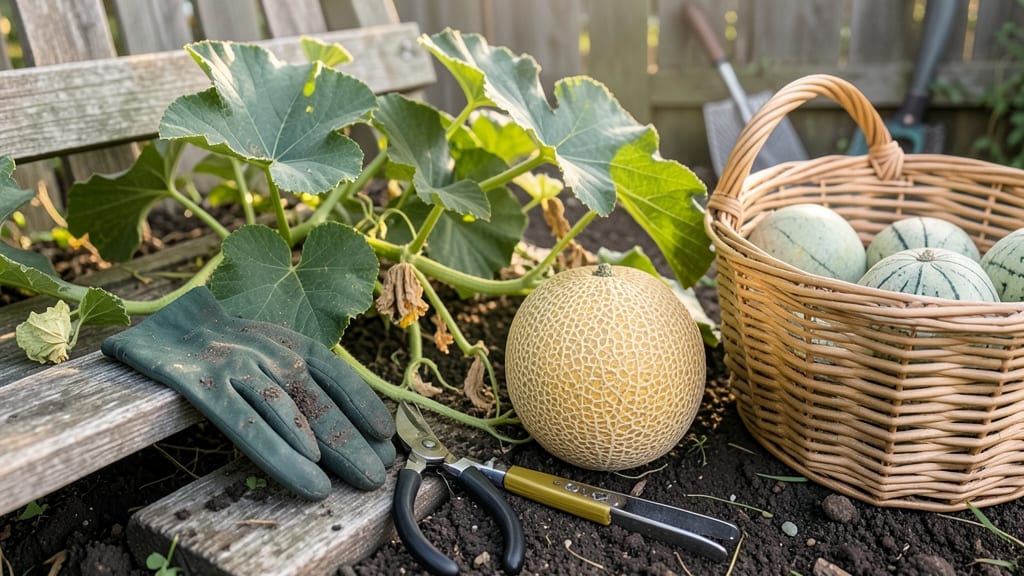
To pick cantaloupe from your garden at the perfect moment, watch for a creamy blush near the stem and a slight give when pressed—these are the two key signs of peak ripeness.
Nothing beats the sweet, fragrant reward of harvesting your own cantaloupe—but timing is everything. Pick too early, and you’ll end up with bland, seedy disappointment. Too late, and your melons turn mushy. Here’s how to master the perfect harvest moment using simple, foolproof tests.
Cantaloupes 🍈 don’t ripen further once picked, so getting them right in the garden is critical. We’ll cover the three tactile tests that work every time—no guesswork, no wasted melons—plus how to adjust for your local climate.
By the end, you’ll know exactly when to twist that stem free, how to check for hidden sweetness, and even how to save near-perfect melons that need a little extra time. Let’s make this your best harvest yet!


3 Tactile tests to determine cantaloupe ripeness
Mastering the art of cantaloupe ripeness starts with understanding three simple, science-backed tests that work together like a symphony. These tactile methods—stem slip, blossom end color, and the thump test—rely on physical cues that reveal the melon's internal sweetness and texture.
I’ve used these same techniques in my own garden to go from guessing to confidently harvesting melons at peak flavor. The key is combining all three tests for accuracy, because no single method guarantees perfection.
First, let’s talk about the stem slip test, which is often the most reliable indicator. When a cantaloupe is perfectly ripe, the stem where it connects to the vine should detach easily with just a gentle twist.
This happens because the fruit’s natural sugars break down the pectin in the stem, creating a clean separation. I’ve found that if the stem pulls off without resistance, the melon is ready to eat. If it resists, it needs more time on the vine.
Next, examine the blossom end color, which is the opposite side of the melon from where the stem connects. A ripe cantaloupe will show a creamy yellow or tan hue here, sometimes with a slight network of brown veins.
When I first started growing cantaloupes, I’d pick melons based on their outer color alone—only to find they were still hard and bland inside. The blossom end gives you the real story about internal ripeness that you can’t see from the outside.
The thump test might sound silly, but it’s a foolproof way to check for ideal texture. Give the melon a firm knock with your knuckles—if it sounds hollow, it’s ripe. A solid thump means it’s still firm and needs more time.
I test this on all my cantaloupes before harvest, especially when I’m unsure about the other two methods. This test works because ripe cantaloupes develop air pockets inside as their flesh softens.
Here’s how these three tests compare when determining when to pick cantaloupe from your garden:
| Test Method | Ripe Indicator | Unripe Indicator | Overripe Indicator |
|---|---|---|---|
| Stem Slip | Stem twists off easily | Stem resists removal | Stem falls off on its own |
| Blossom End Color | Creamy yellow/tan | Green or white | Yellow with gray/brown spots |
| Thump Test | Hollow sound | Solid thud | Mushy feel, no sound |
| Bonus Cue | Sweet aroma at stem | No noticeable smell | Fermented or sour smell |
Combining these tests gives you the most accurate picture of ripeness. For example, a cantaloupe might pass the thump test but fail the stem slip test—this means it’s close but not quite ready.
I’ve learned that patience pays off; waiting an extra day or two for all three tests to align results in melons that are bursting with sweetness and perfect texture. The blossom end color is particularly telling—if it’s still green, no matter how hollow the thump, the melon needs more time.
Don’t overlook the aroma test, which is my personal favorite for confirming ripeness. A ripe cantaloupe emits a sweet, musky fragrance near the stem when you gently sniff it. This scent comes from volatile compounds that develop as sugars mature.
In my garden, I’ll often pick melons that pass two tests but fail the aroma test—only to set them aside for another day. That final whiff is what separates good cantaloupes from great ones.
Timing your harvest correctly also depends on your local climate. In hotter regions like USDA Zone 9 or 10, cantaloupes may ripen faster due to higher temperatures.
I’ve noticed that in my Zone 6a garden, melons take about 75-85 days from planting to harvest, while in warmer climates, they might be ready in as few as 60 days. Always adjust your expectations based on your specific growing conditions.
One common mistake I see gardeners make is relying on size alone to determine ripeness. A cantaloupe’s weight or diameter doesn’t guarantee sweetness—some varieties stay small but pack intense flavor, while others grow large but remain bland.
That’s why tactile tests matter more than measurements. For instance, Hale’s Best cantaloupes are typically smaller but sweeter when fully ripe, while Athena varieties can be larger but need all three tests to confirm readiness.
To put it all together, here’s my foolproof approach: I check the blossom end color first, then perform the thump test, and finally test the stem slip. If all three align with the ripe indicators in the table above, I know it’s time to harvest.
This method has saved me from countless underripe disappointments and overripe messes. The best part? These tests work for honeydew melons too, with slight adjustments to the color cues.
Once you
Common mistakes that ruin cantaloupe harvest timing
Even experienced gardeners sometimes fall into the trap of picking cantaloupe too early or too late. The result? Bland, seedy melons that never reach their full sweet potential—or worse, mushy, split fruit that’s inedible.
These mistakes happen more often than you’d think, especially when we’re eager to enjoy our homegrown harvest. But with a few simple adjustments, you can avoid these pitfalls and enjoy cantaloupes at their peak.
One of the biggest culprits is ignoring the stem slip test. Many gardeners wait for the melon to reach a certain size or color, but without checking if the stem detaches easily, you risk harvesting too soon.
The stem should twist off with just a gentle tug—if it doesn’t, your melon needs more time on the vine. This simple test alone can save you from a disappointing harvest.
Another common error is harvesting based solely on size or color. A cantaloupe might look ripe with a creamy blossom end, but if it’s still firm and lacks that signature sweet aroma, it’s not ready.
Relying on just one cue—like color—can lead to underripe fruit that’s tough and lacks flavor. To get it right, combine visual, tactile, and olfactory tests for the most accurate results.
⚠️ Warning: Overripe Cantaloupe Signs You Can’t Ignore
These red flags mean your cantaloupe is past its prime:
- Split skin – Cracks or tears indicate overwatering or extreme heat stress.
- Soft, mushy texture – Press a fingernail into the rind; if it leaves a dent, it’s too late.
- Fermented smell – A sour or alcoholic odor means the melon has spoiled.
Pro Tip: Harvest 1-2 days before you think it’s ready to avoid these issues.
Even if you miss the perfect harvest window, don’t toss your cantaloupes! Near-perfect melons can often be salvaged with proper storage. Place them in a cool, dry spot (like a pantry) with other ripe fruits to speed up ripening.
Ethylene gas from apples or bananas can help soften underripe cantaloupes in just a few days. Just avoid refrigerating them until they’re fully ripe—cold temperatures can turn the flesh mealy.
Heat waves and inconsistent watering also play a role in ruined harvests. Fluctuating temperatures can cause cantaloupes to ripen unevenly, leading to split fruit or uneven sweetness. To prevent this, mulch around your plants to keep soil temperatures stable and water deeply but consistently.
A drip irrigation system can help maintain even moisture without overwatering.
Finally, resist the urge to harvest every melon at once. Leave a few on the vine to ripen fully, even if others are ready. Cantaloupes continue to sweeten after picking, so patience pays off.
If you’re unsure, cut one open—if the seeds are white and the flesh is orange with a honey-like texture, you’ve nailed it. If not, give the others a few more days.