
Picking
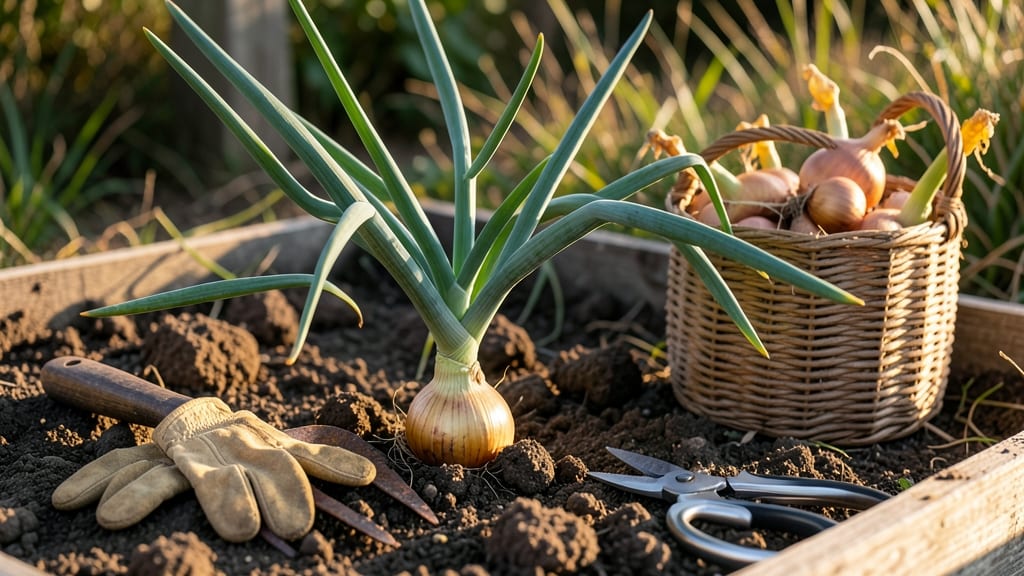
Picking onions from your garden at the right time turns a simple harvest into a flavorful success — and missing it means tough, pungent bulbs that won’t store well.
You’ve nurtured your 🧅 plants all season, but knowing when to pull them is the trickiest part. Too early, and you’re left with tiny, weak onions; too late, and they bolt or split open.
The secret lies in watching for those telltale signs: tops yellowing, bulbs firming up, and a neck that’s shrinking like a tiny corset.
Most storage onions are ready by late summer, while green onions can be snipped as soon as they reach 6-8 inches tall. But don’t guess — I’ll walk you through the exact tactile and visual cues to avoid common mistakes like harvesting too soon or waiting too long.
Once you’ve got the timing down, I’ll show you how to cure and store your onions so they last all winter, plus what to do if you’ve already missed the window. Let’s make this your best onion harvest yet!
How to identify the perfect harvest time for onions using tactile & visual cues
Harvesting onions at the right moment ensures sweet, flavorful bulbs instead of bitter, overgrown disappointments. The key lies in combining visual cues like leaf color with tactile tests such as bulb firmness and neck tightness.
For storage onions, timing is everything—wait too long, and you risk hollow stems and poor storage life.
Most onion varieties mature between 100-150 days, but exact timing depends on your climate and variety. Green onions (scallions) and spring onions can be harvested earlier when just 6-8 inches tall, while storage onions need full maturity.
Pay attention to seasonal shifts—late summer to early fall is ideal for most regions.
| Cue Type | Visual/Tactile Indicator | Storage Onions | Green Onions |
|---|---|---|---|
| Leaf Color | Tops turn yellow-brown and fall over | ✅ Ready (75-85% tops yellowed) | ❌ Not ready (harvest when 6-8" tall) |
| Bulb Size | 2-3 inches in diameter | ✅ Ideal (firm, dry skin) | ❌ Harvest when pencil-thick |
| Neck Tightness | Shriveled and tight above bulb | ✅ Perfect (prevents rot) | N/A (cut at base) |
| Root Resistance | Gently pull—roots resist slightly | ✅ Ready (bulb won't slip) | ❌ Easy pull (underripe) |
| Seasonal Timing | Late summer/early fall (Zone 6a) | July-August (spring) or Sept-Oct (fall) | Spring or fall (every 3-4 weeks) |
Start by examining the top leaves—when they turn from green to yellow-brown and flop over, storage onions are nearly ready. For long-day varieties (like Yellow Granex), this happens in late summer, while short-day varieties (like Texas Sweet) mature later.
Pro tip: Use a finger test—gently squeeze the bulb; it should feel firm, not soft or hollow.
For green onions, skip the color test entirely. Harvest when the white bulb is 1-2 inches long and the green tops are 6-8 inches tall. Cut just above the soil line to encourage regrowth.
If you miss the window, green onions can bolt (send up a flower stalk), making them bitter and inedible.
Tactile cues are your best friend when visual signs are ambiguous. Gently grasp the onion bulb near the base—if it feels dry and papery with minimal give, it’s ready. A hollow sound when tapped is a red flag: the onion is overripe.
For storage onions, the neck should shrink to about ½ inch above the bulb, creating a natural barrier against rot.
Seasonal variations matter! In cooler climates (like Zone 6a), onions mature slower, so extend your harvest window into early fall. Conversely, in hot climates, onions may mature faster—watch for yellowing tops as early as July.
Always adjust for your last frost date; onions planted too late may not reach full maturity before winter.
One common mistake is harvesting based solely on bulb size. A 2-inch diameter is ideal for storage onions, but some varieties (like shallots) stay smaller. Instead, combine size with the neck test—a tight neck means the bulb is cured and ready.
For green onions, size is the primary cue, but never let them flower.
If your onions bolt prematurely (shoot up a flower stalk), they’ll become bitter and woody. This often happens in spring-planted onions exposed to long daylight hours. To prevent bolting, plant short-day varieties or use shade cloth during peak sunlight.
For late-season harvests, focus on fall-planted onions, which mature after the longest days have passed.
Once you’ve confirmed readiness, harvest on a dry, sunny day to speed curing. Use a sharp knife or garden fork to loosen soil around the bulb, then gently lift. Shake off excess dirt and let onions cure in the sun for 3-5 days—this toughens the skin
Common mistakes that ruin onion flavor: overharvesting vs. underharvesting signs
Harvesting onions at the wrong time can turn your garden's hard work into bitter, pungent, or even rotten bulbs. Overharvesting (picking too early) leaves you with small, weak onions, while underharvesting (waiting too long) results in hollow, papery stems and strong flavors.
Both mistakes are surprisingly common, but knowing the warning signs can save your crop.
One of the biggest red flags is the top leaves. If they're still vibrant green and upright, your onions aren't ready yet. This is a classic sign of underharvesting—waiting too long means the bulbs will continue growing upward instead of developing properly.
On the flip side, if the tops are already yellow and crispy but the bulbs are tiny, you've overharvested and missed the sweet spot.
🚨 callout warning 🚨
Overharvesting: Tiny bulbs (<1 inch) with green tops still standing → Bitter, weak flavor. Salvage by replanting or using as green onions.
Underharvesting: Hollow stems, papery leaves, and bulbs >3 inches → Pungent, tough texture. Trim tops immediately to salvage remaining flavor.
Perfect Harvest: 2-3 inch bulbs with yellowing tops that flop over → Sweet, firm onions. Cure in shade for 2-3 weeks before storing.
Let's talk about bulb size—this is where most gardeners go wrong. Ideal onions should be between 2-3 inches in diameter at harvest. If yours are smaller, they're underripe and won't store well.
Larger bulbs (over 3 inches) often develop hollow stems and tough skins, which is a clear sign of overgrowth.
The neck of the onion (where the bulb meets the stem) should also be shrinking and tightening—this is your cue that the bulb has stopped growing upward and is ready for harvest.
Don't ignore the roots either. Healthy onion roots should be white and firm when you gently pull back the soil. If they're black, mushy, or rotting, your onions have been in the ground too long and are past their prime.
This is another classic underharvesting sign. On the other hand, if the roots are barely developed when you harvest, you've likely overharvested and missed the window for full bulb development.
Here's how to salvage underharvested onions: Trim the tops down to 2 inches and leave them in the ground for another 1-2 weeks to let the remaining energy go into the bulb.
For overharvested onions, use them immediately as green onions or freeze them—their small size and weak flavor make them poor candidates for long-term storage. The good news? Both mistakes can still yield edible onions with the right approach.
Remember, onions are seasonal crops—spring-planted varieties typically mature in July-August, while fall-planted ones are ready in September-October. Pay attention to your local frost dates too; onions won't tolerate freezing, so plan your harvest before the first frost hits.
With these signs in mind, you'll never ruin a crop again!