
Fertilization
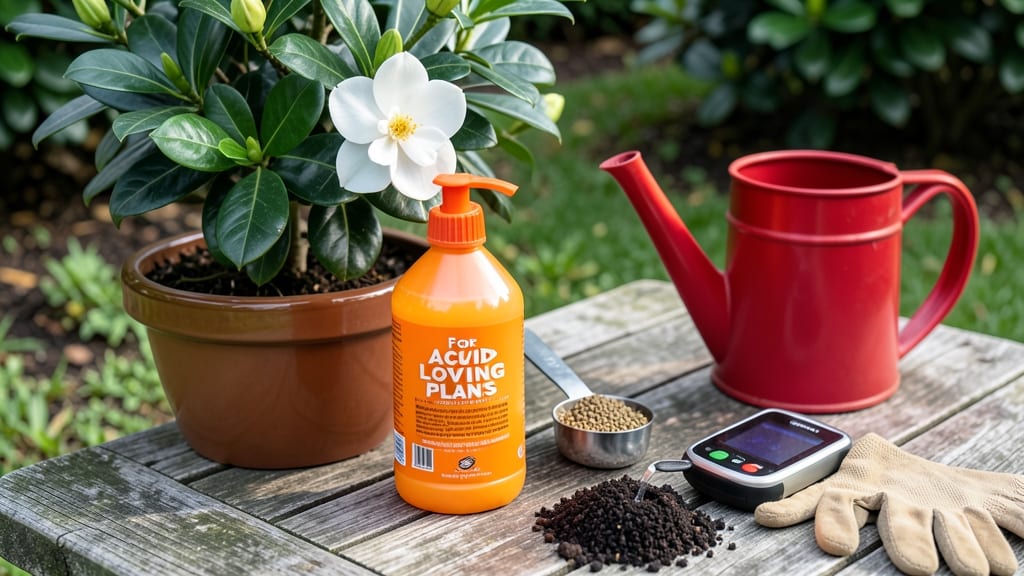
The fertilizer for gardenias in pots you choose makes all the difference—because these acid-loving plants won’t thrive on just any feed. Struggling to keep your potted gardenias blooming year-round? The secret lies in feeding them the right fertilizer at the right time—because these acid-loving beauties demand precision.
Most gardeners overlook the pH balance or use the wrong fertilizer type, which can lead to yellowing leaves or sparse blooms. But with the right approach, you can turn your container gardenia into a fragrant showstopper.
In this guide, I’ll break down the best fertilizers for potted gardenias, seasonal feeding schedules, and how to avoid common mistakes that kill blooms—so you can enjoy those sweet-smelling flowers all season long.

Best acid-loving fertilizers for potted gardenias (pH-tested recommendations)
Potted gardenias reward you with fragrant blooms and glossy leaves—but only when their acidic soil needs are met. These divas thrive in pH 4.5–6.0, and the wrong fertilizer can turn your container garden into a sad, yellowing mess.
The key? Choosing fertilizers designed for acid-loving plants while avoiding overfeeding, which burns delicate roots. Let’s break down your best organic and synthetic options, plus how to test your soil’s pH before applying anything.
First, test your soil pH—gardenias won’t absorb nutrients properly if the soil is too alkaline. A simple digital pH meter (under $10) or home test kit will tell you if you need to lower your pH with sulfur or peat moss.
Most potted gardenias start with a neutral pH (7.0), so adjusting is often necessary. Once you’ve got the right balance, you’re ready to feed.
Here’s the comparison-table of top fertilizers for potted gardenias, ranked by effectiveness and ease of use:
| Type | Key Nutrients | pH Adjustment | Application Rate | Best For |
|---|---|---|---|---|
| Organic: Fish Emulsion | N-P-K 5-1-1 + micronutrients | Slightly acidic (pH ~6.0) | 1 tbsp per gallon of water | Quick nutrient boost, foliar spray |
| Organic: Cottonseed Meal | N-P-K 6-1-1 + slow-release N | Lowers pH over time | 1 cup per 5 sq ft or 1 tbsp per pot | Long-term soil acidification |
| Synthetic: Miracid Azalea/Camellia | N-P-K 8-3-8 + iron & micronutrients | Formulated for pH 4.5–5.5 | 1 tbsp per gallon monthly | Bloom production, iron deficiency |
| Organic: Peat Moss + Compost | N-P-K 1-0-0 + organic matter | Lowers pH to ~5.5–6.0 | Mix 25% peat into potting soil | Soil structure, long-term acidity |
| Synthetic: Iron Chelate | Pure Fe (no N-P-K) | Neutral (but fixes chlorosis) | 1 tsp per gallon every 2 months | Yellow leaves (iron deficiency) |
For organic gardeners, I recommend starting with fish emulsion or cottonseed meal. Fish emulsion provides immediate nutrients and can be sprayed on leaves for extra absorption, while cottonseed meal slowly releases nitrogen and helps lower pH over time.
Mix a quarter cup of cottonseed meal into your potting soil every 3 months to maintain acidity.
Synthetic fertilizers like Miracid Azalea/Camellia are my go-to for bloom-heavy seasons because they’re formulated specifically for acid-loving plants. The 8-3-8 ratio supports both foliage and flowers, and the built-in iron prevents yellowing. Always dilute as directed—overfeeding with synthetics can burn roots faster than organics. Pro tip: Apply in the early morning so leaves dry quickly, reducing fungal risks.
If your gardenia’s leaves turn yellow between veins, it’s screaming for iron chelate. This isn’t a fertilizer but a micronutrient supplement that bypasses soil pH issues. Even in acidic soil, gardenias sometimes can’t access iron.
Use it every 2 months during blooming season, and you’ll see new growth in 2–3 weeks. Pair it with a slow-release fertilizer like Osmocote (14-14-14) to avoid nutrient spikes.
Slow-release fertilizers are a game-changer for potted gardenias. Products like Osmocote Smart-Release or Jobe Organic granules feed your plant for 3–6 months without the risk of overfeeding. Sprinkle them on the soil surface in spring and let rain or watering activate them.
This method is perfect for busy gardeners who forget monthly feedings—or for those with black thumb syndrome.
One critical mistake I see often? Using regular garden fertilizers (like 10-10-10) without adjusting pH. These can raise soil pH over time, locking out nutrients. If you must use a general fertilizer, add sulfur (1 tsp per pot)
Seasonal feeding schedule for potted gardenias: when, what, and how much
Potted gardenias thrive when fed with precision—too little and they won’t bloom, too much and you’ll burn their delicate roots. The key is a seasonal approach that matches their natural growth cycles. In spring, they crave nutrients to fuel blooms, while summer requires lighter feeding to prevent stress.
Fall and winter? They rest, so feeding stops completely. Let’s break down the month-by-month plan to keep your gardenias happy and flowering.
First, always use a balanced, acid-loving fertilizer with a pH of 4.5–6.0. Synthetic options like Miracle-Gro Azalea/Camellia or organic choices like fish emulsion work well. Dilute liquid fertilizers to half-strength for potted plants to avoid salt buildup. Now, let’s dive into the schedule—because timing is everything for these finicky beauties.
| Season | Fertilizer Type | Frequency | Dilution Ratio | Signs of Over-Feeding |
|---|---|---|---|---|
| Spring (March-May) | Acidic 10-10-10 or fish emulsion | Every 4 weeks | Half-strength | Brown leaf tips, stunted growth |
| Summer (June-August) | Light feed: 5-5-5 or seaweed extract | Every 6 weeks | Quarter-strength | Yellowing leaves, leaf drop |
| Fall (September-November) | None (resting phase) | Skip | N/A | New growth in fall |
| Winter (December-February) | None (dormancy) | Skip | N/A | Wilting or crispy leaves |
In spring, gardenias need a nutrient boost to support bud formation. Use a balanced acidic fertilizer like 10-10-10 every 4 weeks, starting in early March. For a 6-inch pot, 1 tablespoon is plenty—too much causes salt buildup.
Mix the fertilizer into the top inch of soil or dilute it to half-strength for liquid feeds. Watch for yellowing leaves, a sign of over-fertilization.
By summer, reduce feeding to avoid stress. Switch to a lighter formula like 5-5-5 or seaweed extract, applied every 6 weeks at quarter-strength. Gardenias in pots dry out faster, so always water deeply after fertilizing.
If you spot brown leaf tips, flush the soil with water to remove excess salts. This is also the time to add mulch to retain moisture and cool roots.
As temperatures drop in fall, gardenias enter dormancy. Stop fertilizing entirely—this mimics their natural cycle. Focus on pruning dead blooms and reducing watering. If you notice new growth, you’ve overfed.
In winter, keep your potted gardenia in a cool, bright spot (like a garage with natural light) and avoid fertilizing. Overwatering is the biggest winter mistake—let the top inch of soil dry out between waterings.
Pro tip: If your gardenia’s leaves turn yellow between veins, it’s a classic sign of iron deficiency. Boost iron with a chelated iron supplement every 2 months during spring and summer. And remember, pH matters—test your soil annually.
If it’s above 6.0, amend with sulfur or peat moss to lower it. With this schedule, your gardenias will reward you with fragrant blooms all season.