
Tools
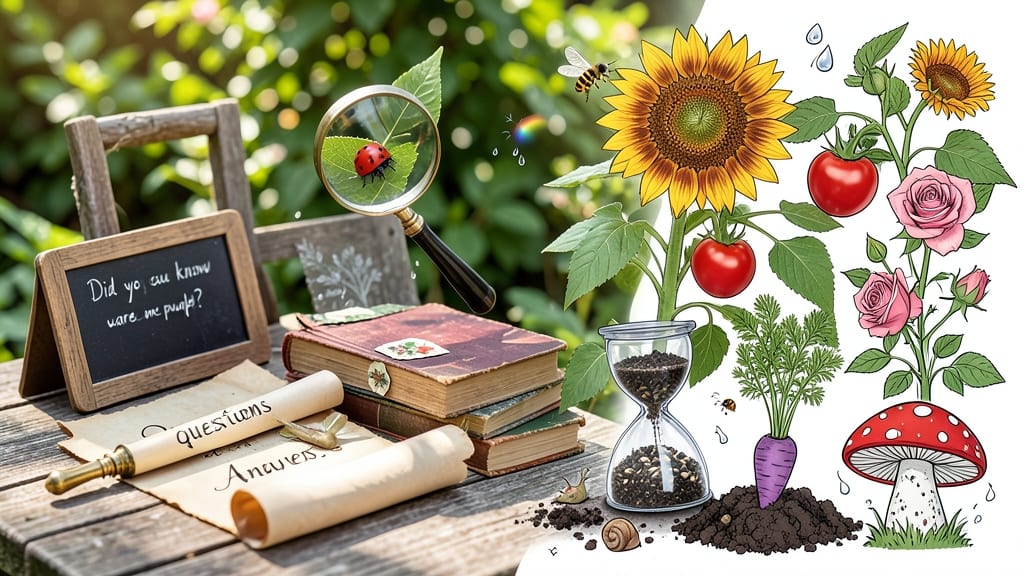
Garden trivia questions and answers uncover fascinating plant behaviors, such as why sunflowers track sunlight throughout the day, how onion layers develop into full bulbs, and which houseplants naturally filter toxins from indoor air. These unexpected insights make gardening more engaging and educational for everyone.
Did you know that some plants have hidden superpowers? 🌱 Many gardeners are surprised to learn how much science lies behind everyday plant behaviors. For example, sunflowers don't just turn toward the sun—they perform heliotropism, a process that helps them maximize photosynthesis during their growth stages.
Meanwhile, onions store nutrients in their layers, which is why they develop into those familiar bulb shapes. And let's not forget the air-purifying benefits of houseplants like spider plants or snake plants, which can remove common household toxins through their leaves.
These fun facts aren't just interesting—they can transform how you approach gardening. Whether you're teaching kids about plant life cycles or hosting a trivia night with fellow green thumbs, incorporating these tidbits makes learning interactive and memorable.
Plus, understanding the science behind your plants helps you care for them more effectively, from choosing the right light conditions to troubleshooting common issues.
💡 In This Article
- Science Behind Common Garden Facts
- How to Use Garden Trivia for Teaching
Science behind common garden facts
Sunflowers don't just look like they're following the sun—they're performing a botanical phenomenon called heliotropism. During their flowering stage, sunflowers rotate their heads to track the sun's movement from east to west, a process driven by changes in the plant's stem growth.
The eastern side of the stem elongates faster, causing the flower to tilt toward the morning sun. This behavior maximizes photosynthesis by keeping the flower facing the light for up to 14 hours a day during peak growth.
At night, the stem contracts, resetting the flower's position for the next morning.
The onion's layered growth pattern is equally fascinating. Each papery layer represents a leaf sheath that wraps around the bulb's core, where nutrients and water are stored. As the plant grows, these layers expand and store carbohydrates, transforming into the familiar bulb shape.
This storage system allows onions to survive drought conditions by drawing on their own reserves. 🌱 What's surprising is that each layer contains a miniature plant—if you separate and replant a single layer, it can regrow into a full onion, though the process takes 6-8 months and results in smaller bulbs.
Houseplants like the spider plant (Chlorophytum comosum) and snake plant (Sansevieria trifasciata) clean indoor air through a process called phytofiltration. Their leaves absorb volatile organic compounds (VOCs) like formaldehyde and benzene through tiny openings called stomata.
NASA studies found that these plants can remove up to 87% of airborne toxins in a 24-hour period when placed in well-lit rooms. The key is surface area—the more leaves, the more pollutants they can process.
For example, a single snake plant can purify air in a 200-square-foot room, making it a silent but powerful ally against indoor air pollution.
Many gardeners overlook how plant behaviors are tied to survival strategies. Take the Venus flytrap (Dionaea muscipula), which uses rapid leaf movements to trap insects. This "snap" happens in just 0.1 seconds, triggered by tiny hairs on the leaf surface that detect vibrations.
The plant's digestive enzymes then break down the prey, providing essential nitrogen—a nutrient often scarce in its boggy, acidic habitat. Understanding these mechanisms helps gardeners replicate ideal conditions, whether it's mimicking a flytrap's moisture-rich environment or positioning sunflowers to maximize sunlight exposure.
Even seemingly simple facts hide complex science. For instance, why do some plants close their leaves at night? This nyctinastic movement (common in plants like the sensitive mimosa) is controlled by a biological clock in the plant's stem.
The hormone abscisic acid causes cells on one side of the leaf joint to shrink, pulling the leaf downward.
This behavior conserves water and protects the plant from nocturnal predators. 🌙 The same principle applies to the sleep movements of beans and clovers, showing how plants have evolved to optimize energy use across their 24-hour cycle.
Knowing these processes can transform gardening from a hobby into a science experiment. For example, if you're growing sunflowers, positioning them to face east in the morning boosts their growth rate by up to 20%.
Similarly, placing air-purifying plants in high-traffic areas (like bedrooms or offices) can reduce airborne allergens by 30-50%. The next time you tend to your garden, think about the hidden intelligence behind each plant's behavior—it's not just decoration, it's a living system with remarkable adaptations.