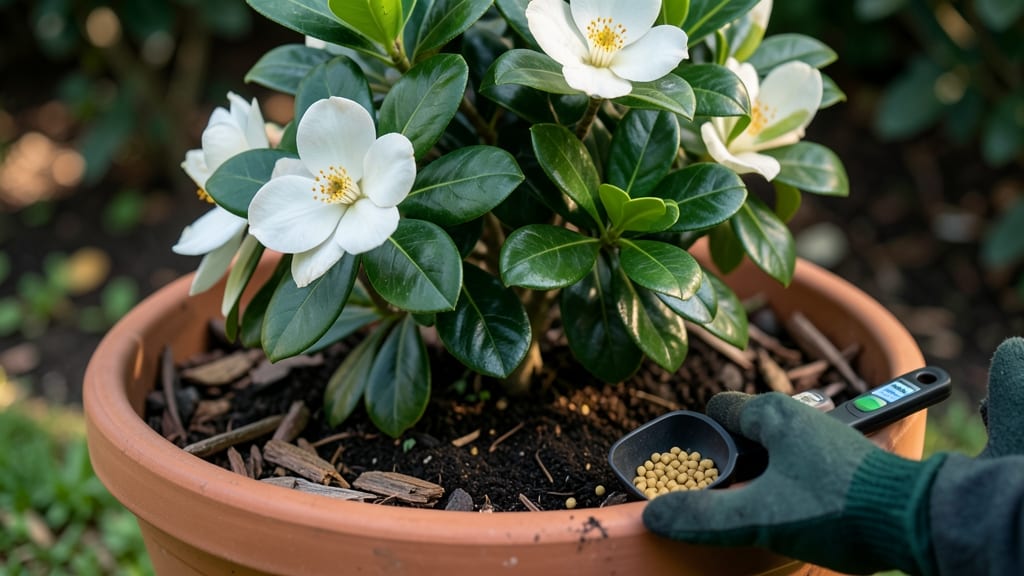
The secret weapon for bigger, more fragrant gardenia flowers is using the right gardenia flower fertilizer—and skipping the wrong type can leave you with lush leaves but zero blooms. 🌸
If your gardenia flowers are small, sparse, or failing to bloom at all, the missing ingredient might be a targeted acid-loving fertilizer—one that matches their exact nutritional needs. Discover how the right feeding strategy can transform your gardenia into a fragrant, flower-filled powerhouse.
Gardenia thrives on acidic soil (pH 5.0–6.0), but not all fertilizers play nice with that requirement. Synthetic blends like acid-forming pellets or organic options such as fish emulsion can make all the difference, but timing and dosage matter just as much as the formula itself.
In this guide, you’ll learn how to choose the best fertilizer for your gardenia, when to feed it for maximum blooms, and how to spot signs of over- or under-fertilizing before it’s too late.
💚
💚
💚

🌸
Gardenia Feeding Guide
Frequency
Every 4-6 weeks during growing season
Best acid-loving fertilizers for gardenia blooms: organic vs synthetic options
Gardenia plants thrive when fed with the right acid-loving fertilizers, but not all options deliver the same results. The key lies in matching your gardenia’s nutritional needs—specifically a balanced NPK ratio (like 10-10-10) and micronutrients such as magnesium and iron.
These elements directly influence bloom size, fragrance intensity, and overall plant health. Without the proper fertilizer, your gardenia might produce sparse, weak flowers or even fail to bloom altogether.
Organic fertilizers, like fish emulsion or peat-based compost, release nutrients slowly, improving soil structure over time. Synthetic options, such as acid-forming blends or slow-release pellets, provide immediate results but require careful monitoring to avoid over-fertilization.
Both types have their place, depending on your gardenia’s current health and your gardening goals. Let’s break down the best choices to maximize those show-stopping blooms.
Here’s how pH levels, nutrient ratios, and release timing impact your gardenia’s performance. For instance, a low pH (below 5.0) can lock out essential nutrients like iron, leading to yellowing leaves—even if you’re fertilizing regularly.
Meanwhile, a high phosphorus (P) ratio (like 10-20-10) can boost flower production, but too much nitrogen (N) will prioritize leafy growth over blooms. Balancing these factors is the secret to vibrant, fragrant gardenia flowers.
| Fertilizer Type |
NPK Ratio |
pH Impact |
Release Timing |
Best For |
Micronutrients |
| Fish Emulsion (Organic) |
5-1-1 |
Acidifies soil (pH 5.5-6.0) |
Slow (4-6 weeks) |
Established plants, soil health |
Iron, magnesium, calcium |
| Peat-Based Compost (Organic) |
2-1-1 |
Maintains acidity (pH 5.0-5.5) |
Very slow (months) |
Long-term soil enrichment |
Trace minerals, organic matter |
| Acid-Forming Blend (Synthetic) |
10-10-10 + sulfur |
Lowers pH (pH 4.5-5.5) |
Medium (2-4 weeks) |
Quick bloom boost |
Iron chelate, zinc |
| Slow-Release Pellets (Synthetic) |
14-14-14 |
Neutral to slightly acidic |
Very slow (3-6 months) |
Low-maintenance feeding |
Balanced micronutrients |
| Citrus Peel Compost (DIY Organic) |
1-1-1 (low N) |
Mildly acidifies (pH 5.5-6.0) |
Slow (6-8 weeks) |
How to apply gardenia flower fertilizer for maximum results: seasonal schedule and dosage
Gardenias thrive when fed with the right acid-loving fertilizer at the perfect times. Unlike many plants, they demand a seasonal feeding schedule that aligns with their natural growth cycles. Skipping this step often results in small blooms or no flowers at all, despite your best efforts.
The key is balancing nutrient timing with soil pH adjustments—both critical for unlocking that signature gardenia fragrance.
Most gardeners make two fatal mistakes: over-fertilizing in winter or using the wrong NPK ratio. Gardenias need a low-nitrogen, high-phosphorus feed during bloom season (like a 6-12-6 blend) but a balanced formula in spring to build foliage.
Let’s break down the exact month-by-month plan that’ll transform your plant from struggling to showstopping.
-
🌱 Spring (March-May): Light feed with acid-based fertilizer (pH 5.0-6.0) every 4-6 weeks to encourage new growth. Use 1 tbsp per plant mixed into topsoil.
-
☀️ Summer (June-August): Double the dose (2 tbsp/plant) every 4 weeks for blooming. Focus on phosphorus-rich formulas to boost flower production.
-
🍂 Fall (September-October): Light feed only (1 tbsp/plant) to prepare for dormancy. Avoid high-nitrogen fertilizers, which promote late-season growth vulnerable to frost.
-
❄️ Winter (November-February): No fertilizer. Gardenias are dormant—feeding now causes root burn and nutrient buildup.
💡 Pro Tip: Always water before fertilizing to prevent root damage.
For best results, apply root zone fertilizer in early morning when the soil is moist but not soggy. This gives nutrients time to absorb before the heat of the day.
If your gardenia’s leaves are turning yellow with brown edges, it’s a classic sign of over-fertilizing or alkaline soil. Flush the soil with water and test your pH—gardenia soil should stay between 5.0 and 6.0. Use sulfur or peat moss to lower pH if needed.
Foliar sprays can also help, especially during bloom season. Mix a liquid fertilizer with water (1 tsp per gallon) and spray leaves in the morning. This delivers quick nutrients for vibrant flowers, but avoid spraying when blooms are open to prevent damage.
Always follow the product’s instructions for dosage rates, as gardenias are sensitive to chemical buildup.
Watch for stunted growth or sparse blooms—these are red flags for under-fertilizing or poor soil conditions. If your gardenia isn’t blooming by mid-summer, it’s time to reassess your feeding routine.
A monthly soil check and adjusting your fertilizer type can make all the difference between a fragrant garden centerpiece and a sad, leafy shrub.
With this seasonal schedule, your gardenia will reward you with larger, more fragrant blooms year after year. The secret? Consistency and pH control—two small efforts that yield enormous results. Happy gardening! 🌸
★★★★★4.9(7 reviews)
|