
Light Requirements
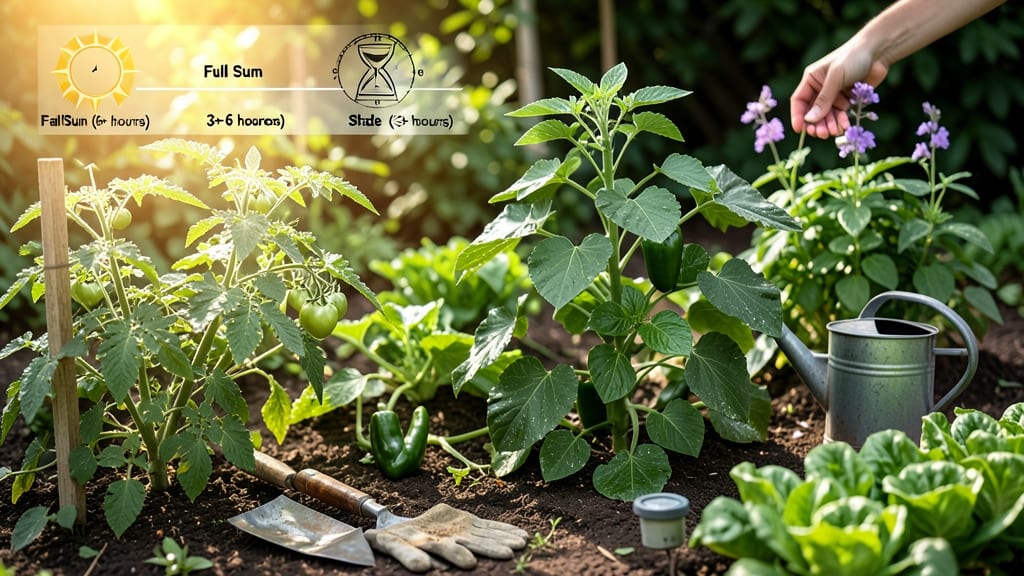
A vegetable garden needs how many hours of sun does a vegetable garden need—typically 6 to 8 hours of sunlight daily 🥬—to grow strong and productive. Without it, your tomatoes might stay green, your lettuce bolt, and your peppers produce half the yield.
Sunlight is the lifeblood of your vegetable garden—but too much or too little can spell disaster for your crops. Discover the exact light requirements your plants need to thrive, from leafy greens that tolerate shade to sun-hungry tomatoes that demand full exposure.
Not all vegetables are created equal: while leafy greens like spinach and kale can handle 3 to 6 hours of sunlight, crops like peppers, eggplants, and cucumbers will wilt without at least 8 hours of direct light.
Even a small misjudgment can mean the difference between a bumper harvest and a sad, stunted garden.
In this guide, I’ll break down the sunlight needs by crop type, how to measure sunlight in your garden, and how to adjust for optimal growth—no matter where you live or what your space looks like.


Sunlight requirements by vegetable type: full sun vs. partial shade guide
Understanding sunlight requirements is the first step to a thriving vegetable garden. Most vegetables fall into three categories: full sun lovers (6+ hours), partial shade tolerators (3-6 hours), and low-light survivors (under 3 hours).
Getting this right means the difference between a bountiful harvest and struggling plants. For example, tomatoes and peppers wilt without full sun, while lettuce bolts in too much heat.
Your garden’s microclimate plays a huge role—what’s full sun in one spot might be partial shade just a few feet away. Start by observing your space for 4-6 hours daily to categorize areas accurately.
This simple step prevents common mistakes like placing basil in deep shade or radishes in scorching afternoon sun, both of which stifle growth.
Why sunlight matters: It drives photosynthesis, determines flavor (e.g., sweeter tomatoes), and affects plant structure. A 6-hour deficit can reduce yields by 30-50% for sun-dependent crops. Even shade-loving plants like spinach need some light to avoid leggy, bitter growth.
For full sun crops like tomatoes, place them where they receive uninterrupted sunlight from early morning to late afternoon. These plants thrive with 6+ hours of direct rays and show signs of stress—like yellowing leaves or stunted growth—if deprived. In hot climates, afternoon shade can prevent sunscald on fruits.
Partial shade plants, such as lettuce or spinach, need protection from intense afternoon heat. Too much sun causes them to bolt prematurely, turning bitter and woody. Aim for morning sun (cooler temperatures) and dappled shade in the afternoon. This balance keeps leaves tender and flavorful.
Low-light shade-tolerant vegetables like parsley or Swiss chard can survive with as little as 3 hours of sun, making them ideal for woodland gardens or urban balconies with limited exposure. However, even these plants may stretch toward light, becoming leggy. Supplement with grow lights or reflective surfaces if needed.
Watch for visual cues like pale leaves (too little sun) or scorched edges (too much). Adjust by moving plants or using shade cloth (30-50% blockage) during peak hours. For example, basil in hot climates benefits from afternoon shade to prevent wilting while still getting morning sun.
How to measure sunlight in your garden and adjust for optimal growth
Measuring sunlight in your garden is the first step to creating the perfect growing environment for your vegetables. Without accurate sunlight data, even the hardiest plants can struggle to thrive.
I’ve learned that simply glancing at your garden won’t cut it—you need precise measurements to match plants with their ideal light conditions.
Start by observing your garden throughout the day, especially during the peak sunlight hours between 10 AM and 4 PM. Use a simple sunlight journal to track how many hours each spot receives direct light.
This method ensures you’re not guessing about your garden’s microclimates, which can vary dramatically even within a few feet.
⚠️ ⚠️ WARNING: MISJUDGING SUNLIGHT CAN RUIN YOUR HARVEST ⚠️ Most vegetables need 6-8 hours of full sun daily for optimal growth, but many gardeners overestimate or underestimate their garden’s light exposure.
For example, tomatoes and peppers require 8+ hours of sun—any less, and you’ll see stunted growth or poor fruit production. Meanwhile, leafy greens like spinach or lettuce can thrive with just 3-4 hours of sun, making them perfect for partial-shade spots.
If your garden gets less than 4 hours of sun, consider shade-tolerant crops or supplement with reflective surfaces (like white walls or mirrors) to boost light exposure.
For a more precise approach, use a sunlight calculator or a simple DIY method with a solar meter (available online for under $20). These tools measure light intensity in foot-candles, giving you a clear picture of whether your garden meets the needs of sun-loving or shade-tolerant plants.
I’ve found that even a small difference—like moving a plant from a 6-hour sun spot to a 4-hour spot—can drastically reduce yields.
If your garden lacks sufficient sunlight, don’t despair! You can adjust light exposure with strategies like using reflective mulch (white gravel or aluminum foil) to bounce extra light onto plants. For shade-loving crops, shade cloths (30-50% shade) can prevent leaf scorch while still allowing enough light for growth.
I’ve successfully used these tricks in my own garden to extend the growing season for basil and kale in partially shaded areas.
Another pro tip: Plant taller, sun-loving crops like corn or sunflowers on the north side of your garden (in the Northern Hemisphere) to avoid casting shadows on shorter plants. This simple layout tweak can maximize sunlight distribution and improve overall plant health.
Always rotate crops annually to prevent soil depletion and ensure even light exposure across your garden beds.
Finally, keep an eye on seasonal changes—summer sun patterns differ from spring or fall. What seems like a full-sun spot in June might only get partial sun in September due to lower sun angles.
Adjust your planting plan accordingly, and don’t hesitate to move sensitive plants to sunnier locations as needed. With these adjustments, you’ll create the perfect light conditions for a thriving vegetable garden. 🌱