How Much Sun Does a Vegetable Garden Need: Daily Light Ranges by Plant Type

Light Requirements

How Much Sun Does a Vegetable Garden Need: Daily Light Ranges by Plant Type

A vegetable garden needs how much sun does a vegetable garden need to thrive? The answer is 6 to 8 hours of sunlight daily for peak growth, but how you measure that—and which crops thrive in less—makes all the difference.

Struggling to decide where to plant your tomatoes or lettuce? Sunlight is the single most critical factor in a thriving vegetable garden—but too much or too little can ruin your harvest. Here’s the science-backed breakdown of how much sun your plants actually need to grow strong, productive, and pest-resistant.

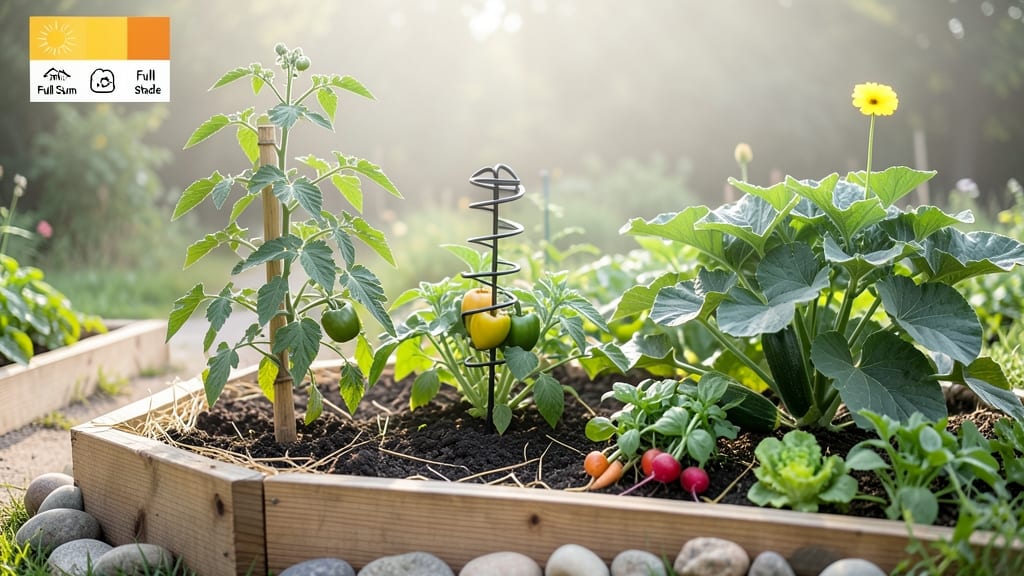
Some plants, like peppers and cucumbers, demand full sun (6+ hours) to produce, while others, such as leafy greens, adapt to partial shade (4-6 hours). The key is matching your garden layout to your yard’s natural light patterns, whether you’re working with a raised bed, containers, or in-ground plots.

Below, I’ll break down the ideal sunlight ranges by plant type, how to measure sunlight in your space, and 3 easy fixes for gardens that don’t get enough light—so you can grow a bountiful harvest no matter where you live.

Light Requirement
Full Sun
6-8+ hours of direct sunlight daily for most vegetables
🔆
Low Medium Bright Direct
🪟 Near a South-Facing Window or in a sunlit garden bed

Sunlight requirements for vegetable gardens: full sun vs. partial shade explained

Understanding sunlight requirements for your vegetable garden is like knowing the secret ingredient for success. Too little sun, and your plants stretch weakly toward the light; too much, and they scorch or bolt prematurely. The key lies in matching each plant’s needs to its growing conditions.

For example, tomatoes and peppers crave full sun exposure, while leafy greens like spinach tolerate partial shade better. Let’s break down the categories so you can place every plant perfectly.

First, let’s define the sunlight categories most gardeners use: full sun, partial shade, and light shade. These aren’t just vague terms—they refer to specific hourly sunlight ranges that directly impact growth speed, yield, and even flavor.

For instance, a 6+ hours of sun spot qualifies as full sun, while 4-6 hours is partial shade. Knowing these ranges helps you avoid common mistakes, like planting heat-sensitive crops where they’ll wilt or bolting too quickly.

The summary-table below shows how different vegetables thrive—or struggle—under each sunlight category. Use it as your quick-reference guide when planning your garden layout. For example, cucumbers and squash need full sun to produce heavy yields, while bok choy and arugula can handle partial shade without sacrificing quality.

Even herbs like parsley prefer partial shade to avoid bitter flavors from intense sun.

Vegetable Sunlight Category Hours of Sun Needed Growth Impact Notes
Tomatoes Full Sun 6-8+ hours Max yield, sweet flavor Afternoon shade helps in hot climates
Peppers Full Sun 6-8+ hours Strong stems, high yield Mulch to retain moisture
Cucumbers Full Sun 6-8+ hours Heavy vining, fruit set Trellis for support
Spinach Partial Shade 4-6 hours Prevents bolting Harvest young for tenderness
Lettuce Partial Shade 4-6 hours Sweet, crisp leaves Avoid wilting in heat
Bok Choy Partial Shade 4-6 hours Tender stalks, mild flavor Rich soil prevents bitterness
Parsley Light Shade <4 hours

Best vegetables for low-sun gardens: 10 shade-tolerant plants that still produce

If your garden gets less than 6 hours of direct sunlight, don’t despair—many vegetables thrive in partial or light shade. These shade-tolerant varieties produce just as well (or better!) when protected from harsh afternoon rays.

The key is choosing the right crops and providing consistent moisture, since shaded plants often need more water to compensate for reduced photosynthesis.

For example, leafy greens like spinach and root vegetables such as radishes actually prefer cooler, shaded conditions. Even fruiting plants like bush beans can adapt if given enough space and organic matter in the soil.

Below, I’ve curated the top 10 shade-tolerant vegetables that deliver reliable harvests with minimal sunlight requirements.

🌱 How Much Sun Does a Vegetable Garden Need?

  1. Full Sun (6+ hours/day): Ideal for tomatoes, peppers, and cucumbers. No substitutes for these heat-lovers.
  2. Partial Shade (3-6 hours/day): Perfect for leafy greens, beans, and carrots. Morning sun + afternoon shade works best.
  3. Light Shade (<3 hours/day): Reserved for herbs like parsley and root crops like beets. Avoid fruiting plants here.
  4. Deep Shade (<2 hours/day): Only microgreens or sprouts survive long-term. Not for traditional veggies.

🌿 Pro Tip: Use a sunlight map (free apps like Sun Surveyor) to track your garden’s light patterns before planting.

Let’s start with the easiest shade-tolerant vegetables for beginners. Lettuce, especially butterhead or romaine, grows best in 3-4 hours of morning sun. It bolts (goes to seed) faster in hot conditions, so keep it cool with a shade cloth if temperatures rise above 75°F.

Pair it with radishes, which mature in just 25-30 days and tolerate 2-4 hours of indirect light.

For a protein boost, try bush beans like Blue Lake or Contender. They fix nitrogen in the soil and thrive with 4-6 hours of dappled sunlight.

Plant them near spinach or Swiss chard, which also love shade. Avoid overcrowding—beans need 3-4 inches of space between plants to prevent disease from poor airflow.

Root vegetables like carrots and beets are surprisingly adaptable. Choose shorter varieties (e.g., Paris Market carrots) to avoid soil compaction in shaded beds.

Water consistently to prevent forked roots, a common issue in low-light conditions. Turnips and rutabagas also perform well with 3-5 hours of sun, adding variety to your harvest.

Don’t overlook herbs for shade! Cilantro and parsley grow lushly in partial shade, while chives tolerate even light shade. These herbs deter pests like aphids, making them ideal companions for your shade garden. Just avoid basil or oregano, which need full sun to thrive.

Avoid these common mistakes in low-sun gardens: overwatering (shaded soil stays damp longer), skipping mulch (retains moisture and cools roots), and planting sun-lovers like tomatoes in shaded spots. Instead, focus on moisture-retentive soil with compost or peat moss, and rotate crops annually to prevent nutrient depletion.

With the right choices, your shade garden can be just as productive as a sun-soaked plot. Start with 1-2 shade-tolerant varieties, experiment with companion planting, and soon you’ll be harvesting fresh greens and roots without stepping into direct sunlight. Happy gardening! 🌱

★★★★★4.9(6 reviews)
Categories Light Requirements