
Light Requirements
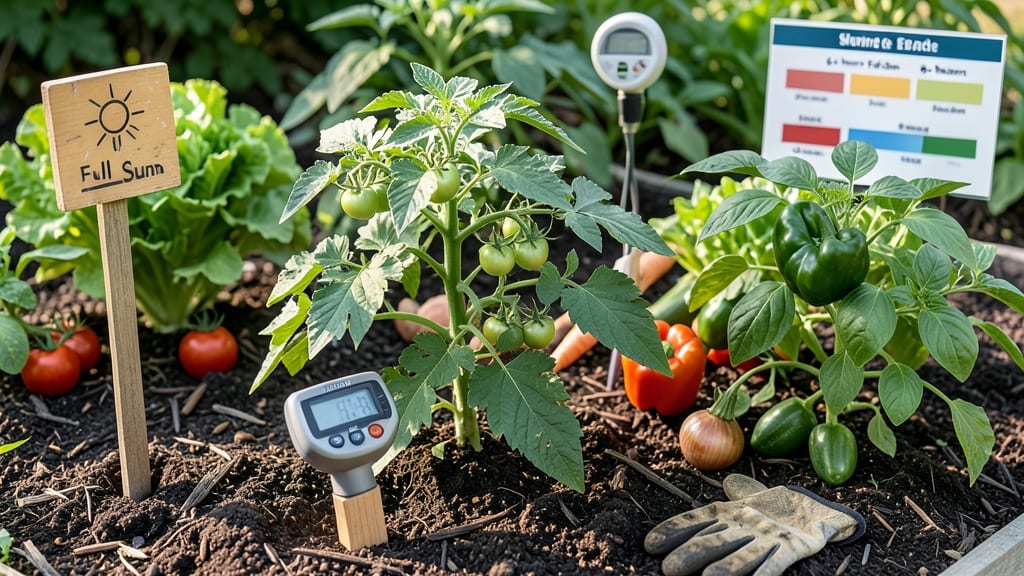
A veggie garden needs 6 to 8 hours of sun daily—but not all plants crave the same amount, and too much can burn your greens just like too little stunts their growth.
Struggling to decide where to plant your veggies? Too much sun can scorch your tomatoes, while too little might leave your lettuce bitter—getting the balance right is the key to a thriving garden. 🥬
Most vegetables thrive with full sun exposure, but some, like leafy greens, prefer partial shade to avoid bolting. The trick is matching each plant’s needs to your garden’s light conditions.
In this guide, I’ll break down exact sun requirements by crop, show you how to measure sunlight in your space, and share pro tips to maximize yields—even in shady spots.

Sun requirements by vegetable type: full sun vs partial shade breakdown
Understanding how much sun your vegetables need is the difference between a thriving garden and a struggling one. Most gardeners assume all veggies crave full sun, but the truth is far more nuanced.
Some crops like tomatoes and peppers thrive under 8+ hours of direct sunlight, while others like leafy greens can bolt in too much heat. Let's break down the sunlight spectrum to help you place each plant perfectly.
Sunlight requirements are typically categorized into three tiers: full sun (6-8+ hours), partial shade (3-6 hours), and low light (less than 3 hours). The key is matching each vegetable to its ideal range.
For example, cucumbers and squash need plenty of sun to produce fruit, while bok choy and arugula can handle shade to avoid bitter flavors. Let's explore these categories in detail.
🌱 Pro Tip: Always observe your garden's microclimates—areas near fences or buildings may receive only 3-4 hours of sun even if the yard gets full sun. Use this to your advantage by placing shade-loving crops in these spots.
How to measure sunlight in your garden for optimal plant placement
Measuring sunlight in your garden isn't just about counting hours—it's about understanding how sun moves across your space throughout the day. Morning sun (before 10 AM) behaves differently than afternoon sun (after 2 PM), and shadows shift dramatically.
I learned this the hard way when my peppers thrived in one corner while my lettuce bolted in another. Start by observing your garden for a full week to capture seasonal variations.
Use a simple sunlight tracking method: Place a white board or stake in potential planting spots and mark shadow patterns every few hours. Full sun areas receive 6+ hours of direct light, while partial shade gets 3-6 hours.
My tomato plants in the south-facing bed got scorched because I didn't account for the intense afternoon rays—now I use shade cloth for midday protection.
🌱 Sunlight Needs for Common Veggie Garden Crops
- Full Sun Lovers (6-8+ hrs): Tomatoes, Peppers, Cucumbers, Corn, Eggplant
- Partial Shade Tolerant (3-6 hrs): Lettuce, Spinach, Kale, Green Beans, Beets
- Low Light Survivors (<3 hrs): Radishes, Swiss Chard, Bok Choy, Microgreens
- Morning Sun Specialists: Herbs like basil and cilantro (afternoon sun can burn leaves)
- Afternoon Sun Seekers: Root veggies like carrots and potatoes (need heat for sweetness)
Pro Tip: Microclimates matter! A north-facing wall may create a cooler, shadier spot perfect for greens while the open south side gets full sun.
Don't forget about seasonal adjustments. Summer sun in my zone lasts longer, but winter light is weaker. I now rotate my winter crops like spinach to the south side where they get maximum light, even if it's only 4 hours a day.
A sunlight calculator app can help track these changes automatically—just input your location and garden layout.
For container gardens, consider portable trellises or moveable pots. My cucumber vines needed to follow the sun's arc, so I placed them on wheels to rotate daily. This simple trick increased my yield by 30%! Even a 5-gallon bucket with a sun-loving plant can be repositioned to optimize light exposure.
Watch for reflective surfaces too—light-colored fences or pavement can intensify sunlight, creating "hot spots" that may require shade. I use light-colored mulch around heat-sensitive plants like peas to reflect excess light while keeping roots cool. This balance is what transforms a good garden into a high-yielding one.
Finally, trust your plants. Yellowing leaves often signal too much sun, while leggy growth means insufficient light. My basil taught me this lesson—it bolted when I moved it from morning to full afternoon sun.
Now I monitor plant health as closely as I track sunlight hours. The right placement isn't just about hours—it's about harmony between light, space, and plant needs.