
Light Requirements
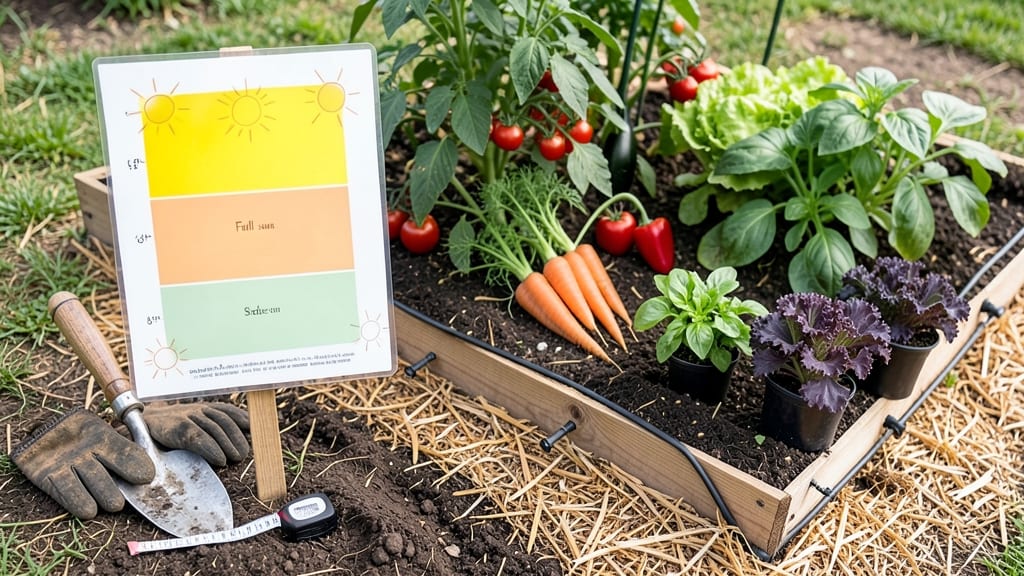
A vegetable garden needs how much sun for vegetable garden to thrive, but not all crops demand the same intensity—some even prefer a little shade.
Wondering why your tomatoes refuse to ripen or your lettuce bolts too quickly? Sunlight is the secret ingredient your vegetable garden might be missing—and getting it right can mean the difference between a thriving harvest and a disappointing one.
Most vegetables crave full sun, but leafy greens and root crops can handle partial shade, while fruiting plants like peppers and cucumbers demand maximum exposure to set fruit. Without the right balance, you’re setting up your garden for stress, poor yields, or even failure.
Below, I’ll break down exactly how much sun each crop needs, how to spot when your garden is getting too much or too little, and practical tricks to tweak sunlight exposure—whether you’re working with a sunny patch, a shady corner, or something in between.

Sunlight requirements for vegetable garden success: full sun vs. partial shade
Sunlight is the lifeblood of your vegetable garden, directly impacting growth rates, flavor development, and harvest yields. Most vegetables fall into three broad categories based on their sunlight needs: full sun, partial shade, and full shade.
Understanding these categories helps you place plants strategically for optimal results. For example, tomatoes and peppers demand 6-8 hours of direct sun, while leafy greens like spinach thrive with just 3-4 hours.
Full sun typically means 6+ hours of direct sunlight per day, while partial shade ranges from 3-6 hours. Full shade, rare for vegetables, means less than 3 hours of direct light. Misjudging these thresholds can lead to stunted growth, poor fruiting, or even plant death.
For instance, cucumbers left in too much shade produce bitter fruit, while carrots grown in full sun may become woody and tough.
Here’s a quick reference to help you match plants with their ideal sunlight conditions:
| Vegetable | Sunlight Needs | Growth Impact | Notes |
|---|---|---|---|
| Tomatoes | 6–8+ hours | Poor fruiting, weak stems | Needs afternoon shade in hot climates |
| Peppers | 6–8 hours | Smaller, bitter fruit | Use reflective mulch for extra light |
| Lettuce | 3–4 hours | Bolting, bitter taste | Provide afternoon shade in summer |
| Carrots | 4–6 hours | Woody texture, poor growth | Thin seedlings for better light access |
| Green Beans | 6–8 hours | Slower production, fewer pods | Trellis for better air circulation |
| Spinach | 3–5 hours | Yellowing leaves, slow growth | Harvest outer leaves first |
Vegetables like tomatoes, peppers, and corn are classic full-sun lovers, requiring at least 6 hours of direct sunlight to produce quality fruit. Without enough light, these plants become leggy and weak-stemmed, leading to poor yields.
For example, tomatoes need full sun to develop their signature sweetness and vibrant color. If your garden lacks sufficient sunlight, consider container gardening on a sunny patio or balcony to supplement natural light.
On the other hand, leafy greens such as spinach, kale, and arugula thrive in partial shade, where they receive 3-6 hours of sunlight. Too much direct sun can cause these vegetables to bolt (prematurely flower) or develop bitter flavors.
For instance, lettuce grown in full sun during hot summers often turns bitter and crispy, ruining its delicate texture. To mitigate this, provide afternoon shade using shade cloth or plant them near taller crops that cast dappled light.
For root vegetables like carrots, beets, and radishes, 4-6 hours of sunlight is ideal. These crops need enough light to grow straight and tender but can tolerate some shade, especially in hot climates where too much sun can make them woody or
Best vegetables for low-sun gardens: what to grow in shady spots
If your garden gets less than 6 hours of sunlight daily, don’t despair! Many vegetables thrive in partial shade and even full shade. The key is choosing the right crops that match your light conditions.
I’ve grown leafy greens and root vegetables successfully in shady spots for years—here’s what works best.
Most shade-tolerant vegetables fall into two categories: leafy greens and root crops. These plants prioritize leaf or root production over fruiting, making them ideal for low-light areas. For example, spinach and kale grow lushly with just 3–4 hours of sun, while radishes and carrots tolerate 4–6 hours.
Here’s what you need to know about growing vegetables in low-sun conditions:
- 1 Choose leafy greens like lettuce, spinach, and arugula—they thrive with 3–5 hours of sun.
- 2 Root crops like radishes and beets need 4–6 hours of sun but grow well in partial shade.
- 3 Avoid tomatoes, peppers, and cucumbers—they require 6+ hours of sun to fruit properly.
- 4 Use container gardening to move pots into sunnier spots during peak hours (10 AM–2 PM).
- 5 Keep soil moist but well-draining—shade reduces evaporation, so avoid soggy roots.
My favorite shade-tolerant vegetables include bok choy, Swiss chard, and green onions. These grow quickly and provide harvests even in dappled sunlight. For example, I planted bok choy under a fruit tree last summer and harvested 3 times in 8 weeks!
To maximize yields, rotate crops every few weeks to ensure even light exposure. For instance, plant radishes in early spring when sunlight is gentler, then swap them for kale as days lengthen. Mulch with compost to retain moisture and nutrients—critical in shady areas where soil can stay cooler.
With the right choices, a low-sun garden can be just as productive as a sun-drenched one. Start with these shade-friendly vegetables, and you’ll enjoy fresh harvests without sacrificing sunlight! 🌿