
How To
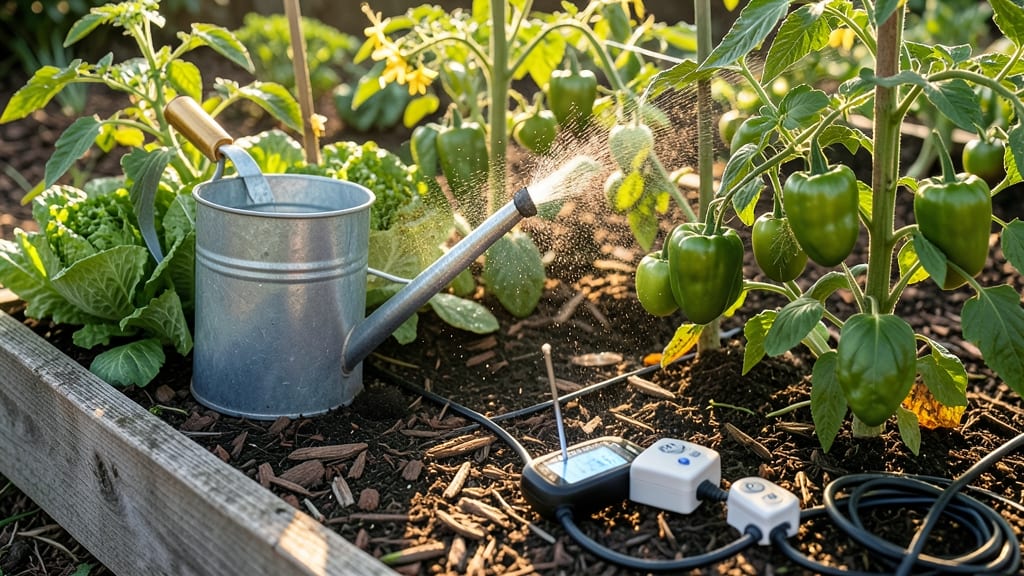
Watering your vegetable garden the right way means knowing how often to water vegetable plants without drowning or starving their roots.
Overwatering or underwatering your vegetable garden can mean the difference between a thriving harvest and wasted seeds—yet most gardeners guess rather than measure. The secret to perfect watering lies in understanding soil moisture, plant needs, and seasonal adjustments.
Leafy greens like lettuce and spinach need consistent moisture, while root crops such as carrots and potatoes prefer drier soil. Meanwhile, tomatoes and peppers thrive with deep, infrequent watering to encourage strong roots.
Below, I’ll break down the science of soil moisture tests, seasonal tweaks, and the exact watering schedule for 12 common vegetables—so you can finally stop guessing and start growing.
How often to water vegetable plants by soil type and season
Watering your vegetable garden isn't a one-size-fits-all task—it depends on your soil type, seasonal temperatures, and the specific needs of each plant. Sandy soil drains too quickly, while clay holds moisture far longer than needed.
Loamy soil, the gardener's gold, strikes a balance. Understanding these differences prevents root rot or drought stress, both of which can ruin your harvest before it even starts.
Seasonal shifts also demand adjustments. Spring showers mean less frequent watering, while summer heat can dry out soil in half the time. The key is monitoring soil moisture at root depth—not just the surface.
For most vegetables, roots extend 6-12 inches deep, so checking moisture there gives you the real picture. This science-backed approach saves water and keeps your plants thriving.
| Vegetable | Sandy Soil | Loamy Soil | Clay Soil | Spring | Summer |
|---|---|---|---|---|---|
| Tomatoes | Every 1-2 days | Every 2-3 days | Every 3-4 days | 2x weekly | Daily |
| Peppers | Every 1-2 days | Every 2 days | Every 3 days | 2x weekly | Every other day |
| Lettuce | Daily | Every 2 days | Every 3 days | Every other day | Daily |
| Cucumbers | Every 1-2 days | Every 2 days | Every 3 days | 2x weekly | Daily |
| Carrots | Every 2 days | Every 3 days | Every 4 days | 2x weekly | Every other day |
| Beans | Every 2 days | Every 3 days | Every 4 days | 2x weekly | Every other day |
| Spinach | Daily | Every 2 days | Every 3 days |
3 Soil-moisture tests to water like a pro (no guessing)Guessing how much water your vegetable garden needs is a fast track to wasted seeds or sad, wilted plants. Instead, use these three soil-moisture tests to water with precision. Each method gives you actionable data—whether you're nurturing seedlings or tending to mature plants. The best part? No fancy tools required for the first two! Start with the finger test, the simplest way to check moisture levels. For seedlings, insert your finger just 1 inch deep—if it feels dry, water lightly. For mature vegetables, go 2-3 inches deep. This method works best in loamy soil but can be tricky in sandy or clay-heavy gardens where moisture moves unpredictably. 🌱 Numbered Highlights: Master Soil-Moisture Tests
Next, invest in a moisture meter for accuracy, especially in container gardens or sandy soils. These digital tools give you a percentage reading—aim for 40-60% moisture for most vegetables. For leafy greens like lettuce, keep it closer to 50%, while root crops like carrots tolerate slightly drier soil (35-45%). For large gardens, the weight-check technique saves time. Grab a 1-gallon container of soil—if it feels light and dry, water deeply. If it’s heavy and clumpy, hold off. This works best in clay soil where moisture lingers but can be adapted by adjusting the container size for sandy soil (use a ½-gallon instead). Adjust your watering based on plant life stages. Seedlings need frequent, shallow watering to keep the top ½ inch moist, while mature plants benefit from deep watering 2-3 times per week. Use the finger test in the morning—if the soil is dry at 1 inch deep, water before the heat of the day stresses your plants. Pro tip: Combine methods for peak accuracy. Use the finger test daily for quick checks, then verify with your moisture meter weekly. For container gardens, the weight-check is your best friend—especially during summer heat when evaporation speeds up. With these tests, you’ll never over- or underwater again! |