Size
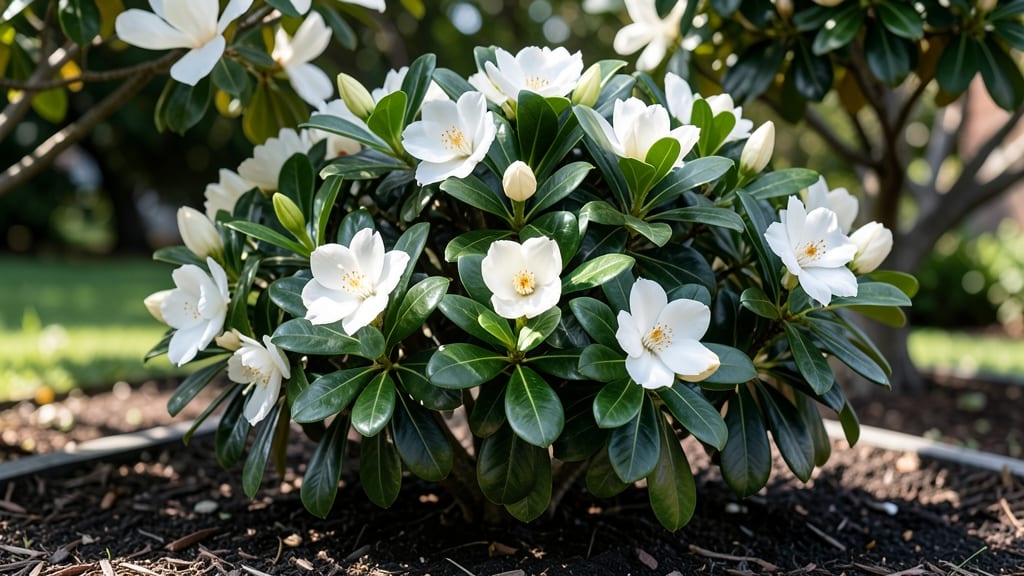
Gardenias grow between 3 and 6 feet tall at maturity, though some varieties like G. radicans can stretch up to 15 feet when left unchecked 🌸 — and yes, that includes the fragrant blooms you love.
If you're dreaming of fragrant, creamy-white blooms but wondering whether gardenias will overwhelm your garden space, you're not alone. These tropical favorites vary dramatically in size—from compact shrubs perfect for containers to towering specimens that need room to breathe.
The key to controlling their height lies in pruning, sunlight, and soil. Too much shade or improper trimming can send a gardenia skyward, while the right care keeps it lush and manageable.
Below, I’ll break down the height ranges by variety and share my go-to tips for keeping them at your ideal size.
You’ll also discover how to spot the signs of overgrowth early and which varieties stay small enough for patios or large enough for privacy screens—without sacrificing those intoxicating blooms.


Gardenias height by variety: exact growth ranges & mature sizes
Gardenias are prized for their intoxicating fragrance and glossy foliage, but their mature height can vary wildly—from 1-foot dwarf varieties to towering 10-foot shrubs.
Understanding these growth ranges helps you choose the perfect gardenia for your space, whether it's a container on your patio or a privacy hedge in your backyard. The key difference lies in the species and cultivar, paired with proper care.
Most gardenias fall under Gardenia jasminoides, the classic common gardenia, but other species like Gardenia augusta and Gardenia radicans offer unique heights and growth habits. Even within G. jasminoides, dwarf varieties stay under 3 feet, while standard types can reach 6 feet or more.
Let’s break down the exact height ranges and what influences their growth.
The Kleim’s Hardy gardenia is a popular choice for USDA Zones 6–10 because it tolerates cooler temperatures while still reaching 3–5 feet tall. In contrast, Gardenia radicans grows aggressively as a vining shrub, climbing up to 10 feet if given support like a trellis or arbor.
If you’re limited on space, Veitchii or Mystery gardenias stay under 3 feet and thrive in containers or small gardens.
Your gardenia’s final height depends on three critical factors: pruning habits, sunlight exposure, and soil conditions. For example, a Fortuniana gardenia left unpruned will naturally grow 4–6 feet tall, but aggressive pruning can keep it under 3 feet.
Meanwhile, Gardenia augusta needs ample space to reach its 8–12-foot mature height
How to control gardenia height: pruning, training & care tips
Gardenias can reach anywhere from 1 foot to 15 feet tall, depending on the variety and how you manage them. If your gardenia is growing taller than you'd like, don't worry—pruning and training can easily keep it at your desired height while encouraging more blooms.
The key is understanding when and how to prune, along with a few simple care adjustments to maintain compact growth.
Most gardenias grow 6-12 inches per year, so regular pruning every 1-2 years will help control their height. For dwarf varieties, you can even prune them back by one-third annually to keep them at a manageable size.
The best time to prune is right after the blooming season ends, typically in late summer or early fall, when the plant is entering its dormant phase.
How to Prune Gardenias for Height Control
- Step 1: Wait until after blooming (late summer/early fall) to prune. This allows the plant to recover before winter.
- Step 2: Use sterilized pruning shears to cut back 1/3 of the plant's height if needed. For dwarf varieties, trim just above a leaf node to encourage bushier growth.
- Step 3: Remove dead or diseased branches first, then shape the plant by cutting back overgrown stems to your desired height.
- Step 4: For compact growth, pinch back new growth tips in spring to encourage branching. This works best for container gardenias.
- Step 5: Apply a balanced fertilizer (10-10-10) after pruning to support new growth. Water deeply to help the plant recover.
Training gardenias to stay smaller involves more than just pruning—it's also about light exposure and soil conditions. Gardenias thrive in partial shade, which naturally slows their growth.
If your plant is in full sun, consider moving it to a spot with morning sun and afternoon shade to reduce rapid height growth. Additionally, ensure the soil is well-draining and acidic (pH 5.0-6.5), as poor soil can stress the plant and lead to leggy growth.
Another trick to keep gardenias compact is regular feeding. Use an acid-loving plant fertilizer every 4-6 weeks during the growing season (spring and summer). This promotes denser foliage and more blooms while preventing the plant from becoming top-heavy and stretching for light.
Avoid over-fertilizing, as this can lead to excessive leafy growth with fewer flowers.
For gardenias in containers or small spaces, pruning is even more critical. Since potted gardenias have limited root space, they grow more slowly but still benefit from annual pruning to maintain shape.
Choose a dwarf variety like G. jasminoides 'Kleim's Hardy', which stays under 3 feet tall with proper care. Always use a pot with drainage holes and repot every 2-3 years to refresh the soil.
Finally, remember that patience is key when controlling gardenia height. Over-pruning can stress the plant and reduce blooming. Start with small adjustments and monitor how your gardenia responds.
With the right balance of pruning, training, and care, you can enjoy fragrant, compact gardenias that fit perfectly in your garden—no matter how small or large your space is. 🌿✂️🌸