
Tools
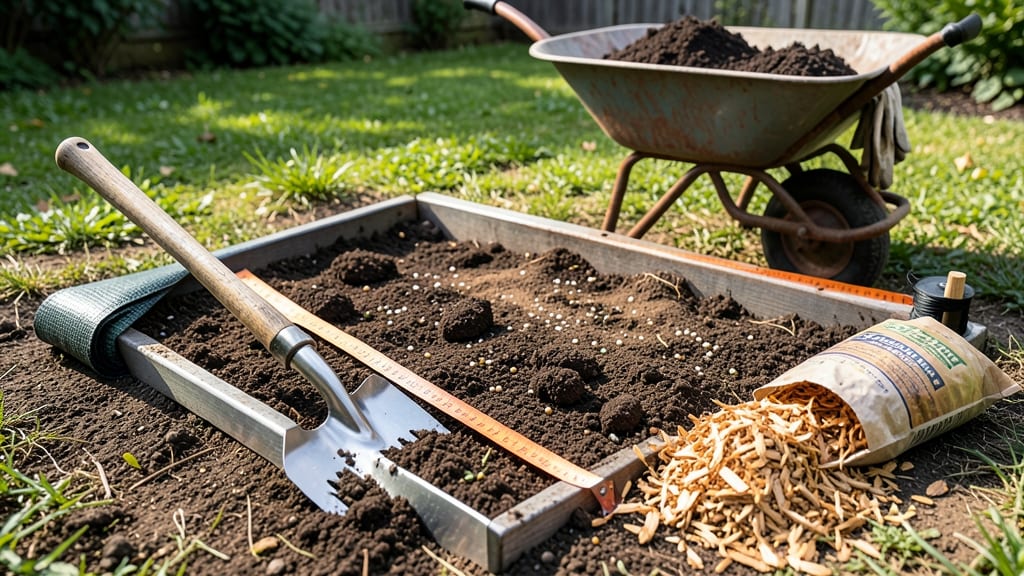
To make a garden bed, choose a sunny location, mark the area with stakes, remove grass or weeds, loosen soil to 12 inches deep, and mix in compost for nutrient-rich planting conditions. Keep beds 3-4 feet wide for easy access.
Creating a garden bed starts with selecting the right spot—prioritize areas with at least 6-8 hours of sunlight daily for most vegetables and flowers. 🌱 After clearing weeds and marking your layout, aerating the soil improves root penetration and prevents compaction.
I always add a 2-3 inch layer of compost to boost fertility, which makes all the difference for plant health and yield. The 3-4 foot width ensures easy reach from all sides without stepping on the soil.
For raised beds, consider using untreated wood or landscape fabric to contain soil and improve drainage. This method also warms up faster in spring, giving you an earlier planting window. Whether you go in-ground or raised, proper bed design reduces weeds, improves water efficiency, and makes maintenance a breeze.
The key is balancing sun exposure with soil quality—both are non-negotiable for thriving plants.
💡 In This Article
- Best Soil Preparation Techniques for Healthy Garden Beds
- Garden Bed Layout and Design Tips for Maximum Yield
Best soil preparation techniques for healthy garden beds
Soil preparation isn't just about digging—it's about creating the perfect ecosystem for roots to thrive. The ideal garden soil should contain 45-50% minerals, 25% water, 25% air, and 5% organic matter.
When you loosen soil to 12 inches deep, you're breaking up compacted layers that restrict root growth and oxygen flow. Compacted soil has 10-15% less air space than properly aerated soil, which stresses plants by limiting their ability to absorb water and nutrients.
A simple test: Press your thumb into the soil—if it feels hard or cracks easily, it needs aeration. 🌱
Compost works magic by improving soil structure and fertility. A 2-3 inch layer of well-aged compost (with a 20:1 carbon-to-nitrogen ratio) introduces beneficial microbes that break down organic matter into plant-available nutrients. These microbes also help create stable soil aggregates, which improve water retention and drainage.
For example, adding compost increases soil's water-holding capacity by 30-50%, meaning plants stay hydrated longer between waterings. I always test my compost's readiness by checking if it's dark, crumbly, and has an earthy smell—never smells like ammonia or rot.
Don't overlook pH testing—most vegetables prefer a 6.0-7.0 range, while blueberries need 4.5-5.5. Soil pH affects nutrient availability; for instance, phosphorus becomes locked up in alkaline soils (>7.0), starving plants even when the soil appears fertile.
A simple $10 home test kit reveals your soil's pH and guides amendments like lime (to raise pH) or sulfur (to lower it).
For instance, if your soil tests at 5.5, adding elemental sulfur at 1-2 pounds per 100 square feet can adjust it to the ideal range over 2-3 months.
Drainage is another critical factor—waterlogged soil cuts oxygen supply by 80% during saturation. To improve drainage in heavy clay soils, mix in 10-20% coarse sand or perlite to create larger pore spaces. For sandy soils that drain too quickly, add 30% compost or peat moss to boost water retention.
A quick field test: Dig a hole, fill it with water, and time how long it takes to drain—ideal drainage empties in 4-6 hours. If it drains faster, you need more organic matter; if slower, add sand or gypsum.
One common mistake is over-tilling, which destroys soil structure by breaking down beneficial fungal networks. Instead, use a broadfork to aerate between rows, preserving the soil's natural architecture.
For vegetable gardens, I recommend a 3-4 inch layer of mulch after planting to regulate temperature, suppress weeds, and gradually enrich the soil as it decomposes. Mulch also reduces soil temperature swings by 10-15°F, protecting roots during heatwaves or cold snaps. 🌿
For container gardens or small spaces, consider using a 50-50 mix of potting soil and compost in raised beds. This blend provides the perfect balance of nutrients, aeration, and moisture retention.
The key is consistency—maintain your soil's health year-round by adding 1-2 inches of compost annually and rotating crops to prevent nutrient depletion. Healthy soil isn't just about what you add; it's about creating a living, breathing ecosystem that supports plant growth naturally.