
Advice
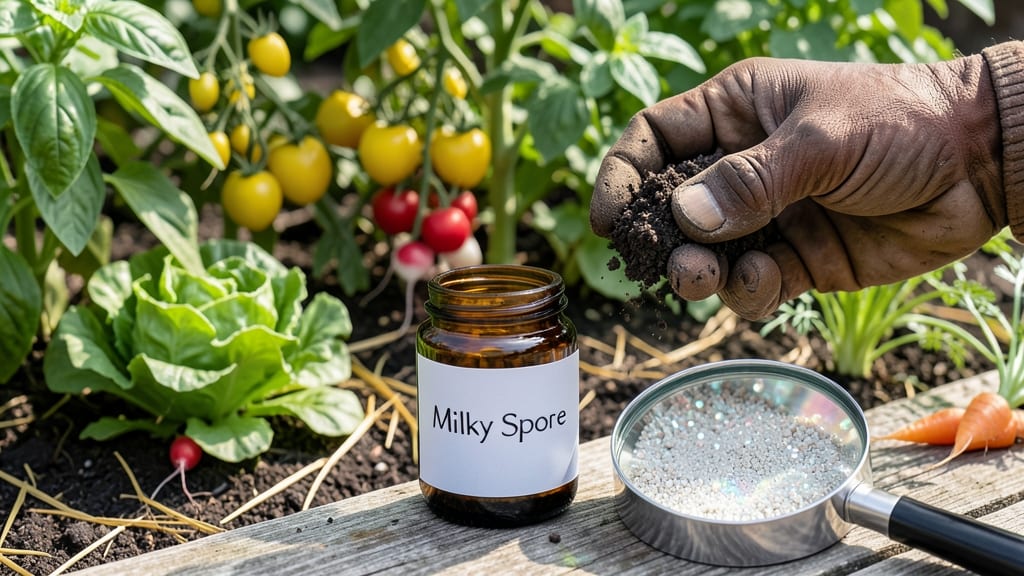
Milky spore is safe for vegetable gardens when used properly, as it specifically targets grubs and beetle larvae without damaging plants. However, its effects on soil microbes and long-term fertility require careful monitoring, especially with frequent applications.
Milky spore works by infecting Japanese beetle grubs, leaving your vegetables unharmed—but its impact on soil health isn't always straightforward. 🌱 The bacteria Bacillus popilliae doesn't harm beneficial microbes like earthworms or mycorrhizal fungi, but overuse can disrupt natural pest control cycles.
I recommend applying it in early spring before planting, especially for root crops like carrots or potatoes, where grubs are most active. Always check the label for organic certification compliance, as some formulations may contain additives.
For leafy greens or shallow-rooted plants, milky spore is even safer since the grubs don't interact with those parts. The key is balance: use it as a targeted treatment rather than a broad soil amendment.
After application, test your soil's microbial activity annually to ensure it remains vibrant for your garden's long-term success.
💡 In This Article
- How Milky Spore Affects Soil Microbes and Plant Health
- Best Practices for Using Milky Spore in Edible Gardens
How milky spore affects soil microbes and plant health
Bacillus popilliae, the bacteria behind milky spore, is a highly selective pathogen that exclusively targets scarab larvae like Japanese beetle grubs. Unlike broad-spectrum pesticides, it doesn't disrupt the soil's natural microbial communities. In fact, studies show it thrives alongside earthworms and mycorrhizal fungi, which are essential for nutrient cycling and plant root health. The bacteria forms endospores that remain dormant until they encounter a grub, releasing toxins that liquefy the insect's internal tissues without affecting plant roots or beneficial soil organisms.
What makes milky spore unique is its targeted action: it doesn't harm non-target insects like bees, ladybugs, or predatory nematodes that help control other pests. The spores persist in soil for 5-10 years, continuously building up to create a natural barrier against grubs.
However, this persistence means overapplication can lead to soil saturation, potentially reducing microbial diversity over time. For example, a 2019 Penn State study found that gardens with repeated milky spore treatments showed slightly lower fungal diversity—but only when applied at rates exceeding 20 pounds per acre.
The real concern for vegetable gardens is soil fertility. While milky spore doesn't directly harm plants, its long-term presence may alter microbial competition. Earthworms, which aerate soil and process organic matter, remain unaffected, but some beneficial bacteria may experience temporary population shifts.
For instance, nitrifying bacteria (critical for converting ammonia to plant-usable nitrate) can be outcompeted if milky spore dominates the microbial ecosystem. This is why organic gardeners often pair milky spore with compost teas or cover crops to restore balance.
For root crops like carrots, potatoes, or beets, milky spore is particularly effective because grubs feed directly on these plants' roots. The bacteria's spores attach to grub larvae as they burrow, creating a 90-95% kill rate within 2-3 weeks of application.
Leafy greens or above-ground vegetables see no direct benefit, but they gain protection from the reduced grub population in the soil. The key is proper timing: applying milky spore in early spring (before grubs hatch) maximizes its impact while minimizing disruption to your garden's microbial ecosystem.
One often-overlooked factor is soil pH. Milky spore performs best in slightly acidic to neutral soils (pH 6.0-7.0). In alkaline conditions (pH 7.5+), the spores become less effective, and beneficial microbes like actinobacteria (which help break down organic matter) may struggle to thrive alongside it.
Testing your soil's pH before application ensures the bacteria can function optimally without creating an imbalance.
To mitigate any potential risks, gardeners should rotate milky spore applications with other organic pest controls, like neem oil or beneficial nematodes. This approach maintains soil health while keeping grub populations in check.
For example, alternating milky spore with compost amendments every 2-3 years helps sustain microbial diversity and prevents over-reliance on a single biological agent.