
Tools
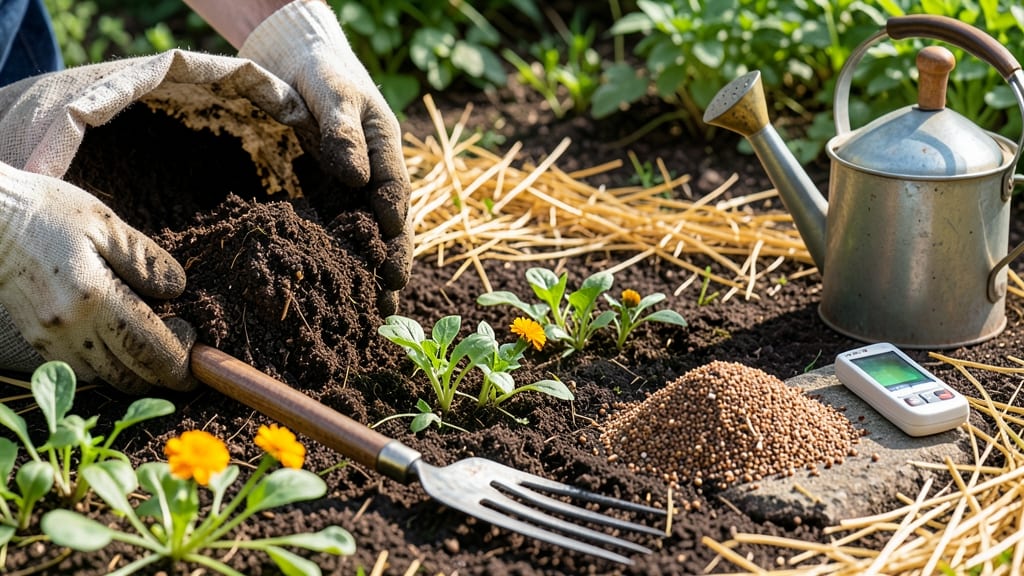
To add to garden soil in spring, incorporate nutrient-rich materials like compost, aged manure, or worm castings to enhance soil structure and fertility. These amendments improve moisture retention, support beneficial microbes, and provide essential nutrients for stronger plant growth.
Spring is the perfect time to revitalize your garden soil before planting season kicks off. 🌱 The key is balancing organic materials—compost breaks down quickly, releasing nutrients, while aged manure provides slow-release nitrogen that feeds plants over time.
For sandy soils, consider adding coconut coir or peat moss to improve water retention, whereas clay-heavy soils benefit from perlite or coarse sand to boost aeration. I always mix these amendments into the top 6 inches of soil, as this is where most root systems thrive.
Don't forget to test your soil's pH first—most vegetables prefer a slightly acidic to neutral range (6.0–7.0), while blueberries and azaleas thrive in acidic conditions (4.5–5.5). Adjusting with elemental sulfur or lime can make all the difference in plant health.
The goal is to create a thriving ecosystem where roots can access both water and nutrients efficiently.
💡 In This Article
- How Soil Amendments Improve Plant Growth
- Best Spring Soil Amendments by Plant Type
How soil amendments improve plant growth
Soil amendments work by transforming your garden's foundation into a thriving ecosystem. Compost, for instance, introduces beneficial microbes that break down organic matter into plant-accessible nutrients. These microbes create tiny air pockets, improving aeration while holding moisture—critical for root development.
Think of it like adding a living layer of nutrients that actively supports plant growth rather than just feeding them. 🌱
The magic happens at the microscopic level: compost contains 1-3% nitrogen, 0.5-1% phosphorus, and 0.5-1% potassium, along with trace minerals like calcium and magnesium. When mixed into the top 6 inches of soil, these nutrients become available to plants over time.
Aged manure, on the other hand, provides a slower release of nitrogen, which is ideal for long-term plant health rather than quick fixes.
Aeration is where perlite or coarse sand comes into play. These amendments prevent soil compaction by creating space between particles, allowing roots to spread easily. For example, clay-heavy soils often become waterlogged after rain, but adding 20-30% perlite by volume can transform them into a well-draining medium.
This physical improvement reduces root stress and encourages deeper growth patterns.
pH balance is another critical factor—most garden plants prefer a range of 6.0-7.0. Compost typically maintains a neutral pH, while peat moss or pine bark can lower it slightly. If your soil tests acidic (5.5 or below), adding crushed limestone can raise the pH gradually.
The goal is to create an environment where nutrients like nitrogen and phosphorus remain soluble and available for uptake.
One often-overlooked benefit is the improvement in soil structure. Sandy soils, which drain too quickly, benefit from organic matter that helps retain moisture, while clay soils gain better drainage.
This dual improvement means plants receive consistent hydration without suffering from water stress or root rot. The result is stronger, more resilient plants that can better withstand environmental challenges.
For vegetable gardens, this means 20-30% more yield potential compared to unamended soil. The combination of improved nutrient availability, better water retention, and enhanced root growth creates an ideal growing environment. It's not just about adding food for plants—it's about creating the perfect conditions for their roots to thrive.