
Tools
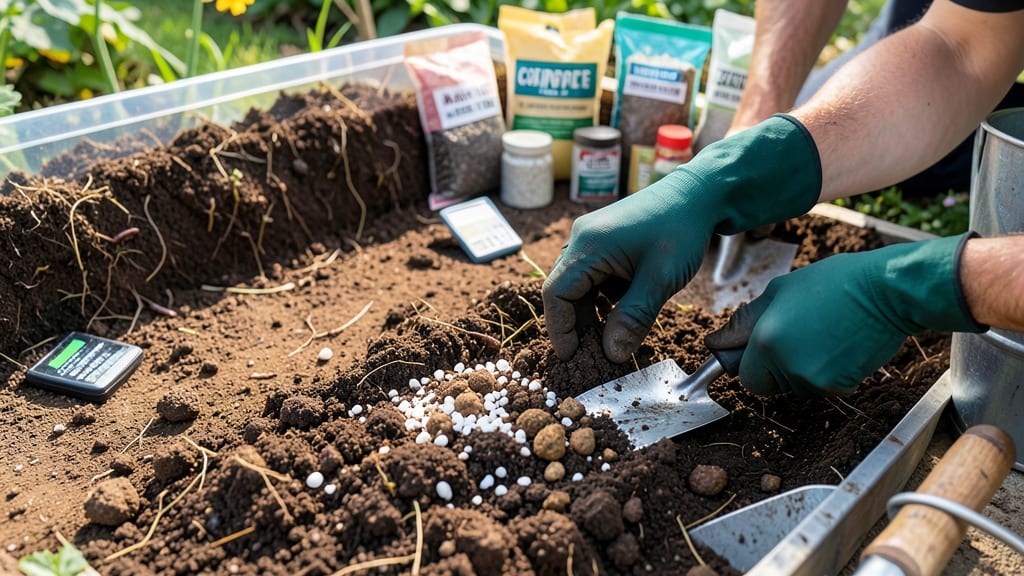
To mix into garden soil, incorporate organic materials like compost, aged manure, or coconut coir to enhance drainage, nutrient availability, and microbial activity. These amendments also help balance soil pH and texture for optimal plant health, with adjustments needed based on your specific soil type and regional climate.
Soil amendments don't just improve plant growth—they create a thriving ecosystem beneath your garden. Compost acts like a natural fertilizer, breaking down slowly to feed roots over time, while aged manure adds nitrogen and phosphorus for lush foliage. 🌱 For sandy soils that drain too quickly, peat moss or coconut coir helps retain moisture, while perlite or vermiculite lightens heavy clay.
The key is matching your soil's current condition to the right amendment—whether you're growing vegetables that need nutrient-rich soil or flowers that prefer well-draining mixes.
Your climate plays a surprisingly big role too. In hot, dry regions, organic matter helps soil hold onto precious moisture, while cooler, wetter climates might benefit from amendments that improve aeration. Lime or sulfur can adjust pH levels if your soil tests too acidic or alkaline.
The best approach? Start with a simple mix—like equal parts compost and perlite—and observe how your plants respond before making bigger changes.
💡 In This Article
- How Soil Amendments Boost Plant Growth Science
- Best Soil Mixes for Different Plant Types and Climates
How soil amendments boost plant growth science
Soil amendments work by addressing three critical factors: nutrient availability, water retention, and root aeration. Compost, for example, introduces beneficial microbes that break down organic matter into plant-accessible nutrients like nitrogen, phosphorus, and potassium.
These microbes also produce enzymes that unlock bound nutrients in the soil, making them available to roots. A single teaspoon of healthy compost can contain billions of bacteria and fungi that form a symbiotic relationship with plant roots, enhancing nutrient uptake by up to 30%.
The texture of your soil plays a huge role in how amendments perform.
Sandy soils drain too quickly, while clay soils become compacted and waterlogged. Perlite and vermiculite add porosity to clay, creating air pockets that improve root respiration, while peat moss or coconut coir bind sandy soils to hold moisture.
The ideal soil structure should resemble a well-drained sponge—firm enough to support roots but loose enough to allow water and oxygen movement. 🌱 For instance, adding 20% perlite to heavy clay can increase drainage by 50% while maintaining moisture for up to 2 weeks longer than unamended soil.
pH balance is another critical factor that amendments can adjust. Most plants thrive in slightly acidic to neutral soil (pH 6.0-7.0), but some, like blueberries, need acidic conditions (pH 4.5-5.5). Lime raises pH by neutralizing acidic compounds, while sulfur or elemental sulfur lowers it.
A soil test can reveal your pH level—if it's off by more than 1.0, amendments can shift it toward the ideal range in just 2-3 months with consistent mixing.
Organic amendments also improve soil structure over time by adding humus—a dark, spongy material that increases cation exchange capacity (CEC). CEC measures how well soil holds onto essential nutrients like calcium, magnesium, and potassium.
Soil with high CEC can store nutrients like a battery, releasing them gradually as plants need them. For example, adding 5 gallons of compost per 100 square feet can increase CEC by 20-30%, reducing the need for synthetic fertilizers.
Consider the microbial ecosystem too. Healthy soil contains thousands of species of bacteria, fungi, and protozoa that decompose organic matter and recycle nutrients. Worm castings (from earthworms) introduce these microbes directly, while kelp meal adds beneficial trace minerals that support microbial growth.
The result? Plants develop stronger root systems and better resistance to pests and diseases. 🌿 For example, tomatoes grown in soil amended with worm castings show 25% more fruit yield and 40% fewer signs of blight compared to unamended soil.
Finally, the timing of amendment application matters. Mixing amendments into the top 6-12 inches of soil in early spring or fall allows microbes time to establish before the growing season.
For container gardens, pre-mix amendments into potting soil at a ratio of 30% organic matter (like compost or coco coir) to 70% mineral components (like perlite or sand). This balance ensures roots have access to both nutrients and oxygen, preventing issues like root rot or nutrient burn.