
Fertilization
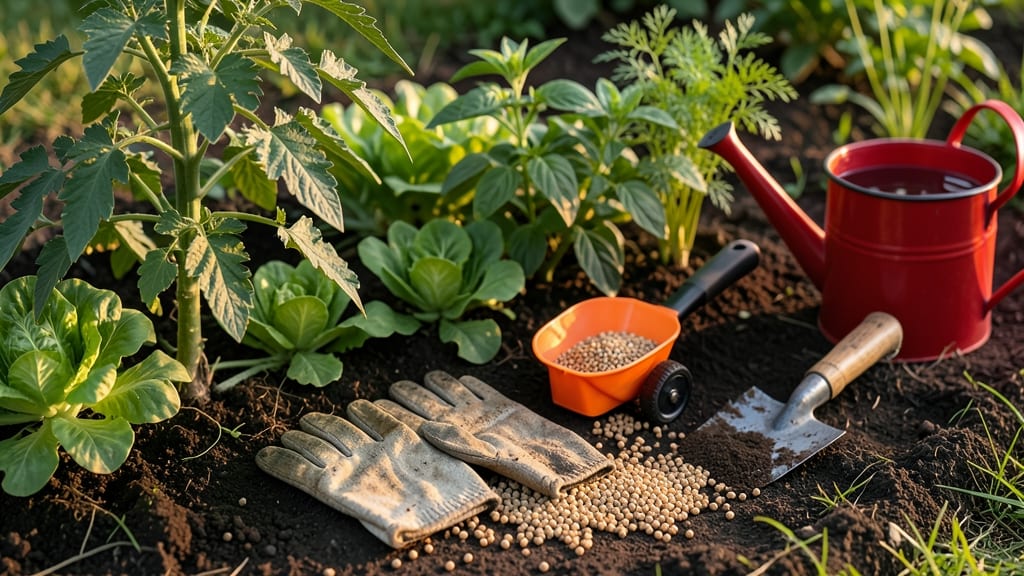
To fertilize your garden effectively, time applications to early spring before planting, mid-summer for flowering plants, and fall for cool-season crops, while soil tests reveal exact nutrient needs and pH adjustments. Local climate and plant types determine the best schedule for maximum growth.
Timing matters because plants absorb nutrients most efficiently during active growth phases. 🌱 For vegetables, a spring feeding jumpstarts root development, while summer applications support fruiting. Flowering plants, like roses or petunias, need mid-summer boosts to maintain vibrant blooms.
Meanwhile, cool-season crops such as kale or spinach benefit from fall fertilization to strengthen roots before winter dormancy.
Soil tests are your secret weapon—they reveal what your plants actually need rather than guessing. A test might show your soil is nitrogen-deficient, which explains why your lawn stays green but flowers struggle.
Adjusting your fertilizer blend based on these results prevents over- or under-feeding, saving you money and protecting your garden's health.
Don't forget that regional climate plays a role. In warmer zones, you might extend your spring feeding into early summer, while cooler areas could push fall applications later into the season.
Always check the back of your fertilizer bag for plant-specific recommendations, but remember: organic fertilizers release nutrients more slowly than synthetics, so you'll need to apply them more frequently.
💡 In This Article
- How Soil Tests Determine Optimal Fertilizer Timing
- Seasonal Fertilizer Schedule by Plant Type
How soil tests determine optimal fertilizer timing
Soil tests reveal the hidden chemistry of your garden's foundation. They measure three critical factors: pH levels (ideal 6.0-7.0 for most plants), macronutrient availability (nitrogen, phosphorus, potassium), and organic matter content.
For example, a pH reading of 5.5 signals acidic soil that locks out phosphorus—essential for root development—while a reading of 7.5 makes iron and manganese unavailable, causing yellowing leaves. These tests also identify micronutrient deficiencies like zinc or manganese, which become visible as stunted growth or discolored foliage.
The timing window for fertilization opens when soil temperatures reach 50°F and remain stable, typically mid-April to early May in most regions.
This is when microbial activity revs up, allowing beneficial bacteria to break down organic fertilizers into plant-available forms. 🌱 For instance, composted manure takes 4-6 weeks to decompose fully, so applying it in late winter gives microbes time to work before planting season.
Synthetic fertilizers, however, release nutrients immediately, making them ideal for mid-summer applications when flowering plants need quick phosphorus boosts.
Plant-specific nutrient demands create distinct fertilization windows. Leafy greens like spinach thrive with nitrogen-heavy feeds in early spring, while fruiting tomatoes require phosphorus-rich applications when flowers appear. Soil tests quantify these needs precisely—perhaps revealing your garden needs 50 lbs of nitrogen per acre but only 10 lbs of phosphorus.
This data lets you tailor blends rather than using generic 10-10-10 formulations that waste resources or harm plants by overfeeding certain nutrients.
Seasonal variations matter because nutrient availability changes with temperature. In summer, phosphorus becomes more soluble in warm soil, making it ideal for root crops like carrots, while cooler fall soil retains nitrogen better for winter-hardy vegetables.
A soil test taken in early spring might show adequate potassium levels, but by summer, those reserves could be depleted by heavy flowering plants—requiring a mid-season potassium supplement to prevent blossom-end rot in tomatoes.
Don't overlook organic matter percentages—soils with less than 3% organic matter need annual compost applications to rebuild structure. This organic material acts like a slow-release fertilizer, improving water retention and microbial activity.
The test results might show your garden's organic matter at 5% in the top 6 inches, which is excellent, but if it's 2% or below, you'll need to adjust your fertilization strategy to include more compost or cover crops like clover to rebuild soil health over time.
Regional climate creates additional timing nuances. In Zone 7, you might fertilize cool-season crops in early October, while Zone 9 gardens could extend fall feeding until November. The key is matching your soil test results with your local frost dates—plants need time to absorb nutrients before dormancy sets in.
For example, a soil test showing low magnesium would trigger a late-summer Epsom salt application for tomatoes, but in colder climates, this would need to happen by mid-August to avoid winter washout.