
Fertilization
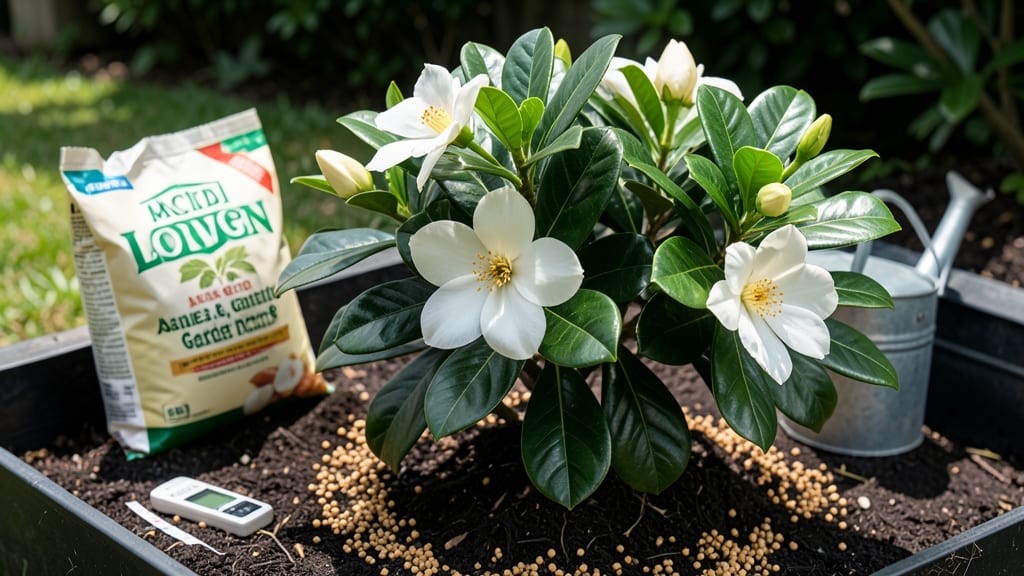
Fertilizing gardenias in Florida at the right times is the secret to year-round blooms and lush, fragrant foliage 🌸.
Here’s the catch: Florida’s warm climate means gardenias grow almost constantly, but feeding them at the wrong moment—like mid-summer—can stress the plant and even kill those delicate buds. Get the timing wrong, and you might end up with fewer flowers despite all your efforts.
In Florida’s 9a-11 zones, the best times to fertilize are early spring and late fall, when the plant is gearing up for its biggest bloom cycles. Think of it like prepping for a marathon: you wouldn’t fuel up mid-race, and your gardenias won’t either.
Below, I’ll break down the exact months to feed, the best fertilizers for Florida’s acidic soil, and how to avoid the costly mistakes that turn your gardenias into leafy monsters instead of fragrant stars.

Optimal fertilizing schedule for gardenias in Florida’s climate zones
Florida’s year-round growing season creates ideal conditions for gardenias, but their fertilizing schedule must adapt to seasonal shifts and USDA zones 7-11. Unlike northern climates, Florida’s humidity and heat mean gardenias grow almost continuously, requiring two key feeding periods—spring and fall—to maximize blooms without stressing the plant.
In North Florida (zones 7-8), cooler winters mean gardenias enter a light dormancy, while South Florida (zones 9-11) sees minimal slowdown. The biggest mistake is fertilizing during summer’s peak heat (June-August), which can burn roots and reduce blooms.
Instead, focus on early spring and late fall for nutrient uptake before blooming seasons.
Key timing cues include new leaf growth in spring (your signal to start feeding) and bud formation in fall (your last chance for winter blooms). For potted gardenias, adjust slightly—container plants dry out faster and need more frequent light feeding (every 3-4 weeks) during active growth.
| Season | Zone 7-8 (North FL) | Zone 9-11 (South FL) | Fertilizer Type | Key Cues |
|---|---|---|---|---|
| Early Spring (Feb-Mar) | First feeding after buds form | Light feeding in Feb | 6-6-6 or 8-3-9 | New leaf growth appears |
| Late Spring (Apr-May) | Second feeding before blooms | Second feeding in Apr | High-iron acid fertilizer | Bud formation visible |
| Summer (Jun-Aug) | Skip fertilization | Skip fertilization | None | High heat stress risk |
| Early Fall (Sep-Oct) | Final feeding for late blooms | Final feeding in Sep | Slow-release 6-6-6 | New growth after summer |
| Winter (Nov-Jan) | No fertilization | No fertilization | None | Plant enters dormancy |
In North Florida (zones 7-8), gardenias often slow growth in winter, so delay spring feeding until you see new leaf flush (usually mid-February). Use a balanced fertilizer like 6-6-6 to avoid nitrogen overload, which can reduce blooms.
For South Florida (zones 9-11), where winters are milder, you can start feeding as early as January if growth resumes.
One critical Florida-specific tip: gardenias hate alkaline soil, and Florida’s limestone-rich soil often raises pH. Before fertilizing, test soil pH—aim for 5.0-6.0.
If your soil is above 6.5, amend with sulfur or peat moss before applying fertilizer. Over-fertilizing in alkaline soil can lock out iron, causing yellow leaves (a common Florida gardenia problem).
For container gardenias, which are popular in Florida’s urban areas, reduce fertilizer amounts by 50% since potted soil drains faster and nutrients leach out. Use a slow-release fertilizer or liquid feed every 3-4 weeks
Best fertilizer types and application methods for Florida gardenias
Choosing the right fertilizer for gardenias in Florida isn’t just about NPK numbers—it’s about matching your plant’s needs to your local soil conditions. Gardenias thrive in acidic, well-draining soil with a pH between 5.0-6.0, so your fertilizer must support that environment while promoting luxuriant blooms and healthy foliage.
Synthetic fertilizers offer precise nutrient control, while organic options improve soil structure over time. I’ll break down the best choices and how to apply them without burning delicate roots.
For Florida’s humid climate, I recommend a balanced fertilizer with an NPK ratio of 6-6-6 or 8-3-9, specifically formulated for acid-loving plants. The higher phosphorus (middle number) encourages abundant blooms, while the potassium (last number) boosts disease resistance—a must in Florida’s damp air.
Organic options like fish emulsion or cottonseed meal slowly release nutrients, but they require more frequent applications to keep up with gardenias’ rapid growth during Florida’s warm seasons.
Here’s how to decide between organic and synthetic fertilizers for your gardenias:
Organic Fertilizers for Gardenias
- Improves soil structure
- Slow-release nutrients prevent burn
- Supports beneficial microbes
- Requires more frequent applications
- Slower results for blooming
- Can attract pests if overused
Synthetic Fertilizers for Gardenias
- Precise nutrient control
- Faster bloom production
- Longer shelf life
- Risk of root burn if overapplied
- No soil improvement benefits
- Can disrupt soil pH over time
🌱 Best for Florida: Mix organic (spring) and synthetic (fall) for balanced growth
When applying fertilizer, timing is everything. I always feed gardenias in early spring (February-March) to kickstart new growth and again in early fall (September-October) to support late-season blooms. Avoid fertilizing during peak summer heat (June-August), as gardenias become stressed and vulnerable to nutrient burn.
Instead, focus on deep watering and mulching to protect roots during Florida’s intense sun.
For granular fertilizers, scatter 1 tablespoon per plant around the root zone, then water deeply to activate nutrients. If using liquid fertilizers, dilute to half-strength and apply every 4-6 weeks during growing seasons.
Always avoid contact with leaves, as concentrated fertilizer can cause leaf scorch—a common issue in Florida’s bright sunlight. After application, I like to top-dress with pine bark mulch to maintain soil acidity and retain moisture.
To maximize blooms, I’ve found that alternating organic and synthetic fertilizers works best. Start with a synthetic 6-6-6 in spring for quick phosphorus boost, then switch to organic fish emulsion in fall for sustained nutrient release.
This combo ensures your gardenias get the immediate energy for blooms and the long-term soil health they crave. Just remember: less is more—Florida’s rich soil can overwhelm plants if over-fertilized.
Pro tip: If your gardenias show signs of yellowing leaves or fewer blooms, they might need a chelated iron supplement. Florida’s alkaline soils often lack this essential micronutrient, and gardenias are particularly sensitive to deficiencies.
A monthly iron supplement in spring and fall can work wonders for leaf color and overall vigor. With the right fertilizer strategy, your gardenias will reward you with fragrant, creamy-white blooms from spring through fall—just like the ones thriving in my own Florida garden! 🌸