
Planting
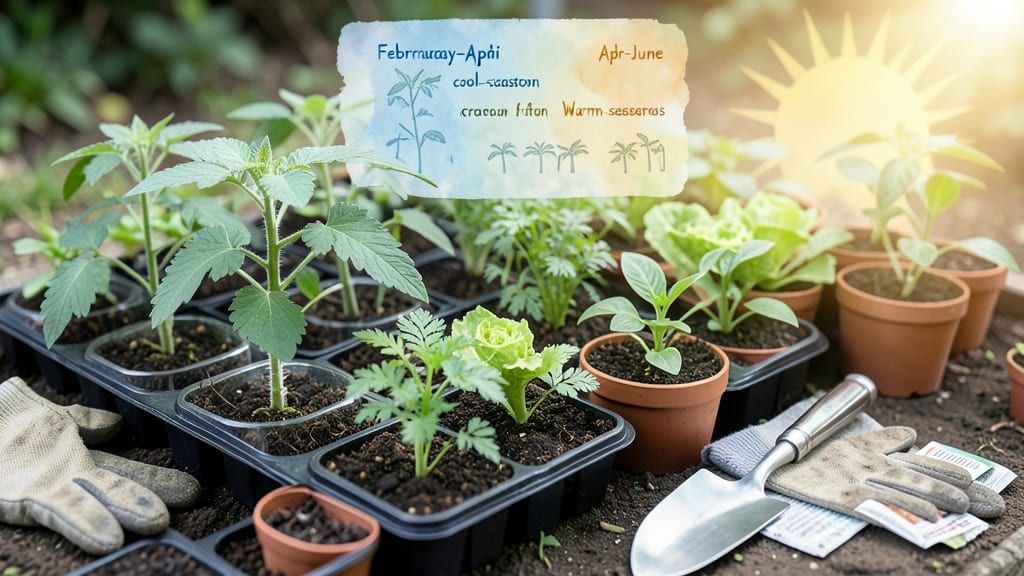
Planting your vegetable garden in California at the right time means the difference between a thriving harvest and wasted effort—especially when coastal fog, desert heat, and valley winds all play a role.
California’s diverse microclimates—from frost-free coastal areas to high-desert zones with 100-degree swings—make timing everything. One wrong move, and your 🥕 tomatoes bolt in the heat or your lettuce turns bitter from cold snaps. But get it right, and you’ll enjoy fresh produce year-round with zero frost risk.
Whether you’re in Zone 9b along the coast or Zone 7b in the Central Valley, this guide breaks down the exact months to plant warm-season crops like peppers and cool-season staples like broccoli—plus how to adjust for local quirks like marine layers or Santa Ana winds.
Ready to skip the guesswork? Here’s how to align your planting schedule with California’s unique growing windows for a foolproof harvest every season.
California’s planting zones by microclimate: coastal vs. desert vs. valley timelines
California’s diverse microclimates create unique challenges and opportunities for gardeners. While the Central Valley enjoys long, hot summers, the coastal regions stay mild year-round, and the desert experiences extreme heat with minimal frost. Understanding these differences ensures you plant at the perfect time for maximum yield and zero frost risk.
For warm-season crops like tomatoes and peppers, timing is critical—plant too early, and they’ll bolt in the cold. For cool-season crops like lettuce and broccoli, late planting can lead to bitter flavors or stunted growth.
Below, I break down the optimal planting windows for California’s five key regions, so you can plan with confidence.
Key factors to consider include last frost dates, soil temperatures, and local rainfall patterns. For example, the Central Valley typically has its last frost in January or February, while coastal areas like San Francisco rarely experience frost at all. Meanwhile, the desert regions (like Palm Springs) can plant warm-season crops as early as February due to their early warming soils.
If you’re in the Central Valley, aim to plant warm-season crops like tomatoes and peppers in March or April when soil temperatures consistently stay above 60°F. This ensures strong root development before the summer heat peaks.
Meanwhile, cool-season crops like broccoli and cabbage thrive when planted in August or September, allowing them to mature before winter rains arrive.
The coastal regions offer a unique advantage: year-round gardening. Here, you can plant warm-season crops as early as February and cool-season crops in September without worrying about frost.
However, coastal areas often experience foggy mornings, which can delay soil warming. Use black plastic mulch or row covers to speed up the process for heat-loving plants.
In the desert, where nights can be chilly even in summer, start warm-season crops like peppers and okra in February under shade cloth to protect young seedlings. Cool-season crops like spinach and radishes grow best in fall or winter, when temperatures drop below 80°F.
Always water deeply in the early morning to prevent evaporation in the extreme heat.
For those in the Sierra Foothills, where frost can linger into March
Best vegetables to plant by month in California (with frost-free guarantees)
California's year-round growing potential means you can plant vegetables almost anytime, but timing matters for maximum yields. Warm-season crops like tomatoes and peppers thrive in spring and summer, while cool-season crops such as lettuce and broccoli prefer fall and winter.
The key is leveraging succession planting to keep your garden productive month after month.
For coastal regions, frost is rarely a concern, but inland areas may face light frosts in winter. In desert climates, extreme heat requires shade and consistent watering. Below is a month-by-month guide tailored to California’s diverse zones, ensuring zero-frost risk and continuous harvests.
🌱 PRO TIP: Always check your local last frost date (if applicable) and adjust planting times by 2-4 weeks for safety. Coastal areas can start warm-season crops as early as February, while inland valleys may wait until April.
For continuous harvests, practice succession planting by sowing fast-growing crops like radishes or lettuce every 2-3 weeks. This ensures you always have fresh produce while slower crops like broccoli or cabbage mature.
In desert regions, focus on shade-tolerant crops like bush beans or malabar spinach during peak summer heat.
Remember, soil temperature matters just as much as air temperature. Use a soil thermometer to confirm warm-season crops like tomatoes won’t be planted until soil reaches 60°F+. Coastal areas can start earlier, while inland valleys may need to wait until late spring for consistent warmth.
🌿 EXPERT TIP: Always