Planting a winter garden in Florida means timing your crops to avoid frost while beating the summer heat—something I learned the hard way when my broccoli seedlings turned to mush after a late October chill.
Florida’s frost-free winters are a gardener’s secret weapon, but the 60-day window between summer’s end and spring’s arrival is tight. Miss it, and you’ll either freeze your plants or watch them wilt under early heat.
The key? Knowing your county’s exact frost risk and planting cool-season crops like kale and carrots at the perfect moment.
Here’s how to get it right: I’ll break down the county-by-county deadlines for North, Central, and South Florida, plus the best crops to grow and how to stretch your harvest into spring. No more guessing—just a foolproof schedule for Florida’s unique climate.
Ready to turn your winter garden into a year-round bounty? Let’s dive into the exact dates and strategies that work, no matter where you’re planted in the Sunshine State.
🌱
When to Plant Winter
Jan
❄️
Feb
❄️
Mar
🌱
Apr
🌱
May
🌱
Jun
🌱
Jul
☀️
Aug
☀️
Sep
🍂
Oct
🍂
Nov
🍂
Dec
❄️
Florida county deadlines for planting winter vegetables by frost zone
Florida’s three distinct frost zones mean your winter garden timing depends on where you live. North Florida counties like Jacksonville face 30% frost risk by December, while South Florida’s Miami-Dade rarely sees frost.
Central Florida’s Orlando sits in between with 10-20% risk. These differences create critical planting windows—miss them, and your broccoli or kale could bolt or freeze.
For direct-sown crops like lettuce and radishes, aim to plant 6-8 weeks before your county’s first frost date. If starting seedlings indoors, begin 4-6 weeks earlier to give them a head start.
Below, I’ve mapped out county-specific deadlines for Florida’s three frost zones, including last safe planting dates and seed-starting timelines for 10 top winter crops.
| Frost Zone |
Counties |
First Frost Risk |
Last Direct Sow |
Start Indoors |
Transplant Window |
| North Florida |
Jacksonville |
30% (Dec 15) |
Oct 15 - Nov 1 |
Sep 1 - Sep 15 |
Oct 1 - Oct 15 |
| Gainesville |
25% (Dec 20) |
Oct 20 - Nov 5 |
Sep 1 - Sep 20 |
Oct 5 - Oct 20 |
| Tallahassee |
20% (Dec 25) |
Oct 25 - Nov 10 |
Sep 15 - Sep 30 |
Oct 10 - Oct 25 |
| Panama City |
15% (Jan 5) |
Nov 1 - Nov 15 |
Sep 20 - Oct 5 |
Oct 15 - Nov 1 |
| Central Florida |
Orlando |
10% (Jan 10) |
Nov 1 - Nov 15 |
Sep 25 - Oct 10 |
Oct 15 - Nov 1 |
| Tampa |
5% (Jan 15) |
Nov 10 - Nov 25 |
Oct 1 - Oct 15 |
Nov 1 - Nov 15 |
| Lakeland |
8% (Jan 12) |
Nov 5 - Nov 20 |
Sep 30 - Oct 10 |
Oct 20 - Nov 5 |
| Ocala |
12% (Jan 8) |
Nov 1 - Nov 15 |
Sep 20 - Oct 5 |
Oct 15 - Nov 1 |
| South Florida |
Miami-Dade |
1% (Jan 31) |
Dec 1 - Dec 15 |
Oct 15 - Nov 1 |
Nov 15 - Dec 1
Best winter crops for Florida’s climate and how to extend their season
Florida’s mild winters let you grow cool-season crops that many northern gardeners envy. The key? Choosing frost-tolerant varieties and using simple tricks to stretch harvests into early spring. Unlike colder climates, Florida’s USDA Zones 8b-10a mean you can plant hardy greens, root vegetables, and brassicas without fear of deep freezes.
But even here, a light frost (below 32°F) can damage tender seedlings.
My top 10 winter crops thrive in Florida’s climate when planted at the right time. These include collard greens, carrots, radishes, and turnips, all of which can handle brief cold snaps if you use protective measures.
The secret to extending their season? Mulching, row covers, and succession planting to keep soil temperatures stable.
-
📅 When to Plant: Start seeds 8-10 weeks before first frost (typically September-October for North Florida, October-November for Central/South). Transplant seedlings 4-6 weeks before frost for a head start.
-
🌱 Top 5 Crops: Collard greens (survive 28°F), carrots (sweetened by cold), radishes (fast-growing), turnips, and spinach (choose Florida Broadleaf variety).
-
🌡️ Soil Prep: Test pH 6.0-7.0. Amend with compost and aged manure for nutrients. Loosen soil 12 inches deep for root crops like carrots.
-
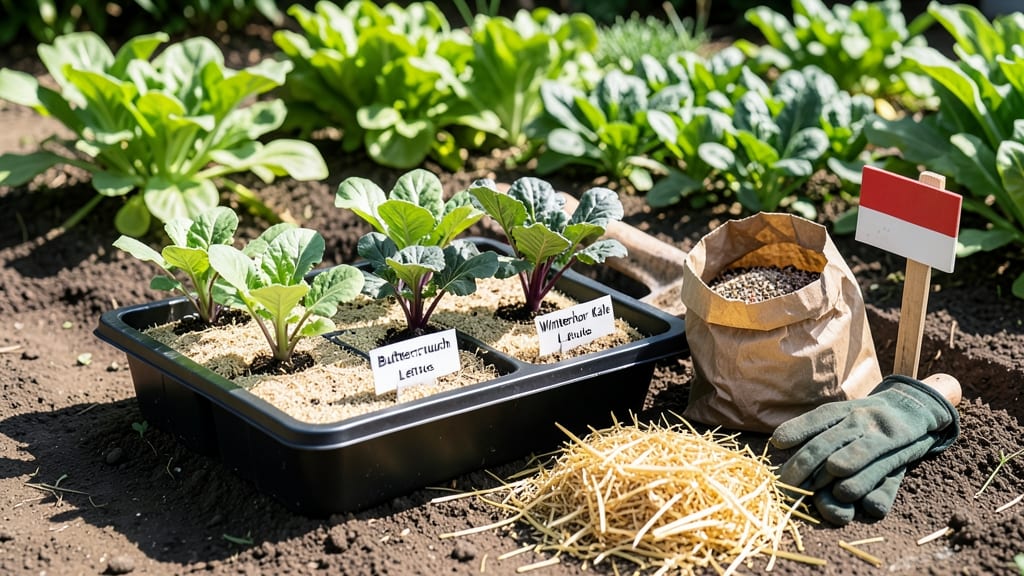
🛡️ Frost Protection: Use row covers (floating fabric) for 28-32°F nights. Apply straw mulch (3-4 inches) to insulate roots. For extreme cold, drape lightweight blankets over plants.
-
🌱 Succession Planting: Sow radishes and lettuce every 2 weeks for continuous harvests. Replace bolted greens with new seedlings in January to extend production.
Don’t overlook broccoli and cauliflower, which thrive in Florida’s winter. Choose fast-maturing varieties like ‘De Cicco’ broccoli (ready in 50 days) to avoid heat stress. For leafy greens, mustard greens and kale (like ‘Lacinato’) add peppery flavor and nutrient density to your meals.
To push harvests into early spring, use low tunnels (hoop houses with row covers) to trap heat. This can add 2-4 weeks to your growing season.
Just remove covers during the day to prevent overheating. Water deeply every 3-4 days—Florida’s winter humidity reduces evaporation, but roots still need moisture.
Harvest leafy greens by cutting outer leaves to encourage regrowth. For root vegetables, pull when tops are 3-4 inches tall (carrots) or 2-3 inches in diameter (turnips). Store extras in 50°F conditions with high humidity to preserve freshness until summer planting.
With the right crop selection and protective strategies, your Florida winter garden can provide fresh produce from November through March. Start small with 5-10 plants of your favorites, then expand next season based on what thrives in your microclimate. 🌱
★★★★★4.6(12 reviews)
|