
Tools
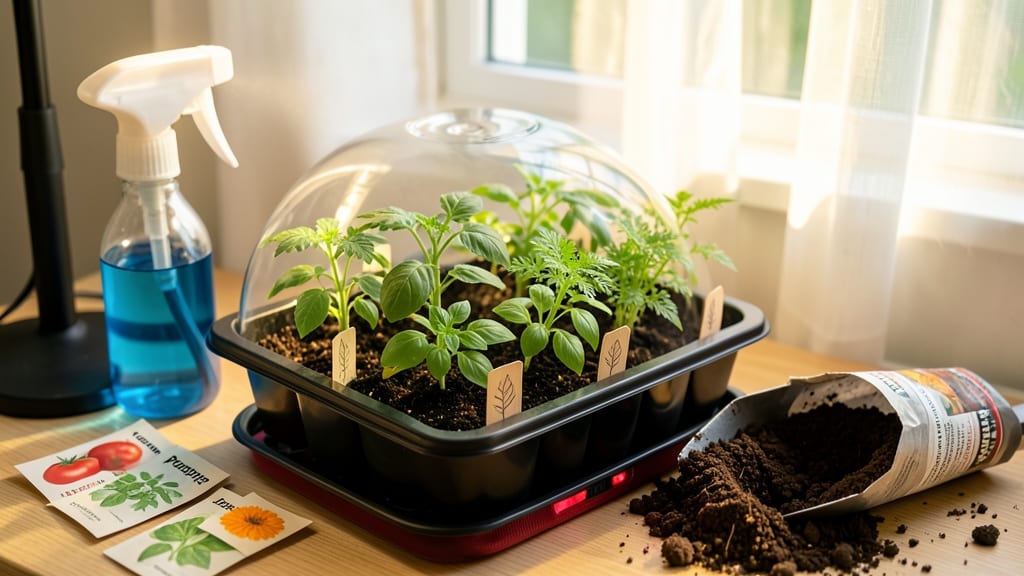
Starting garden seeds indoors at the right time means the difference between burly, ready-to-transplant seedlings and a sad pile of leggy flops.
Picture this: you’ve got your seed trays lined up, the soil is warm, and you’re dreaming of a summer harvest—until you realize your tomatoes are still tiny when frost season arrives. That’s the risk when you guess instead of calculate.
The good news? With a few simple steps, you can pinpoint the exact plant-specific countdown for your zone, last frost date, and even the variety you’re growing.
Most gardeners start too early or too late, and both mistakes lead to wasted time and space. Too soon, and you’re babysitting seedlings for months; too late, and you miss the window entirely.
I’ll walk you through how to use your last frost date, plant maturity days, and even a free downloadable chart to get it right every time.
By the end, you’ll know exactly when to start your tomatoes, peppers, herbs, and more—plus how to adjust for early or late seasons so your garden thrives, not just survives.
How to calculate indoor seed starting dates by last frost date
Starting seeds indoors too early or too late can ruin your garden dreams. The key is matching your last frost date with each plant's maturity days to ensure seedlings are ready for transplanting.
I'll walk you through my foolproof method using a simple countdown calculator approach that works for any USDA zone.
First, find your average last frost date for your area. This is the critical number that tells you when it's safe to move seedlings outdoors. For example, in USDA Zone 6a, the last frost typically falls around April 15.
Check resources like the National Weather Service or local gardening groups if you're unsure.
Next, identify each plant's days to maturity from seed. This is usually listed on seed packets as "harvest in X days." For instance, tomatoes might take 70-85 days to bear fruit, while lettuce matures in just 30-50 days.
Subtract this number from your last frost date to find your ideal start date.
Here's the magic formula: Last Frost Date - Days to Maturity + Buffer Days = Start Date. The buffer days (usually 2-4 weeks) account for potential delays from slow germination, weather setbacks, or seedling struggles.
For tomatoes in Zone 6a, that would be April 15 - 85 days + 14 days = March 1 start date.
| Plant Category | Days to Maturity | Weeks Before Last Frost | Example Start Date (Zone 6a) |
|---|---|---|---|
| Cool Season Veggies | 30-60 days | 4-8 weeks | February 15 - March 15 |
| Warm Season Veggies | 60-90 days | 8-12 weeks | February 1 - March 1 |
| Herbs (Basil, Cilantro) | 30-70 days | 4-8 weeks | February 15 - March 15 |
| Flowers (Marigolds, Petunias) | 45-90 days | 6-10 weeks | January 15 - February 15 |
| Leafy Greens (Spinach, Kale) | 30-50 days | 4-6 weeks | February 20 - March 10 |
For a more precise approach, I create a custom countdown spreadsheet with columns for each plant type, their maturity days, and my last frost date. I even add a "transplant date" column to track when seedlings should be hardened off.
Pro tip: Use colored tabs for different plant families to stay organized!
Adjust your timing for early or late varieties. If you're growing heirloom tomatoes that take 90+ days, start them 10-12 weeks before your last frost. Conversely, bush beans (50 days) can wait until 6 weeks out. Always check seed packet instructions for specific recommendations.
Don't forget to account for your hardening-off period (7-10 days) before transplanting. This acclimation time helps seedlings adjust to outdoor conditions. For example, if your last frost is May 1 in Zone 8a, start peppers (80 days) by February 15 to allow time for hardening.
Use this quick reference guide for common plants: Tomatoes/Peppers (8-12 weeks), Broccoli/Cabbage (6-8 weeks), Lettuce/Spinach (4-6 weeks), Herbs (4-8 weeks). Always err on the side of starting too early—you can delay transplanting, but you can't speed up growth!
For gardeners in warmer climates (Zones 9-11), adjust your countdown by 6-8 weeks earlier since frost isn't a concern. Instead, focus on avoiding summer heat stress by starting seeds in late winter for spring harvests and early fall for winter crops.
Finally, keep a seed starting journal to track what works in your space. Note which plants thrive with your indoor conditions and which ones need grow lights or temperature adjustments. Over time, you'll
Plant-specific seed starting countdowns for common vegetables & herbs
Getting your seed starting timing right means the difference between a lush, productive garden and a disappointing harvest. Each plant has its own ideal countdown from indoor start to outdoor transplant, based on its maturity timeline and your last frost date.
For example, tomatoes need 6-8 weeks indoors, while basil only requires 4-6 weeks. Let’s break down the best indoor seed-starting windows for 15 of the most popular garden plants.
Use your last frost date as your starting point—subtract the weeks-to-maturity for each plant to find the perfect indoor seed-starting window. For instance, if your last frost is April 15, peppers (which need 8-10 weeks indoors) should start indoors by February 15.
Adjust for early, mid, or late-season varieties—some plants, like lettuce, can handle cooler temperatures and may start later.