
Size
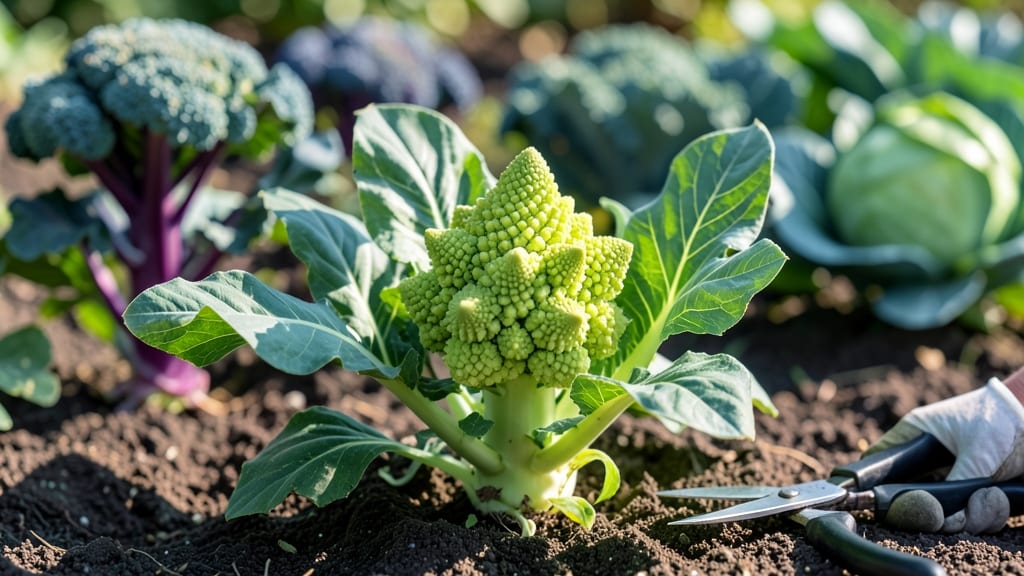
Does Romanesco grow back in a garden as a biennial plant, forming its distinctive fractal head in the first season before flowering in the second year. While the base can produce smaller heads after harvest with ideal conditions, full regrowth varies by climate and care.
This unique broccoli relative follows a two-phase lifecycle where its first year focuses on building the edible head you know, while the second year shifts energy to flowering. 💫 The fractal pattern isn't just pretty—it's a mathematical growth pattern that stores energy efficiently in the root system.
Many gardeners report partial regrowth if they leave the base intact after harvest, though cooler climates tend to yield better results than hotter regions.
What makes this plant particularly interesting is how it responds to temperature cues. In year one, it prioritizes head development when days are long and cool, while year two's flowering is triggered by shorter daylight periods.
This means gardeners in Mediterranean climates often get more reliable regrowth than those in tropical zones where the plant may bolt prematurely.
💡 In This Article
- Romanesco’s Biennial Growth Cycle Explained
- Tips to Encourage Romanesco Regrowth After Harvest
Romanesco’s biennial growth cycle explained
The fractal wonder of romanesco unfolds over two distinct seasons, governed by botanical imperatives rather than whims.
In its first year, the plant channels nearly all its energy into developing that iconic edible head—those spiraling green florets aren't just decorative; they're a mathematical growth pattern that maximizes surface area for photosynthesis while minimizing energy expenditure.
This fractal formation is genetically programmed, with each floret branching at precise 1.618:1 ratios (the golden ratio), creating the self-similar patterns you admire.
What drives this transformation is a combination of day length and temperature. Romanesco thrives in cool climates where summer days remain under 14 hours of sunlight—this triggers the plant to focus on head development rather than bolting to seed.
The root system stores carbohydrates during this phase, building reserves that will fuel next year's flowering. In warmer regions, however, the plant may bolt prematurely, sending up a flower stalk before the head fully matures—a common reason why gardeners in tropical zones struggle with reliable harvests.
The second year marks a dramatic shift in priorities. As daylight hours shorten in autumn, the plant's hormonal balance shifts from head production to reproductive growth.
You'll notice the base of the harvested head sending up a tall flowering stalk that can reach 3-5 feet, topped with yellow flowers that will produce seeds. This flowering phase is the plant's final act—after seeding, the romanesco plant typically dies, completing its biennial lifecycle.
The energy stored in those roots during year one is now redirected entirely to seed production, demonstrating nature's efficient resource allocation.
Here's where gardeners can intervene: if you harvest the main head carefully—leaving at least 3-4 inches of stem attached—you may coax the plant to produce secondary heads from the side shoots.
These won't be as large as the primary head (often 25-50% smaller), but they're still edible and extend your harvest window. The key is maintaining consistent moisture and nutrient levels, as the plant now faces competition between regrowing heads and the energy demands of potential flowering.
Climate plays a crucial role in determining whether this regrowth will succeed. In USDA zones 5-8, where winters are cool but summers aren't extreme, romanesco often produces reliable secondary heads.
However, in zones 9-10, the heat can trigger premature bolting, sending the plant into flowering mode before it's ready. Even in favorable climates, these secondary heads typically appear 6-8 weeks after the primary harvest, growing more slowly as the plant ages.
The texture of regrowth heads is often slightly firmer, with tighter florets that require 1-2 minutes less cooking time than mature heads.
The fractal pattern you love isn't just aesthetic—it's a survival strategy. Each floret's angle optimizes sunlight capture while minimizing wind resistance, allowing the plant to grow in dense stands without shading itself. When you harvest romanesco, you're interrupting this carefully balanced system.
The plant's response to this interruption reveals its resilience: by redirecting stored energy to new growth points, it demonstrates why this vegetable has been cultivated for centuries despite its complex lifecycle. Understanding these botanical quirks helps gardeners work with nature rather than against it when attempting regrowth.