
Light Requirements
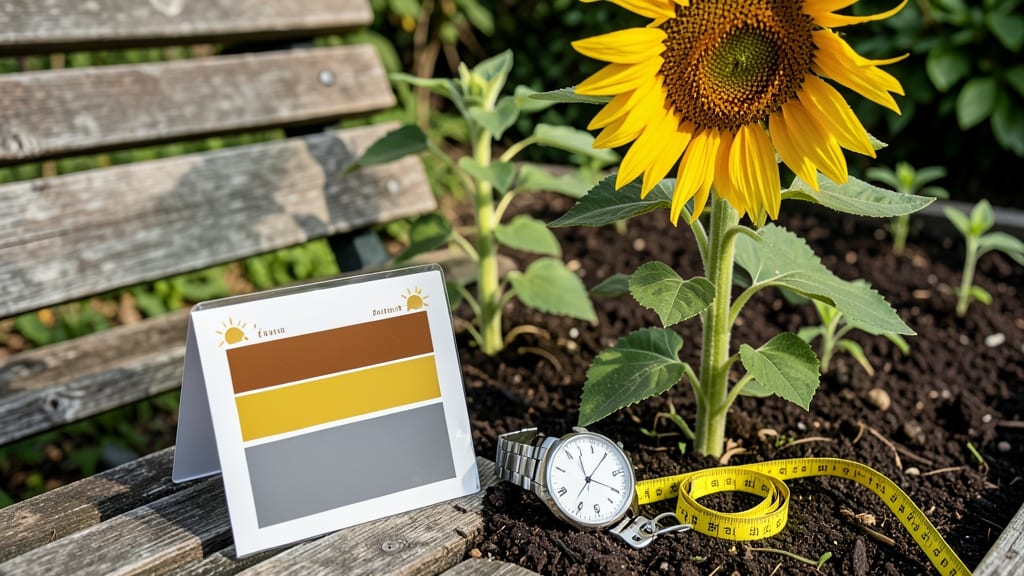
Determining full sun in gardening means providing 6 to 8 hours of direct sunlight per day, with variations depending on plant type—6+ hours for sun-loving plants and 8+ for the most heat-tolerant species. Morning sun tends to be gentler than intense afternoon rays, so positioning matters.
Understanding sunlight needs goes beyond just counting hours—it's about plant biology. Sunlight triggers photosynthesis, but too much can scorch leaves, especially in hot climates. 🌞 For example, tomatoes thrive with 6-8 hours, while desert cacti need full sun (8+ hours) to prevent etiolation.
I always check local sun charts to adjust for seasonal changes, as summer days can push exposure past what plants need.
Your garden's microclimate plays a huge role too. A north-facing wall might block afternoon sun, creating partial shade even if the sky is clear. Using reflective surfaces like white gravel or light-colored mulch can help redirect sunlight to shaded areas.
For precise tracking, I recommend apps like Sun Surveyor—they map your yard's sun patterns hour by hour.
💡 In This Article
- How Sunlight Hours Affect Plant Growth by Type
- Adjusting Sunlight Exposure for Different Climates and Plant Needs
How sunlight hours affect plant growth by type
Sunlight acts as a plant's primary energy source, but not all species metabolize it the same way. The 6-8 hour full-sun guideline stems from photosynthesis efficiency—most plants reach their optimal sugar production within this window.
For instance, vegetables like tomatoes and peppers have chlorophyll that peaks at 1,000-1,500 foot-candles of light, which translates to about 6-7 hours of direct exposure. However, desert-adapted plants like yuccas and agaves actually need 8+ hours to prevent etiolation (stretching) caused by insufficient light.
The difference comes down to transpiration rates—plants in hot climates lose water faster, requiring more sunlight to balance their moisture needs. Morning sun (before 10 AM) is gentler because temperatures are cooler, while afternoon rays (after 2 PM) can exceed 90°F in intensity, potentially scorching leaves.
This is why some plants, like roses, thrive with 6 hours but need afternoon shade protection in southern climates.
Leaf structure reveals these adaptations: broad-leafed plants (like lettuce) have high chlorophyll content but burn easily in full sun, while needle-like conifers (like junipers) have waxy coatings to reflect excess light. The science here involves photosystem II—the protein complex that converts light into chemical energy.
When exposed to too much light, this system can become overwhelmed, leading to oxidative stress and leaf damage.
Consider these key plant categories and their sunlight needs:
- Vegetables: Tomatoes, peppers, and eggplants need 6-8 hours but may wilt in 10+ hours of afternoon sun.
- Flowers: Sunflowers and marigolds thrive in 8+ hours, while impatiens prefer 4-6 hours.
- Shrubs/Perennials: Lavender and rosemary require 6-8 hours but tolerate partial shade in hot zones.
- Succulents/Cacti: Need 8-10 hours to prevent leggy growth from insufficient light.
Even within plant families, variations exist. For example, zucchini needs 6-8 hours, while its cousin cucumber prefers 5-7 hours due to its thinner, more delicate leaves.
This is why gardeners must match plant placement to both sunlight hours and seasonal changes—what works in spring may need adjustment for summer's longer days.
Pro tip: Observe your garden's microclimates. A spot that gets 6 hours of morning sun but only 1 hour of afternoon might qualify as "partial sun" for plants like coleus, even if it's technically 7 hours total. The intensity matters as much as the duration. 💫