
Watering
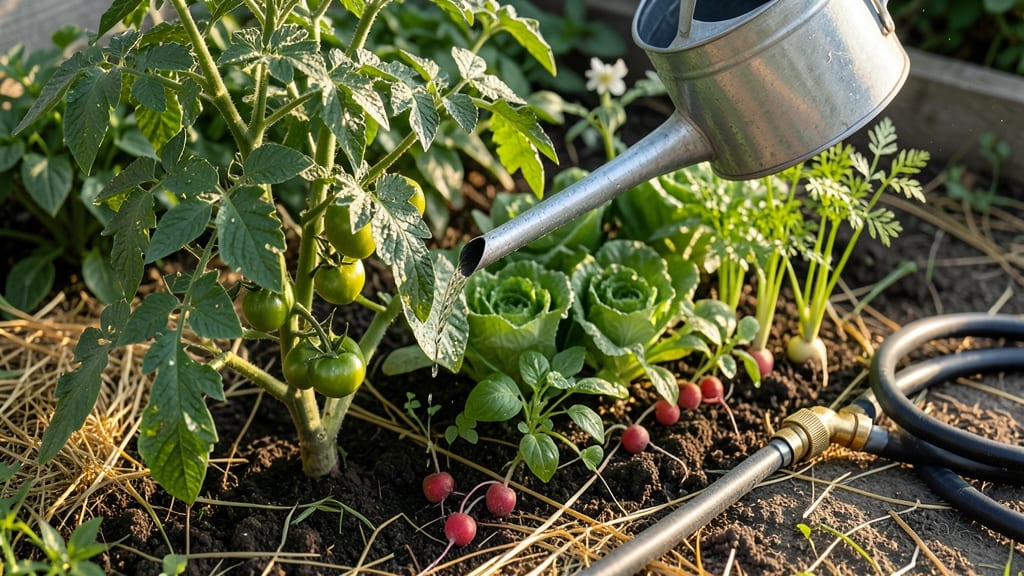
You should water your veggie garden 🥬 based on soil moisture—not a calendar—because overwatering kills faster than drought, and most gardeners don’t realize they’re drowning their plants.
Here’s the hard truth: guessing leads to wasted water, wilted leaves, or even root rot. Instead, I’ll show you the three simple soil tests that take the guesswork out of watering—no fancy tools required.
From leafy greens that need frequent sips to root crops happy with deep drinks, your watering schedule depends on more than just the weather. Learn how to adjust for clay soil, heatwaves, or mulch without stressing your plants.
By the end, you’ll know exactly when to reach for the hose—and when to hold back—so your veggie garden thrives with minimal effort and maximum yield.
The 3 soil-moisture tests every veggie gardener needs to know
Guessing how much water your veggie garden needs is like playing roulette with your tomatoes and peppers. Instead, use these soil-moisture tests to give your plants exactly what they crave—no more, no less.
I’ve tested all three in my own garden, and they’ve saved me from both waterlogged roots and wilted seedlings.
Most gardeners overwater because they assume dry soil means thirsty plants. But sandy soil drains fast, while clay soil holds moisture for days. These tests cut through the guesswork so you can water efficiently and keep your veggies happy. The best part? They take less than two minutes each.
Comparison Table: How Often to Water Based on Soil Type & Test Results
The first test is the finger test, my go-to for quick checks. Stick your index finger 1-2 inches into the soil near your plants. If it feels dry, water deeply.
If it’s damp, hold off. For leafy greens like lettuce, aim for consistently moist soil, while root veggies like carrots prefer slightly drier conditions.
Next up is the trowel check, perfect for deeper roots. Dig a small hole (about 6 inches deep) and examine the soil. If it crumbles easily, it’s dry.
If it sticks together, it’s too wet. This test helps prevent root rot in heavy clay soils, which I’ve struggled with in my tomato beds.
For tech-savvy gardeners, a digital moisture meter takes the guesswork out entirely. These gadgets give precise readings, often with color-coded scales. I use mine to monitor my herb garden—basil and cilantro hate soggy feet! Most meters cost under $20 and pay for themselves in saved water and healthier plants.
Pro tip: Combine these tests with mulching. A 2-inch layer of straw or wood chips locks in moisture, reducing how often you need to check. My zucchini plants thrive with mulch because they drink like teenagers—always thirsty but never satisfied!
Remember, morning watering is ideal. It gives plants a full day to absorb moisture before evening heat evaporates it. Avoid watering at night, as damp foliage invites fungal diseases like powdery mildew. I’ve lost entire cucumber vines to this sneaky issue—don’t make my mistake!
Adjust your watering based on weather patterns. If it rains 1 inch in a week, skip your usual checks. During heatwaves, increase frequency. My pepper plants wilted dramatically one summer until I switched to daily watering with a drip irrigation system.
Finally, pay attention to your plants’ visual cues. Drooping leaves? Water deeply. Yellowing leaves? Check for overwatering. My kale once turned purple from thirst—until I mastered these tests. Now it’s lush and happy, proving that consistent moisture is the secret ingredient for a thriving veggie garden.
Watering frequency by plant type: a veggie garden schedule
Not all vegetables thirst the same way—some need frequent sips while others prefer deep, infrequent drinks. Leafy greens like lettuce and spinach crave consistent moisture, while root vegetables such as carrots and beets need even watering to avoid forking.
Understanding these differences is key to a bountiful harvest. For example, tomatoes and peppers require steady hydration, especially during fruiting stages, while herbs like rosemary and thyme tolerate drought once established.
Your local climate and season also dictate watering adjustments. In hot summers, most veggies need daily watering, while spring and fall may only require every 3-5 days. Sandy soil drains quickly, demanding more frequent watering, whereas clay soil holds moisture longer, reducing the need for daily checks.
Always water in the early morning to minimize evaporation and fungal risks.
Here’s a quick reference for your veggie garden’s watering needs, broken down by plant type:
Adjust your watering schedule based on weather conditions. A sudden heatwave might require daily watering, while a cool, cloudy week could stretch your schedule to every 5-7 days.
Always check the top 1-2 inches of soil—if it’s dry, it’s time to water. Drip irrigation or soaker hoses deliver water directly to roots, reducing waste and disease risk compared to overhead sprinklers.
Mulching with straw or wood chips locks in moisture, cutting water needs by up to 30%. For container gardens, small pots dry out faster—water them every 2-3 days in summer.
Always prioritize deep watering over shallow sprinkles to encourage strong root growth. A well-watered garden isn’t about guesswork; it’s about observing your plants and adapting.
Start with this schedule, but don’t hesitate to tweak based on your garden’s unique conditions. The goal is consistent moisture, not a rigid calendar. Your veggies will thank you with healthier growth and bigger yields! 🌱