
Planting
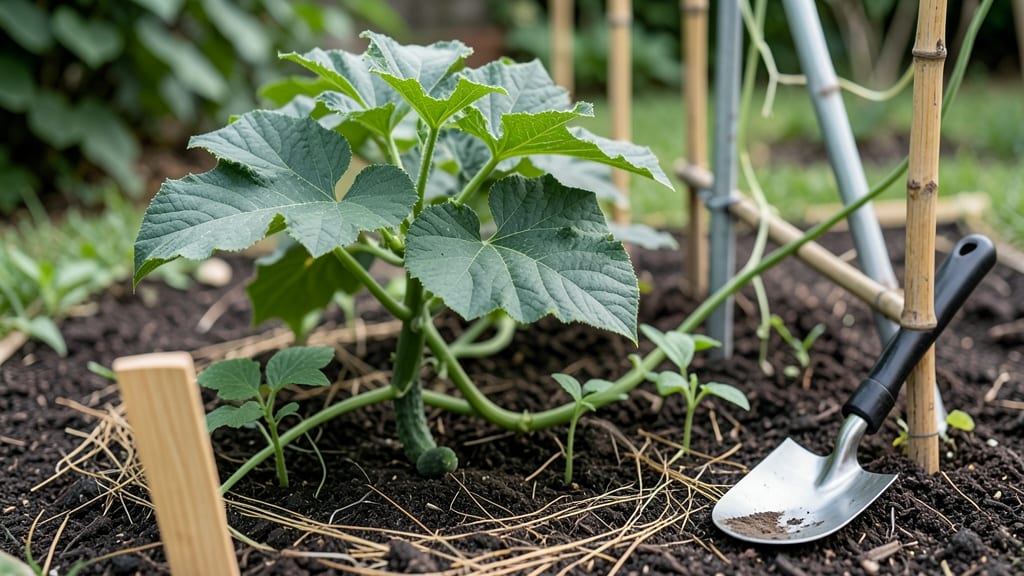
To plant cucumbers in a garden successfully, start by choosing the right spot with 6+ hours of sunlight and well-draining soil — the foundation for a bountiful harvest.
Picture this: you’ve waited all spring for those first crisp cucumbers 🥒, only to watch your plants wilt because they’re crowded or the trellis collapsed under the weight. Avoiding these mistakes starts with spacing and support, whether you’re growing bushy varieties or sprawling vines.
Cucumbers thrive when planted after the last frost in USDA Zone 6a, but the real secret lies in how you prep the soil, space the seeds, and train the vines. Too close together, and you’ll lose yield to disease; too far apart, and you’ll waste garden real estate.
In this guide, I’ll walk you through the exact steps for planting, spacing, and trellising — plus how to troubleshoot common early-stage issues so your cucumbers go from seed to salad in no time.

Step-by-step guide to planting cucumbers by type (bush vs. vining)
Cucumbers aren’t a one-size-fits-all crop—bush varieties like 'Bush Champion' stay compact, while vining types such as 'Straight Eight' can sprawl up to 10 feet if left unchecked. The wrong approach can mean wasted space or poor yields.
I’ve planted both types for years, and the difference in early care is everything. Let’s break it down so you can choose—and plant—with confidence.
Before you even think about seeds, soil temperature is your first hurdle. Cucumbers won’t germinate well below 60°F (15°C), so wait until your last frost date has passed and the ground has warmed.
Test it by pressing your hand into the soil—if it feels warm to the touch, you’re ready. Bush cucumbers tolerate slightly cooler soil than vining types, but neither will thrive in cold conditions. Use a soil thermometer if you’re unsure.
Now, let’s get to the planting. The steps below cover everything from soil prep to the first watering, with clear differences for each cucumber type. Follow these, and you’ll set your plants up for success from day one.
Both bush and vining cucumbers need full sun (6+ hours daily), but vining types benefit from vertical support near planting. Bush varieties can thrive in containers or small spaces, while vining types need at least 3 feet of ground clearance for sprawling vines.
Mark your spot with a stake or string to visualize the space.
Cucumbers love rich, well-draining soil with a pH of 6.0–6.8. Work in 2–3 inches of compost or aged manure 2 weeks before planting. For vining types, add a handful of bone meal (for phosphorus) to encourage strong roots.
Bush varieties don’t need extra phosphorus but benefit from balanced fertilizer (10-10-10) at planting time.
Sow seeds 1 inch deep for both types, but here’s the key difference: Bush cucumbers can handle closer spacing (2–3 seeds per mound), while vining types need 1 seed per mound to avoid overcrowding.
Space mounds 3–4 feet apart for bush varieties and 6–12 feet apart for vines (depending on trellis support). Thin to the strongest seedling per mound after germination.
Keep soil consistently moist (not soggy) until seeds sprout, which takes 5–10 days in ideal conditions. Bush cucumbers germinate slightly faster than vining types, so monitor closely. Once sprouts appear, reduce watering slightly to prevent damping off (a fungal disease).
Thin seedlings to 1 per mound when they’re 2 inches tall, using scissors to avoid disturbing roots.
Water deeply 2–3 times per week (more in extreme heat). Bush cucumbers need less frequent watering (every 4–5 days) because their compact roots retain moisture better. Vining types, with their longer roots, need daily watering in summer to prevent stress.
Always water at the base, not the leaves, to avoid fungal diseases like powdery mildew. Mulch with straw to retain moisture and suppress weeds.
If you’re growing vining cucumbers, install a trellis, cage, or fence within 2–3 days of planting to give vines something to climb early. Use galvanized wire, bamboo stakes, or a DIY wooden lattice.
Bush varieties don’t need support but benefit from light pruning to improve airflow. Train vines to grow upward by gently weaving them through the trellis as they grow.
One of the biggest mistakes I see is ignoring the trellis until vines are already sprawling. Vining cucumbers left to sprawl on the ground are prone to diseases and pests, and their fruit can rot from touching damp soil.
If you’re short on space, bush varieties are your best bet—they stay tidy and produce just as abundantly. But if you have room to let them climb, vining types yield longer and more consistently throughout the season.
After planting, watch for yellowing leaves or stunted growth—these are red flags. Yellow leaves often mean overwatering or poor drainage, while stunted growth could signal underwatering or nutrient deficiency.
A quick fix is to amend the soil with compost and adjust your watering schedule. Bush cucumbers are more forgiving if slightly neglected, but vining types need consistent care to reach their full potential.
Once your cucumbers start flowering, you’ll know you’re on the right track. Bush varieties may produce fruit faster (as early as 45 days), while vining types take 55–70 days. The key to a great harvest? Frequent picking—this encourages the plant to keep producing.
Check your cucumbers every 2–3 days and harvest when they’re 6–8 inches long and deep green. If left too long, they’ll turn bitter or develop yellow patches—a sure sign they’ve overstayed their welcome.
Pro tip: Companion planting can boost your cucumbers’ health. Pair them with radishes, beans, or marigolds to deter pests like cucumber beetles. Avoid planting near potatoes or sage, as these can stunt growth.
Whether you’re growing bush or vining types, these companions will help your cucumbers thrive from the first seed to the last harvest.
🌱
Optimal spacing and trellis systems for maximum yield
Cucumber plants need proper spacing to thrive—crowding invites disease and steals nutrients.
Bush varieties like 'Bush Champion' only need 12-18 inches apart, while vining types such as 'Straight Eight' sprawl up to 6 feet and require 36-48 inches between plants. Rows should be 3-5 feet apart for airflow and easy harvesting.
Trellising isn’t just for show—it boosts yield by 20-30% by lifting fruits off the ground, reducing rot, and improving sun exposure. Vertical systems work best for vining varieties, while bush types often skip trellises entirely. The key is matching your cucumber type to the right support system.
DIY trellises are easy to build. For vertical growth, use T-posts with wire mesh or bamboo stakes. Horizontal trellises (like cattle panels) save space and work well in small gardens. Always secure vines with soft ties to avoid damaging stems.
| System Type | Best For | Spacing | Yield Boost | DIY Difficulty |
|---|---|---|---|---|
| Vertical Trellis | Vining varieties | 36-48" apart | 20-30% | Easy |
| Horizontal Trellis | Small gardens | 24-36" apart | 15-25% | Medium |
| No Trellis | Bush varieties | 12-18" apart | 0% | None |
Skip trellises entirely for bush cucumbers or in shady spots—these plants thrive ground-level. However, if you’re growing vining types like 'Marketmore', invest in a trellis to prevent soil-borne diseases and maximize fruit quality. Always prune side shoots to direct energy upward.
For container gardening, use 5-gallon pots with one plant per container and a small trellis. In-ground gardens benefit from raised beds with trellis arches, which create a microclimate that extends the harvest season. Mulch heavily around the base to retain moisture and suppress weeds.
Pro tip: Train vines to trellises early—waiting until they’re established wastes energy. Use soft cloth strips or old T-shirts to tie vines gently. Avoid metal ties, which can girdle stems as they grow thicker.