
Fertilization
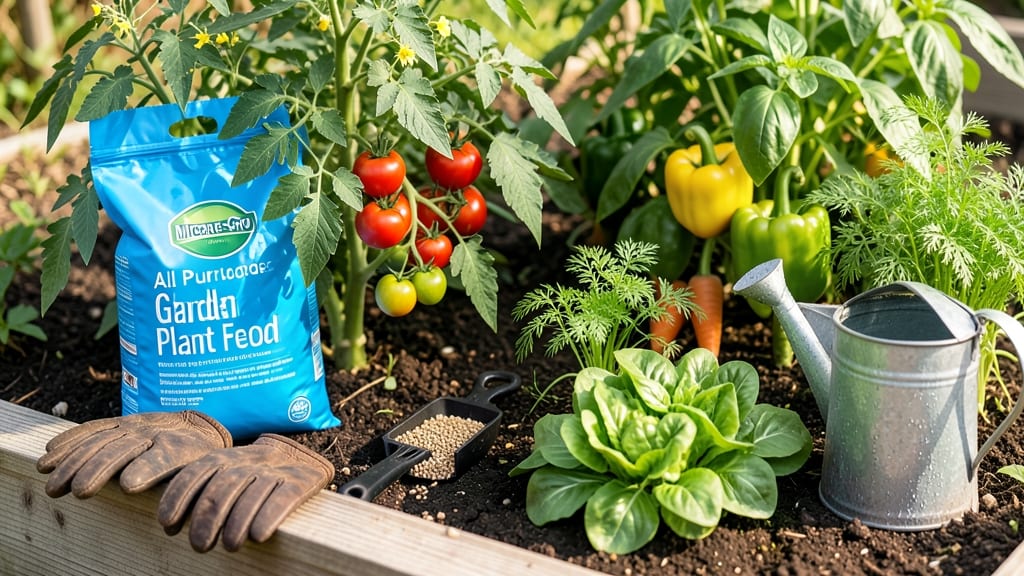
Using Miracle Gro for vegetable gardens delivers rapid nutrient delivery to speed up growth, though its synthetic formula may need dilution to align with organic gardening goals. Apply it carefully alongside compost to maintain soil health and prevent potential root damage from overuse.
Miracle Gro's fast-acting formula contains balanced nitrogen, phosphorus, and potassium ratios designed to give vegetables an immediate growth boost. 🌱 The synthetic nutrients dissolve quickly, making them accessible to plants within days—ideal for reviving struggling gardens or jumpstarting seedlings.
However, this speed comes with trade-offs: it can disrupt soil microbes over time and may require more frequent applications than organic alternatives.
For best results, I recommend mixing it with compost at a 1:3 ratio (one part Miracle Gro to three parts compost) to improve soil structure and reduce chemical buildup.
Always follow package instructions for dilution rates, especially when growing edible crops, and avoid applying it during extreme heat or drought conditions to prevent salt damage. The key is moderation—this fertilizer shines as a supplement, not a replacement for natural soil fertility.
💡 In This Article
- How Miracle Gro Works in Vegetable Soil
- Best Ways to Use Miracle Gro for Vegetable Gardens
How Miracle Gro works in vegetable soil
Miracle Gro's effectiveness in vegetable gardens comes from its carefully balanced NPK ratio—typically 15-30-15 (nitrogen-phosphorus-potassium)—which targets rapid leaf growth, root development, and flowering. The synthetic nutrients, like urea (a nitrogen source) and water-soluble phosphates, dissolve instantly in soil moisture, allowing plants to absorb them within 24-48 hours.
This is a stark contrast to organic fertilizers, which release nutrients slowly through microbial breakdown, often taking weeks to become fully available. 🌱
The fast absorption rate explains why Miracle Gro delivers visible results within 7-14 days, especially for nutrient-hungry vegetables like tomatoes or peppers. However, this speed has a downside: the synthetic salts can temporarily raise soil salinity, stressing sensitive plants if not properly diluted.
Unlike compost or manure, which improve soil structure and microbial diversity over time, Miracle Gro primarily feeds plants without nourishing the soil ecosystem. This is why gardeners often pair it with organic matter to maintain long-term soil health.
Another critical factor is its impact on soil pH. Most Miracle Gro formulations are slightly acidic (pH 6.0-6.5), which can suppress beneficial soil microbes if overused. The synthetic nutrients also create a "feeding frenzy" among plants, often leading to rapid but short-lived growth spurts.
For example, tomatoes fertilized with Miracle Gro may produce more leaves than fruit if phosphorus levels aren't balanced—a common issue when using high-nitrogen blends. The key lies in understanding your plants' specific needs: leafy greens thrive on nitrogen-heavy mixes, while fruiting plants need more phosphorus.
Over time, repeated applications can deplete soil organic matter, making gardens increasingly dependent on chemical inputs. This is why many organic gardeners use Miracle Gro as a short-term solution (e.g., reviving depleted soil before planting) rather than a long-term strategy.
The trade-off is clear: immediate growth benefits at the potential cost of soil degradation. For vegetable gardens, this means careful monitoring of plant responses and soil tests every 3-6 months to prevent nutrient imbalances.
Consider this comparison: A 1-pound bag of Miracle Gro (15-30-15) delivers roughly 2.25 ounces of nitrogen, enough to feed a 10x10-foot garden for 4-6 weeks at recommended rates. In contrast, composted manure provides similar nitrogen but also improves soil texture and microbial activity—a critical factor for sustainable vegetable production.
The choice often comes down to urgency: Miracle Gro for quick fixes, compost for long-term health.
For those concerned about chemical residues, remember that Miracle Gro's nutrients break down into plant-available forms within 1-2 weeks, but they don't become part of the soil's organic structure.
This is why pairing it with 1-2 inches of compost per season helps mitigate potential drawbacks while still enjoying the growth benefits. The secret to success lies in balance—not relying solely on synthetic inputs while still leveraging their speed when needed.