
Planting
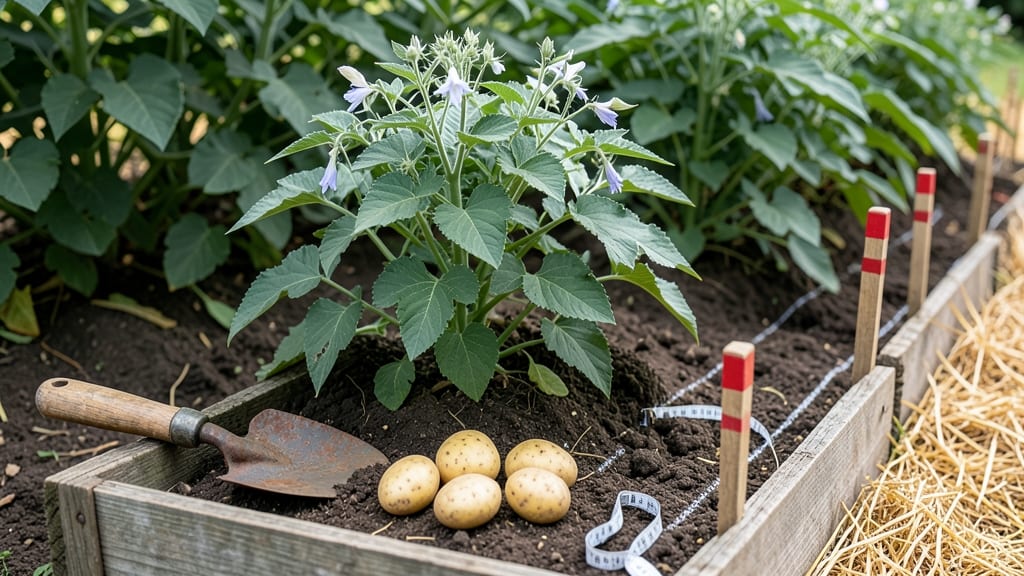
Spacing potatoes in your garden the right way is the difference between a bucketful of small spuds and a harvest that fills your pantry 🥔 — and it starts with the exact distance between plants.
Struggling with stunted potato growth? The secret to bountiful harvests isn't just soil quality—it's the exact spacing between plants that unlocks their full potential.
Get it wrong, and you're inviting disease, competing roots, and wasted space. But nail it, and you'll see bigger tubers, healthier plants, and fewer surprises when harvest time rolls around.
Below, I break down the ideal spacing for different potato varieties, how to adjust for your soil and climate, and the one mistake that ruins more gardens than you'd think.
Optimal potato spacing by variety: row distances for maximum yield
Getting the potato spacing right is like giving your tubers their own personal space to grow into bountiful harvests. Too close, and you’ll end up with small, misshapen potatoes—or worse, disease-ridden plants from poor airflow.
Too far apart, and you waste precious garden real estate. The key? Understanding how each potato variety needs room to spread its foliage and tubers below ground.
I’ve planted everything from russet potatoes (my all-time favorite for baking) to fingerling varieties (perfect for roasting), and I’ve learned that spacing rules aren’t one-size-fits-all. Early-season potatoes like Yukon Golds need less room than late-season Idaho Russets, which can sprawl like overgrown weeds if you’re not careful.
Even row spacing matters—packing plants too tightly in rows can turn your garden into a blight breeding ground.
Here’s the science-backed breakdown: plant spacing directly impacts tuber development, air circulation, and disease prevention. For example, russet potatoes need 12–18 inches apart in rows spaced 30–36 inches wide, while fingerlings thrive with 8–12 inches between plants and 24-inch rows.
Get this wrong, and you’ll either drown your plants in crowded foliage or leave empty soil where potatoes could be growing.
| Potato Variety | Plant Spacing | Row Spacing | Best For | Notes |
|---|---|---|---|---|
| Early Potatoes (e.g., Red Pontiac) | 10–12 inches | 24 inches | Quick harvests (60–70 days) | Compact growth, ideal for small gardens |
| Mid-Season (e.g., Yukon Gold) | 12–15 inches | 30 inches | Buttery texture, versatile cooking | Moderate sprawl, needs hilling |
| Late Potatoes (e.g., Russet) | 15–18 inches | 36 inches | Large tubers, baking | Aggressive growth, needs wide rows |
| Fingerlings (e.g., Purple Peruvian) | 8–12 inches | 24 inches | Gourmet dishes, roasting | Clustered tubers, compact plants |
| New Potatoes (e.g., Red Norland) | 10–12 inches | 24–30 inches | Early harvests, salads | Harvest young for tender skin |
🌱 Pro Tip: Always space rows north-south for even sunlight exposure.
Let’s talk about why these spacing guidelines matter. Potatoes grow underground tubers while their foliage spreads above. If you cram plants too close, their leaves compete for sunlight and nutrients, leading to stunted tubers.
But leave too much space, and you’re wasting garden real estate where you could grow more potatoes—or other crops!
For russet potatoes, which can grow large tubers and sprawling foliage, the 15–18 inch spacing gives them room to develop full-sized potatoes without competing.
How to adjust potato spacing for different garden conditions
Your potato plants thrive when given the right amount of space—but what happens when your garden doesn't fit the standard rules? Climate, soil fertility, and container gardening all demand adjustments to maximize yield.
For example, cooler regions can safely plant potatoes closer together (8–12 inches apart) since growth slows, while hot, fertile soil may need wider spacing (18+ inches) to prevent competition. Let’s break down how to customize spacing for your unique setup.
First, consider your garden's square footage. A 100 sq ft plot can fit 80–120 plants, depending on spacing.
Use this as a starting point: 10–12 plants per sq ft for standard spacing (12 inches apart), but reduce to 6–8 plants per sq ft in rich soil or increase to 14–16 plants per sq ft in containers.
The key is balancing airflow and tuber development—crowded plants lead to disease, while over-spaced plants waste space.
- 1 Soil Fertility: Poor soil? Space closer (8–12 inches) to compensate for slower growth. Rich soil? Widen to 18+ inches to prevent tuber competition.
- 2 Climate: Cooler zones (USDA 3–5)? Reduce spacing to 8–10 inches. Hot climates (USDA 8–10)? Increase to 14–18 inches for airflow.
- 3 Containers: Use 5–8 inch pots with 1 plant per container. For larger bins (12+ inches), space 2–3 plants per sq ft with deep hilling.
- 4 Hilling: Shallow soil? Space closer (10–12 inches) and hill every 2 weeks to encourage deeper tuber growth. Deep soil? Widen to 16–18 inches and hill every 3 weeks.
- 5 Spacing Calculator: For 100 sq ft, multiply plants per sq ft by 100. Example: 10 plants/sq ft × 100 sq ft = 1,000 plants (standard spacing).
For container gardening, prioritize depth over width. A 5-gallon bucket fits 1–2 potato plants, while a 50-gallon bin can hold 4–6 plants spaced 12–15 inches apart.
Use lightweight potting mix and hill soil as vines grow to encourage tuber formation. Pro tip: Interplant with shallow-rooted crops like lettuce or radishes to maximize space without competition.
Adjusting spacing isn’t just about numbers—it’s about observing your plants. If foliage looks stunted or yellowing, widen spacing next season. If tubers are small or misshapen, try planting closer together with better soil amendments. Experiment with one row at a time to find your garden’s sweet spot!
Remember, hilling techniques play a huge role in spacing adjustments. In shallow soil, hill aggressively every 2 weeks to push tubers deeper, allowing you to plant closer together without competition.
In deep, loose soil, you can space plants wider and hill less frequently (every 3–4 weeks) for larger tubers.
With these adjustments, you’ll turn challenging conditions into harvest goldmines. Start small, track what works, and soon you’ll be the neighbor with the perfectly spaced, disease-free potato patch! 🥔