
Tools
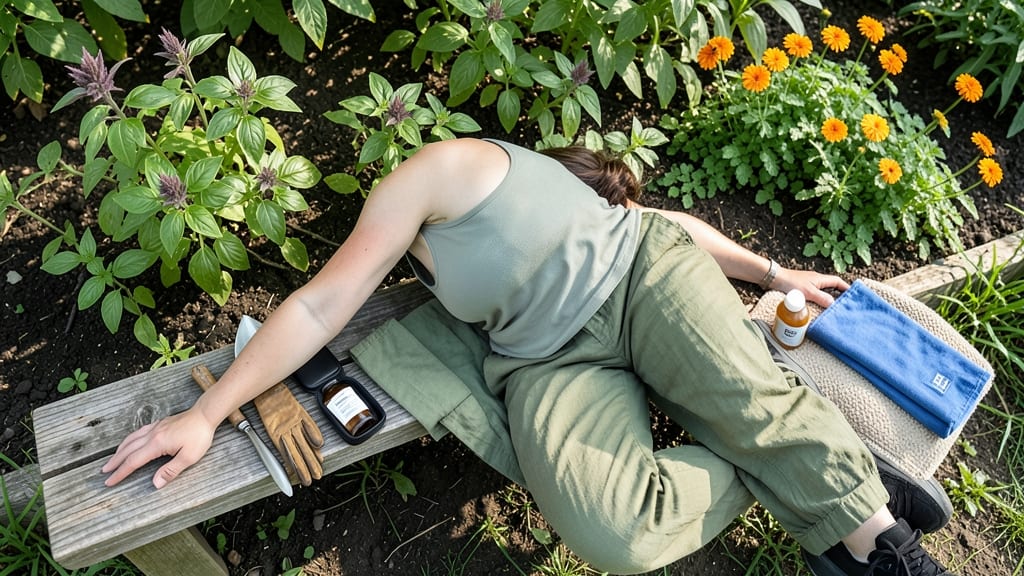
Treating lower back pain after gardening requires immediate relief through gentle movement, ice packs for acute discomfort, and over-the-counter anti-inflammatories like ibuprofen. Stretching your hamstrings and lower back while avoiding heavy lifting helps recovery and reduces stiffness.
Gardening’s repetitive motions—bending, twisting, and lifting—put serious strain on your lower back, especially if you’re not used to it. 🔥 The good news? Most discomfort comes from muscle tension or minor inflammation, not serious injury.
I’ve found that combining targeted stretches (like the cat-cow or knee-to-chest) with short movement breaks every 20-30 minutes can prevent flare-ups. For acute pain, ice packs for 15-20 minutes reduce swelling, while heat helps relax stiff muscles after the initial inflammation subsides.
What often gets overlooked is how posture plays a role. Many gardeners hunch over or twist awkwardly to reach plants, adding unnecessary pressure. Instead, try keeping your back straight, bending at the knees, and using your legs—not your back—to lift.
Over-the-counter pain relievers can help, but they’re just a bandage if you don’t address the root cause: tight muscles from poor movement patterns.
💡 In This Article
- How Gardening Strains Your Lower Back
- Gentle Stretches and Mobility Drills for Gardeners
How gardening strains your lower back
Gardening triggers lower back pain primarily through repetitive bending, twisting, and lifting motions that overload your lumbar spine. When you bend forward to pull weeds or dig, your spine compresses under gravity, increasing pressure on the discs between vertebrae.
Studies show that lifting objects weighing just 25 pounds can generate 500 pounds of force on your lower back when done improperly—this explains why even light gardening tasks can cause discomfort over time.
The twisting motions common in gardening (like turning to reach plants) add rotational stress to your spine, which is far riskier than simple bending. Your spine isn't designed for combined bending and twisting—this combination can irritate nerves or strain muscles.
Poor posture compounds the problem: many gardeners hunch over or lean too far forward, shifting their center of gravity and forcing their lower back to bear extra weight. This posture creates a "J-curve" in your spine, where the natural inward curve of your lower back becomes exaggerated.
Another key factor is muscle fatigue. Gardening engages your core and back muscles continuously, but if they're not conditioned, they fatigue quickly. When these muscles tire, your body compensates by shifting more load onto your spine, leading to micro-tears in muscle fibers or inflammation.
The repetitive nature of gardening—digging, raking, or weeding—creates a cycle where muscles tighten, restrict movement, and trigger pain signals. This is why you might feel stiffness even after finishing your gardening tasks.
Specific gardening activities pose higher risks. Digging with a shovel, for example, requires deep bending and twisting, while carrying heavy pots or bags of soil creates sudden lifting stresses. Even prolonged kneeling or squatting (like when planting flowers) can compress your lower back if done without proper support.
The cumulative effect of these movements explains why gardeners often experience pain that builds gradually rather than appearing suddenly from a single wrong move.
Your body's natural response to this strain is inflammation, which is why you might notice swelling or warmth in your lower back after gardening. The inflammatory response restricts blood flow to affected muscles, leading to stiffness and reduced mobility.
What most people don't realize is that this inflammation isn't just about pain—it's your body's way of signaling that tissues are under stress and need recovery time. Ignoring these signals can lead to chronic issues over time.
Understanding these mechanics helps explain why certain gardeners experience more pain than others. Factors like age (older adults have less muscle elasticity), pre-existing conditions (like arthritis or herniated discs), and fitness level all play a role.
Even your footwear matters—uneven surfaces or worn-out shoes can throw off your balance and increase strain on your lower back. 🌱 The key takeaway is that gardening pain isn't just about "getting older" or being out of shape; it's about how your body handles specific physical stresses.