Planting
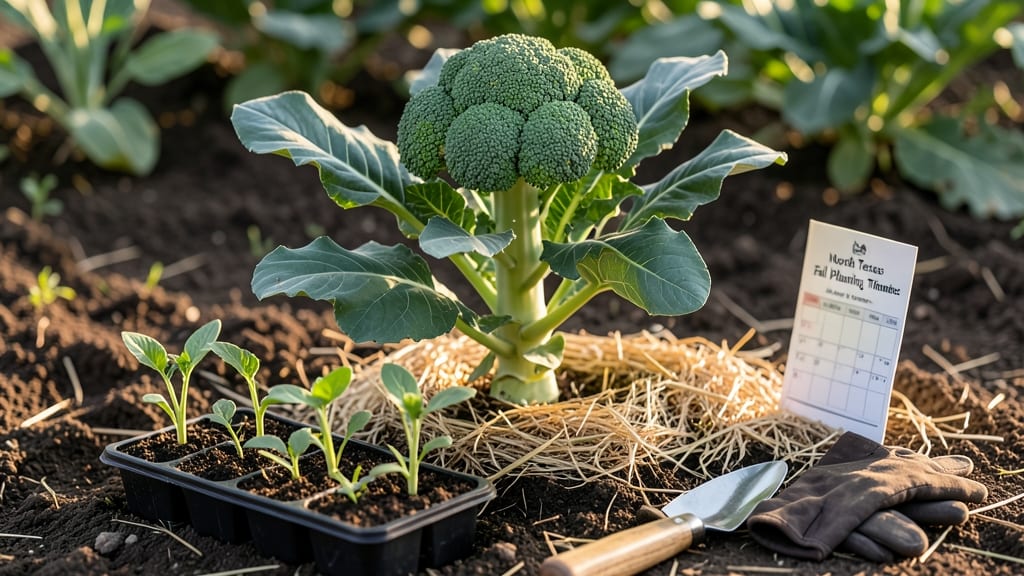
Planting a fall garden in North Texas starts between mid-August and mid-October—a window that balances heat tolerance and frost readiness for your 🥬 crops.
North Texas gardeners know timing is everything—plant too early, and your fall crops will bolt in the heat; too late, and frost will ruin your harvest. But with the right schedule, you can enjoy fresh greens, root vegetables, and herbs straight from your garden all winter long.
In zones 7b-8a, the key is working backward from your first frost date (around November 15). Most leafy greens and root crops need 6-8 weeks to mature, so late August is your best bet for a September harvest.
Below, I’ll break down the exact planting dates by crop type, how to adjust for microclimates, and the three mistakes that wreck North Texas fall gardens every year—plus how to avoid them.
North Texas fall planting calendar: exact dates by crop type
North Texas gardeners face a unique challenge: the scorching summer heat gives way to cool fall nights in just a few months. To maximize your harvest, timing is everything.
Plant too early, and your cool-season crops will bolt from the heat; too late, and a sudden frost will ruin your efforts. The key is knowing the exact planting windows for each crop type.
In Zones 7b-8a, the first frost typically arrives around mid-November, but microclimates can shift this by weeks. That means your fall garden should be planted 6-8 weeks before the average frost date. For most of North Texas, that translates to mid-August through mid-October, depending on the crop.
🌱 Quick Tip: Use the 10-day rule—if nighttime temperatures drop below 50°F (10°C) for 10 consecutive days, it’s time to switch to cold-hardy varieties or use row covers.
| Crop Type | Ideal Planting Window | Heat-Tolerant Varieties | Frost-Sensitive? | Notes |
|---|---|---|---|---|
| Leafy Greens (Lettuce, Spinach, Kale) | Late August - Early October | 'Black Seeded Simpson' (lettuce), 'Winterbor' (kale) | Yes (bolt in heat) | Direct sow or transplant. Succession plant every 2 weeks. |
| Root Vegetables (Carrots, Beets, Radishes) | Mid-August - Mid-September | 'Danvers' (carrots), 'Cherry Belle' (radishes) | No (tolerate light frost) | Loosen soil to prevent forking. Harvest before hard frost. |
| Brassicas (Broccoli, Cabbage, Cauliflower) | Late August - Early September | 'Waltham 29' (broccoli), 'Golden Acre' (cabbage) | Yes (slow to establish) | Start indoors 4-6 weeks before transplanting. Use row covers. |
| Herbs (Cilantro, Parsley, Dill) | Mid-September - Early October | 'Slow Bolt' (cilantro), 'Italian Flat-Leaf' (parsley) | Yes (bolt in heat) | Direct sow in partial shade. Harvest leaves regularly. |
| Cover Crops (Clover, Winter Rye) | Late September - Early October | 'Crimson Clover', 'Winter Rye' | No (improves soil) | Plant after main crops are harvested. Mow before flowering. |
| Peas & Beans (Green Beans, Sugar Snap Peas) | Mid-September - Late September | 'Contender' (beans), 'Sugar Sprint' (peas) | Moderate (peas tolerate frost) | Plant in cool soil. Use trellises for peas to save space. |
For heat-tolerant varieties, prioritize crops like 'Heat-Tolerant Buttercrunch' lettuce or 'Malabar Spinach', which can handle 90°F (32°C) temperatures better than traditional greens. These varieties buy you an extra 2-3 weeks of planting time before the heat becomes prohibitive.
If you’re planting frost-sensitive crops like basil or cucumbers, stick to the earliest window (mid-August) and use black plastic mulch to warm the soil. For cold-hardy crops like kale or carrots, you can push planting to early October, especially in higher elevations where frosts arrive later.
✂️ Pro Tip: Use a soil thermometer to check if soil temps are below 70°F (21°C)—a sure sign it’s time to switch to cool-season crops. Most seeds won’t germinate well in cooler soil.
Don’t forget about succession planting! For leafy greens and radishes, sow new seeds every 2 weeks from late August through mid-September. This ensures a continuous harvest until frost. Meanwhile, broccoli and cabbage take longer to mature, so plant them 4-6 weeks before your target harvest date.
How to adjust planting dates for North Texas microclimates
North Texas isn't one-size-fits-all when it comes to gardening. Elevation changes between Dallas and the Hill Country can shift frost dates by 2-3 weeks, while urban heat islands in cities like Fort Worth make soil 5-10°F warmer than rural areas.
Even within your backyard, soil temperature can vary by 15°F between sunny and shaded spots. These microclimates mean your neighbor's perfect planting schedule might not work for you.
To succeed, you'll need to adjust planting dates based on three key factors: your exact location's frost dates, soil warmth, and heat retention in your garden beds.
For example, leafy greens planted in late August in a high-elevation area might bolt by September, while the same variety thrives in lowland urban gardens until October. Let's break down how to customize your schedule.
- 1 Check your elevation: High elevations (e.g., Dripping Springs) have earlier frosts—plant 4-6 weeks earlier than lowland areas like Waco. Use USDA Plant Hardiness Zone Map and add 1,000 ft = ~1 zone to your local zone.
- 2 Test soil temperature: Use a soil thermometer—50°F is ideal for cool-season crops. In urban areas, soil stays 10°F warmer than rural spots. If your soil is 60°F+, wait 1-2 weeks before planting heat-sensitive crops like broccoli.
- 3 Adjust for urban heat: Cities like Austin and Fort Worth have heat islands—plant heat-tolerant varieties (e.g., 'Heat Tolerant' lettuce) or use shade cloth to buy 2-3 extra weeks of growing time for sensitive crops.
- 4 Extend seasons with row covers: Floating row covers add 2-4°F warmth and protect from light frosts. Install them 4-6 weeks before your area's first frost date to double your harvest window for crops like spinach and kale.
- 5 Use cold frames for late crops: A DIY cold frame (clear plastic over a wooden box) can extend harvests by 6-8 weeks. Place it over hardy greens like swiss chard or radishes in mid-October to keep them growing through December.
Don't forget that microclimates affect more than just frost dates. For instance, south-facing beds warm up 3-5°F faster than north-facing ones, making them perfect for early planting of cold-hardy crops like peas or spinach.
Conversely, shaded areas near fences or buildings may stay cooler, ideal for heat-sensitive herbs like cilantro or parsley in late summer.
Pro tip: Monitor your garden's microclimates for a season by placing minimum-maximum thermometers in different spots. Note where soil stays warmest (great for early planting) and where it cools fastest (ideal for late-season crops). Over time, you'll develop a custom planting calendar tailored to your yard's unique conditions.
When in doubt, start with fast-maturing varieties like 'Early Wonder' peas or 'Black Seeded Simpson' lettuce, which thrive in short windows. These give you flexibility to adjust dates based on real-time conditions rather than relying on average frost dates.
With these adjustments, you'll maximize your fall harvest—even in North Texas's unpredictable microclimates! 🌱